
Is there a possibility of a change in Ukraine's foreign policy and the recognition of Kosovo?
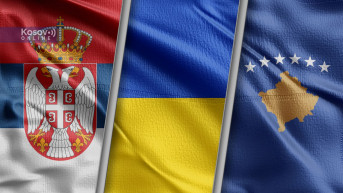
Ambassador of Ukraine to Albania, Volodymyr Shkurov, stated at the end of last week that the recognition of Kosovo was "a matter of time." The statement sparked controversy as it came immediately after the Ukraine and Southeast Europe Summit in Tirana, where a Declaration was passed emphasizing unwavering support for Ukraine's independence, sovereignty, and territorial integrity within its internationally recognized borders since 1991.
"We appreciate Kosovo's assistance. Recognition of Kosovo is on the agenda. Nothing is impossible, but we are currently more focused on how to get out of the firing line. The issue of recognizing Kosovo is more of a political nature, where several elements must be taken into account that may not appear in general," Shkurov stated after the Summit in Tirana.
A response soon arrived from the Embassy of Ukraine in Serbia, stating that "Ukraine's position remains unchanged and is based on unconditional respect for the sovereignty and territorial integrity of states within their internationally recognized borders."
Aleksandar Zivotic, a professor at the Department of History, Faculty of Philosophy in Belgrade, assesses that Ukrainian recognition of Kosovo would be a major blow to Serbia and a consequence of lobbying. However, he doubts it will happen because such a move would severely damage the country's position amid the war with Russia.
Commenting on the announcement by the Ambassador of Ukraine to Albania, Volodymyr Shkurov, Zivotic says for Kosovo Online that it was a "bombastic and unexpected statement" and a "deviation from the main current of Ukrainian foreign policy."
"It is difficult to say whether this slip was accidental or intentional. In Ukraine, there is a current advocating for the recognition of Kosovo's independence. It is hard to determine how much of this current is influenced by current events and how much is due to certain lobbying structures within Kyiv itself. What is important to note is that these are primarily opposition politicians who have even initiated several initiatives in this direction," Zivotic says.
He explains that one initiative was supposed to be discussed in the Ukrainian parliament but did not pass in the relevant committee, while in another case, a petition was organized, but it also failed.
Zivotic emphasizes that there are clear reasons why recognition of Kosovo would not be in Ukraine's interest at this moment.
"Considering the simple fact that Ukraine is currently facing the annexation of parts of its territory by Russia, consistently since 2014 to the present day, such a move would certainly represent a drastic step that would greatly damage its position, primarily in relation to Russia, but also to major players on the international scene," Zivotic says.
He adds that it is also important for Serbia to prevent such recognition.
"It is extremely important for Serbia that this does not happen for several reasons. Firstly, the recognition of Kosovo's independence by yet another European country, a large - populous state, very close to the Slavic, predominantly Orthodox, would be a significant blow to Serbia at this moment. On the other hand, Serbia's position in relation to Russia would be somewhat altered. Such recognition would certainly suit Russia because it would drastically undermine Ukrainian positions not only in Belgrade but also in the region. In this way, they would again gain a certain argument to justify Russia's current policy towards Ukraine," Zivotic believes.
According to him, the best scenario for Kosovo would be for Ukraine to open a representation in Pristina below the level of an embassy, but there is little chance of that happening.
"Given that Ukraine is at war and that its priorities are much broader and drastically different from those desired by the Pristina authorities, it is difficult to expect that. Although it should be noted that a number of countries that have not recognized Kosovo's independence have representations of various levels and tasks in Pristina," Professor Zivotic concludes.
On the other hand, political analyst Visar Xani from Pristina assesses for Kosovo Online that Ukrainian recognition of Kosovo is indeed a complicated process associated with geopolitical developments in the region and the world, but neither Ukraine nor Kosovo will have merit because it will be a political decision of the United States and the EU.
"Some signals may encourage official Kyiv to recognize Kosovo's independence, but this will not happen because of Kosovo's strength, but solely with the support of the United States and EU countries that want to convey the political message that Kosovo's reality is much different from that in which Russia and Ukraine currently find themselves," Xani emphasizes.
He emphasizes that there are already positive developments, and it is fundamentally insignificant whether Ukraine will recognize Kosovo now or after the end of the war with Russia.
"There are positive developments regarding recognition by Ukraine. It takes a lot of work and dedication from global diplomacy for this to happen. We can achieve recognition, whether it happens now or after the war in Ukraine is a question. However, there will be a relaxation of relations and communication because Kosovo has been very engaged and fully supported Ukraine in the war with Russia," Xani believes.
According to him, Ukraine is, in a way, already showing this even though it has problems with Russia's territorial claims.
"But Russia's claims have nothing to do with Kosovo. Kosovo is a unique case that is completely different from Russia's violation of Ukraine's territorial integrity," Xani explains.
Therefore, he emphasizes that it is extremely unimportant that ambassadors of Ukraine in Tirana and Belgrade do not have aligned views at this moment.
"One ambassador somehow has positive signals regarding the recognition of Kosovo's independence, while the Ambassador of Ukraine in Serbia remains in the past and assures Belgrade that there are no concrete steps or intentions for this country to recognize Kosovo's independence," Xani concludes.
Srecko Djukic, a former diplomat and member of the Forum for International Relations of the European Movement in Serbia, believes that the issue of Kosovo's recognition will not be a topic for Ukraine for a long time.
"Such a thing is not a question of Ukraine's current or short-term policy. This issue will wait for things to be resolved between Belgrade and Pristina or to be resolved within Ukraine itself," Djukic emphasizes for Kosovo Online.
He emphasizes that it is important for both Ukraine and Serbia to follow a policy of respecting territorial integrity.
"It is important for us, but it is also important for Ukraine to maintain the current status because it is a principled stance of supporting a country whose territorial integrity is threatened, i.e., non-recognition of Kosovo. Serbia has supported Ukraine's territorial integrity in all resolutions adopted by the UN, and I believe there are six or seven of them," Djukic emphasizes.
He explains that it is very important for Serbia that Ukraine does not change its stance because it could trigger a chain reaction in the countries of the former Soviet Union.
"An important aspect to understand the overall situation in Serbian-Ukrainian relations and why it is important for Ukraine not to recognize Pristina is the fact that it would be the first country from the post-Soviet space, excluding the three Baltic states, to recognize Kosovo as an independent state," Djukic says.
Djukic interprets the announcement of the Ukrainian Ambassador to Tirana, Volodymyr Shkurov, that this country could change its stance and that "recognition of Kosovo is just a matter of time" as "a fairly liberal and broad interpretation of possible Ukrainian policy towards Serbia."
"This topic is open to the Ukrainian public. There have been discussions not only in the media but also in the Supreme Council and among some individuals. It's something that, ultimately, must come up for discussion. However, objectively speaking, it is not a current issue nor is it a topic that will be considered soon in the sense that Ukraine could recognize Kosovo as an independent state. For several reasons. Firstly, it is a principled, ethical stance. Both countries are fighting for their territorial integrity, and certainly Ukraine, regardless of how many powerful allies it may have who objectively are not allies to Serbia, would not step out of that framework," Djukic is convinced.
He points out that Serbia is an important factor for Ukraine, which was confirmed through the Declaration adopted at the Ukraine - Western Balkans Summit in Tirana, as well as in the discussions held there between the two presidents, Aleksandar Vucic and Volodymyr Zelenskyy.
Asked how much Serbia's neutral stance on the war in Ukraine complicated matters for it, Djukic responds that Serbia's position is too complicated, and it depends on how one interprets that neutrality.
"It depends on who and how it is observed. I think Serbian politics needs to be active on all fronts and domains, including the Ukrainian-Russian war. It's difficult to say that Serbia has a neutral status there. I would say that Serbian politics is more tied to Russian policy and the belief that preserving the status of Kosovo and Metohija is ensured through that strong connection with Moscow, and in that sense, the issue of Serbian-Ukrainian relations is pushed into the background, or that our policy towards Ukraine is not active enough," Djukic believes.
When asked whether the statement by the Ukrainian Ambassador should be interpreted as a possible announcement of opening a diplomatic mission of Ukraine in Pristina, Djukic says that it is possible.
"But Ukraine wouldn't gain anything particularly significant from that. It might mean something for Pristina considering it has fully sided with Ukraine," Djukic says, reminding that many other states that haven't recognized Kosovo's independence also have similar missions, below the level of embassies, in Pristina.
"Ukraine can do that any day; it wouldn't be anything unusual and wouldn't set a precedent because a considerable number of countries have their embassy offices from Belgrade in Pristina. Starting from Russia, then China, Greece, and many other countries. They have accredited their offices and diplomats from Belgrade to Pristina through our Ministry of Foreign Affairs and, of course, through the Ministry of Foreign Affairs in Pristina. Russia has maintained its robust diplomatic mission there since 2000. Greece upgraded the level of its diplomatic representation to a trade office a few years ago," Djukic recalls.



0 comments