
The tragedy in Cetinje as a warning: The Western Balkans, a "powder keg" - notorious for the amount of illegal weapons
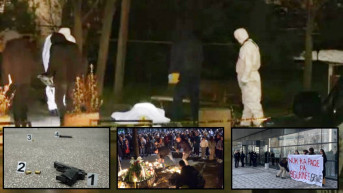
The tragedy in Cetinje is the latest in a series of unprecedented crimes that have shaken the region in just a few years. Security experts warn that one of the reasons is that the Western Balkans is somewhat of a "powder keg" - infamously leading in the number of legal and illegal weapons in the hands of its citizens.
Written by: Arsenije Vuckovic
In just a few hours, on that January 1st in Cetinje, 13 lives were lost.
The murderer, Aco Martinovic, began his bloody spree at 5 PM, shooting at four locations. Among the victims were two children, brothers aged 10 and 13.
According to the police report, he died on the way to the hospital after attempting suicide.
Just a few hours after the tragedy, the Prime Minister of Montenegro, Milojko Spajic, said that a new firearms law would soon be adopted.
"I'm talking about legal weapons. People who currently have permits will have until January 1, 2026, to undergo new psychological and security checks. Those who do not meet this condition will have their permits revoked," Spajic declared.
An immediate campaign also began for the surrender of illegal weapons, "Respect life, return weapons."
"Those who do not surrender illegal weapons within two months will be severely punished," emphasized Spajic.
Serbia faced this problem two years ago.
Within just 24 hours at two locations in Belgrade, about twenty people, mostly children, died.
First, on May 3, 2023, at the Vladislav Ribnikar Primary School, when a student of the school killed nine peers and a janitor.
The next day, in a bloody spree near Belgrade, in Mladenovac, eight people were killed, and 14 injured.
Following this, the Serbian government imposed an embargo on the issuance of weapon permits and also began the most extensive campaign for the control and confiscation of firearms in the possession of citizens.
At the same time, May 3 and 4 were declared as Days of Remembrance for the victims of mass murders.
In North Macedonia last year, the trial began for the murder of minor Vanja Djorcevska from Skopje and Pance Zezovski from Veles.
The entire region cried when, after several days of searching, her lifeless body was discovered on December 4, 2023.
Kosovo has been facing multiple murders for years, often associated with femicide, leading to protests by several NGOs.
According to official statistics, last year in Kosovo, there was a 42% reduction in murders compared to 2023.
Security expert Drizan Shala points out that the situation is quite different and has "gotten out of control."
"The situation has gotten out of control in terms of public safety, so we will need to conduct a deep strategic analysis to identify failures in the system. We will need to restructure and engage additional forces to bring this uncontrolled situation under control," said Shala.
He explained that cases of murder and violence in Kosovo are becoming more frequent, and the relevant authorities should make maximum efforts to enhance the security of citizens.
"National pride"
Editor at RTV Podgorica Milan Sekulovic says that Montenegro is still in shock from the events in Cetinje, and that the country ranks third globally in terms of citizen armament because more than 65,000 citizens have a permit to carry weapons.
"According to official data, over 65,000 citizens are armed in Montenegro, and Montenegro has less than 650,000 inhabitants in its territory. Thus, more than ten percent of the population is armed. We have about 100,000 pieces of weapons in legal possession, while unofficial estimates suggest that between 45,000 to 100,000 pieces of weapons are in illegal possession. By all standards and research, we are record holders regarding the armament of the population. Globally, according to world statistics, we are third in the number of armed citizens," Sekulovic told Kosovo Online.
He explains that weapons in Montenegro are not just objects, but also a matter of national pride.
"Weapons in Montenegro are not simply objects. For some inexplicable, yet historically explainable reasons, weapons in Montenegro are considered more than just weapons; they are a matter of national pride. Numerous families have pieces of weapons left to them as inheritance from their great-grandfathers, grandfathers, and great-great-grandfathers. However, what adds to the problem is that very often there is no control," emphasizes Sekulovic.
Another problem is that a good portion of these weapons are not registered, and at the same time, there are examples where registered weapons are in the hands of "problematic individuals."
"A classic example was (Vuk) Borilovic, who two and a half years ago killed ten fellow citizens. He had a license for hunting weapons and with those hunting weapons, he killed ten of his friends, neighbors, family members, fellow citizens. Thus, even those weapons that are in legal possession are very often not controlled," highlights Sekulovic.
Commenting on the initiative of the Prime Minister of the Government of Montenegro, Milojko Spajic, to change the weapons law, Sekulovic says he supports it, but that it came only after the tragedy.
"Unfortunately, as in all Balkan countries, and so in Montenegro, the reaction comes post festum, when something happens then the reaction of the competent state authorities follows. In this case, the reaction from the government is the announced amendment to the weapons law. It has been announced that these controls will be significantly stricter and of course, this is something we all need to support. We need to know who is armed and in the end, I think it would be very healing for this society to also monitor the psychological situation among the population," says Sekulovic.
He believes that after the coronavirus pandemic in 2020, there were drastic changes in the psychology and behavior of citizens who, instead of turning to professionals for help, mostly turned to quacks and "influencers."
Another related problem he sees is the imposition and lack of selectivity in media content.
"There is a big problem with mental health among people. Today, unfortunately, there is an expansion of influencers and various supposed experts, quacks in the field of psychology who preach to people, but with completely wrong things. We have completely shifted focus. Look, ultimately, what is presented to us through heaps of media, heaps of media content. We are a society where, unfortunately, there isn't much selection when consuming media content," concludes Sekulovic.
Regional Cooperation
Security expert from Skopje, Ljubomir Gjurcevski, warns that the tragic event in Cetinje once again highlights the urgency of collecting illegally possessed weapons at a regional level, and the failure to carry out this action raises suspicions that these weapons are being "preserved" for new security challenges in the Western Balkans.
"As a security expert, it concerns me and leaves room to suspect that someone might be playing with fire, preparing for other security crises in this region instead of carrying out an action to collect all illegal weapons in the hands of citizens or criminal groups," Gjurcevski stated to Kosovo Online. He believes that this action must be conducted with the support of the EU and the USA.
"If they are strategic partners, then address this issue of illegal weapons which are in vast quantities. A large convoy could be collected and sent to Ukraine. We urgently need this action that has been considered so far," says Gjurcevski for Kosovo Online.
He notes that when it comes to North Macedonia, there are various types of weapons involved, which he illustrates with data about weapons found in the region of Aracinovo.
"Rocket launchers, RPGs, and bazookas were found... We're talking about 82 mm caliber weapons, which are quite dangerous. Tank and anti-tank mines were also found, meaning all military formation weapons," emphasizes Gjurcevski.
In the Western Balkans, he warns, there is a "huge amount" of illegal weapons left after the armed conflicts that ended in 2001.
"If we talk about illegal weapons in the region, they are in vast quantities and are in the hands of citizens across the region, we can also talk about Croatia, Bosnia and Herzegovina, Montenegro, Kosovo, in Macedonia, Serbia, Albania, etc. Especially after all those military actions that happened until 2001. Then a huge number of weapons, or what we colloquially call formation weapons, including rifles with oval barrels, automatic rifles, remained in the hands of citizens or in the hands of all those who participated in all those combat actions," says Gjurcevski.
He believes that all previous actions that were done to collect them did not yield the expected results and resulted in tragic events, like the one in Cetinje on January 1 or in Belgrade in 2023.
"I think it was all a farce that we are now paying dearly for, given that some of that weaponry is available to minors, as well as weapons that citizens possess with a permit. This is the case of the Ribnikar Elementary School in Belgrade, a case in which the father owned weapons with permits, but made it available to a minor child under 14 years old, and nine young people were killed. As well as what happened in Montenegro. It's about an older person who may have expressed his frustrations resulting from a quarrel. But the decision to use firearms is again related to his mental state," this expert emphasizes.
He believes there is also a problem in the fact that the peoples of the Western Balkans like to own weapons and that it is part of the "family tradition."
"Therefore, I warn that we need to ensure that this weapon at least is not accessible to minors and children, considering that unfortunate events can happen," says Gjurcevski.
He also warns of the problem of organized criminal groups in the region.
"If we look at the statistics of the public prosecutor's office and police, you will see that in the period after 2001, the critical year for ending military conflicts in the Balkans, you will see that we have over 150-160 to 200 murders of organized groups in clashes for territorial supremacy.
Starting from Croatia, Bosnia... you see all these shootings within the Serbian mafia, in the Kosovo underworld, in the Macedonian underworld. In Montenegro, we had the murder of the former director of Montenegrin police," Gjurcevski recalls.
He sees the solution in the urgent enactment of appropriate laws that will regulate and drastically limit the possibility for citizens to possess firearms.
"It should be crystal clear to us that a very small share of murders, from those horrific and violent ones in shootings by organized criminal groups, occurs with firearms that are possessed with permits. This weapon is most often used in blood crimes caused by property-law relations, inheritances, family disputes... Hunting rifles are used, the weapons that are possessed with permits," this analyst explains.
Prevention of such tragedies must begin with the family, but also involve school educators and sociologists who should work with children.
"Attention should be paid to the harmfulness of social networks, the violence that is presented on social networks, to enhance educational work with children and minors, to point out all these situations. But again I say that the key factor is the family, the factor of raising children away from the dangers of firearms and from creating hatred, here I mean mutual, peer, interethnic, inter-confessional, inter-religious...," Gjurcevski specifies.
Preventive Measures
Security expert from Skopje, Ljubomir Gjurcevski, notes that the tragic event in Cetinje has highlighted the urgency of collecting illegally held weapons on a regional level, and the failure to take action raises suspicions that these weapons are "kept" for new security challenges in the Western Balkans.
"We, as security experts, are concerned and suspicious that someone might be playing with fire and that other security crises are being prepared in this region instead of conducting an operation to collect all illegal weapons held by citizens or criminal groups," Gjurcevski stated to Kosovo Online. He believes that this action should be carried out with the support of the EU and the USA.
"If they are strategic partners, then this issue of illegal weapons, which are in huge quantities, needs to be addressed. A large convoy could be collected and sent to Ukraine. We urgently need this action, which has been considered so far," says Gjurcevski for Kosovo Online.
He mentions that when it comes to North Macedonia, there are various types of weaponry involved, as illustrated by the weapons found in the region of Aracinovo.
"Rocket launchers, RPGs, and grenades have been found... These are weapons with a caliber of 82 mm, which are quite dangerous. Tank and anti-tank mines have also been found, meaning all military formation weapons," emphasizes Gjurcevski.
In the Western Balkans, he warns, there is a "huge amount" of illegal weapons left after the armed conflicts that ended in 2001.
"If we talk about illegal weapons in the region, they are in vast quantities and are in the hands of citizens across the region, including Croatia, Bosnia and Herzegovina, Montenegro, Kosovo, Macedonia, Serbia, Albania, etc. Especially after all the military actions that occurred until 2001. At that time, a huge number of weapons, or what we colloquially call formation weapons, including rifles with oval barrels, automatic rifles, remained in the hands of citizens or in the hands of all those who participated in all those combat actions," says Gjurcevski.
He believes that all previous actions undertaken to collect these weapons have not yielded the expected results and have resulted in tragic events, like the one in Cetinje on January 1 or in Belgrade in 2023.
"I think all of this was a farce that we are now paying dearly for, considering that some of that weaponry is available even to minors, as well as weapons that citizens possess with a permit. This is the case of the Ribnikar Elementary School in Belgrade, where a father had legally owned weapons but made them available to a minor child under 14 years old, and nine young people were killed. The same happened in Montenegro. It involved an older person who may have expressed frustrations stemming from a dispute. But the decision to use firearms is again linked to their mental state," emphasizes this expert.
He believes there is also a problem in the fact that the peoples of the Western Balkans like to own weapons and that it is part of "family tradition."
"Therefore, I warn that it is necessary to ensure that these weapons are at least not accessible to minors and children, given that unfortunate events can occur," says Gjurcevski.
He also warns about the problem posed by organized criminal groups in the region.
"If we look at the statistics from the public prosecutor's office and the police, you will see that in the period after 2001, a critical year for ending military conflicts in the Balkans, we have over 150-160 to 200 murders of organized groups in clashes for territorial supremacy.
Starting from Croatia, Bosnia... you see all these shootings within the Serbian mafia, in the Kosovo underworld, in the Macedonian underworld. In Montenegro, we also had the murder of a former director of the Montenegrin police," reminds Gjurcevski.
He sees the solution in the urgent enactment of appropriate laws that will regulate and drastically limit the possibility for citizens to possess firearms.
"It should be crystal clear that a very small percentage of murders, from those horrific and violent ones in shootings by organized criminal groups, occurs with firearms that are possessed with permits. These weapons are most often used in blood crimes caused by property-law relations, inheritances, family disputes... Hunting rifles are used, the weapons that are possessed with permits," explains this analyst.
Prevention of such tragedies must start with the family but also involve school educators and sociologists who should work with children.
"Attention should be paid to the harmfulness of social networks, the violence that is displayed on social networks, to improve educational work with children and minors, to point out all these situations. But again, I say that the key factor is the family, the factor of raising children away from the dangers of firearms and from creating hatred, here I mean mutual, peer, interethnic, inter-confessional, inter-religious...," specifies Gjurcevski.


0 comments