
Gjurcevski: Someone is playing with fire, urgent regional action needed to collect illegal weapons
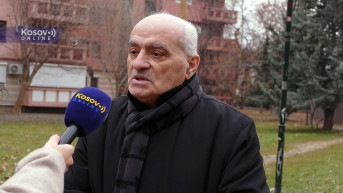
Security expert from Skopje, Ljubomir Gjurcevski, warns that the tragic event in Cetinje once again highlights the urgency of collecting weapons in illegal possession of citizens at a regional level, and the failure to carry out this action raises suspicions that these weapons are being "preserved" for new security challenges in the Western Balkans.
"As a security expert, I am concerned and it leaves room for me to suspect that someone may be playing with fire and that other security crises are being prepared in this region instead of carrying out an action in which all illegal weapons in the hands of citizens, or criminal groups, would be collected,"
Gjurcevski stated for Kosovo online. He believes that this action should be carried out with the support of the EU and the USA.
"If they are strategic partners, then address this issue of illegal weapons which is in huge quantities. A large convoy could be collected and sent to Ukraine. We urgently need this action which has been considered so far," said Gjurcevski for Kosovo online.
He notes that in North Macedonia, various types of weapons are involved, illustrated by the data about weapons found in the region of Aracinovo.
"Rocket launchers, RPGs, bazookas were found... It's about weapons of 82 mm caliber, which is quite dangerous. Tank and anti-tank mines were also found, meaning all that is military formation weapons," emphasizes Gjurcevski.
In the Western Balkans, he warns, there is a "huge amount" of illegal weapons left after the armed conflicts that ended in 2001.
"If we talk about illegal weapons in the region, they are in huge quantities and are in the hands of citizens across the region, we can also talk about Croatia, Bosnia and Herzegovina, Montenegro, Kosovo, in Macedonia, Serbia, Albania, etc. Especially after all those military actions that happened to us until 2001. Then a huge number of weapons, or what we colloquially call formation weapons, or rifles with oval barrels, automatic rifles, remained in the hands of citizens or in the hands of all those who participated in all those combat actions," says Gjurcevski.
He believes that all previous actions that were done to collect them did not yield the expected result and resulted in tragic events, like the one in Cetinje on January 1 or in Belgrade in 2023.
"I think it was all a farce that we are now paying dearly for, given that some of that weaponry is available to minors, as well as weapons that citizens possess with a permit. This is the case of the Ribnikar Elementary School in Belgrade, a case in which the father owned weapons with permits, but made it available to a minor child under 14 years old, and nine young people were killed. As well as what happened in Montenegro. It's about an older person who may have expressed his frustrations resulting from a quarrel. But the decision to use firearms is again related to his mental state," this expert emphasizes.
He believes there is also a problem in the fact that the peoples of the Western Balkans like to own weapons and that it is part of the "family tradition."
"Therefore, I warn that we need to ensure that this weapon at least is not accessible to minors and children, considering that unfortunate events can happen," says Gjurcevski.
He also warns of the problem of organized criminal groups in the region.
"If we look at the statistics of the public prosecutor's office and police, you will see that in the period after 2001, the critical year for ending military conflicts in the Balkans, you will see that we have over 150-160 to 200 murders of organized groups in clashes for territorial supremacy. Starting from Croatia, Bosnia... you see all these shootings within the Serbian mafia, in the Kosovo underworld, in the Macedonian underworld. In Montenegro, we had the murder of the former director of Montenegrin police," Gjurcevski recalls.
He sees the solution in the urgent enactment of appropriate laws that will regulate and drastically limit the possibility for citizens to possess firearms.
"It should be crystal clear to us that a very small share of murders, from those horrific and violent ones in shootings by organized criminal groups, occurs with firearms that are possessed with permits. This weapon is most often used in blood crimes caused by property-law relations, inheritances, family disputes... Hunting rifles are used, the weapons that are possessed with permits," this analyst explains.
Prevention of such tragedies must begin with the family, but also involve school educators and sociologists who should work with children.
"Attention should be paid to the harmfulness of social networks, the violence that is presented on social networks, to enhance educational work with children and minors, to point out all these situations. But again I say that the key factor is the family, the factor of raising children away from the dangers of firearms and from creating hatred, here I mean mutual, peer, interethnic, inter-confessional, inter-religious...," Gjurcevski specifies. Preventive measures would, he adds, involve the inclusion of relevant ministries.
"This would be a series of preventive measures that should be taken by the Ministry of Education, the Ministry of Labor and Social Affairs, because of the family and status, the social status of some children. Poverty is one of the factors for increasing crime. All this needs to be taken into account and a strategic regional program should be created in which equal measures will be built in all areas. We all talk about open borders, community, mutual contact, economic development... Let's work together on collecting firearms and educating children, improving the educational system and social policy," Gjurcevski advises.


0 comments