
Two decades of Montenegro’s independence: What kind of relations has it built with the region?
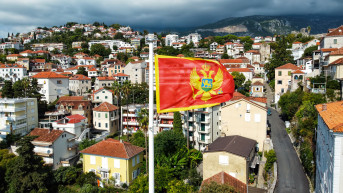
Montenegro today marks the 20th anniversary of declaring independence from the state union it shared with Serbia, with celebrations set to last three days. Whether performances by Ricky Martin and Robin Schulz at Independence Square in Podgorica will help ease tensions that have recently flared with Belgrade remains to be seen. Sources interviewed by Kosovo Online offer differing assessments of Montenegro’s current relations with the region. Some believe relations with Serbia are “on shaky ground,” ties with Kosovo remain difficult to resolve, relations with Albania are generally calm, while the issue of Prevlaka with Croatia remains unsettled.
Written by: Katarina Saicic
The central celebration is expected tonight in Podgorica. Prime Minister Milojko Spajic said last night that Montenegro, two decades after restoring its independence, has an idea that unites and guides it, and whose realization has never been closer. According to him, that idea is a European Montenegro and the project of a united Europe.
Much has changed for Podgorica over these 20 years. Montenegro joined NATO on June 5, 2017, and some predict that it will become the next country admitted into the European Union.
The celebration is also taking place just ten days after Montenegro’s youngest and smallest municipality — Zeta — adopted a declaration revoking recognition of Kosovo’s independence within its territory. Analysts say it is a symbolic act, but stress that it could nevertheless trigger a wave of similar declarations in municipalities where Serbs hold a majority.
Ahead of the anniversary, tensions have emerged on the Belgrade-Podgorica axis. Serbian President Aleksandar Vucic declined an invitation to attend the event in Podgorica, saying he did not wish to celebrate separation from Serbia, after which Montenegro’s Ministry of Foreign Affairs responded that the country was not celebrating its independence against anyone.
These latest developments raise the question: what kind of relations has Montenegro built with the region over the past two decades?
Failure of the Policy of Regional Closeness
Historian Milan Gulic told Kosovo Online that Montenegro’s policy of maintaining regional closeness with its neighbors has failed because relations are not at their best.
According to him, Montenegro’s attempt to maintain good relations with everyone in the region often came at its own expense and represented a blow to its dignity and historical identity.
“Montenegro has poor relations with Croatia, poor relations with Serbia, insufficiently good relations with Kosovo, while its relationship toward Bosnia and Herzegovina is largely based on supporting whatever the strongest political currents in Sarajevo try to push through. That is not a relationship of mutual respect, nor an equal neighborly and friendly relationship. It is something entirely different,” Gulic said.
As he points out, unresolved issues between Montenegro and Kosovo remain open.
“It seems that the only important thing was for Montenegro to recognize Kosovo’s independence and establish diplomatic relations with Kosovo, and that was all that interested Pristina and those who encouraged Montenegro to do so. Everything else — the life of the Montenegrin minority in Kosovo, border demarcation between Kosovo and Montenegro, even sporadic incidents along that border line — remains unresolved, and it is questionable how it will be resolved, because it is difficult to resolve relations with something that was once part of your territory. I would remind you that before unification, Montenegro’s state territory included significant parts of Metohija. Montenegro’s relationship toward Kosovo therefore cannot be as simple and easy as some in Brussels, Washington, or now Podgorica imagine,” Gulic stressed.
In his view, celebrating 20 years of independence is devastating.
“You are celebrating the restoration of statehood through a referendum that was, to put it mildly, irregular — people would say stolen. I’m not sure there is anything to celebrate,” he said.
Regarding the recent decision by the Municipality of Zeta not to accept Montenegro’s recognition of Kosovo’s independence, Gulic believes it carries no legal significance.
“That is not within the jurisdiction of municipalities; no municipality can conduct the foreign policy of a state. Nevertheless, it speaks for itself that a significant part of Montenegro, a significant part of the people of Montenegro, still historically knows very well what Kosovo means to Montenegro, regardless of whether those people identify as Serbs or Montenegrins,” he concluded.
Marko Stojanovic, a journalist with Euronews in Podgorica, told Kosovo Online that Montenegro has sought to maintain good relations with its neighbors since restoring statehood.
“That has been the priority of all governments, although it can be debated in different ways how successfully that good neighborly relationship has been maintained. Relations with Serbia are on glass legs. There have been tensions with Croatia in recent years regarding Prevlaka and the training ship Jadran, but more or less with everyone else there seem to be no open issues,” Stojanovic said.
Kosovo Remains an Open Issue
When it comes to Kosovo, Stojanovic says it has remained an open issue for the past 18 years, ever since Montenegro recognized Kosovo’s independence in 2008.
“A significant number of Montenegro’s citizens opposed that decision, and even today it continues to provoke divided opinions. Especially considering that in 2008, when the decision was made, more than 85 percent of Montenegro’s population was against it. It is a topic that divides the public and even divides the ruling coalition, considering that Montenegro’s governing coalition is highly heterogeneous and includes representatives of the Serbian community, the Albanian minority, Bosniaks, and of course representatives of the Montenegrin nation,” Stojanovic said.
In his opinion, the adoption of the declaration on revoking recognition of Kosovo in the Municipality of Zeta is mainly symbolic.
“That resolution is not legally binding and has no legal consequences. It is not of essential significance for the Serbian population in Montenegro, but the act itself could represent a ‘light at the end of the tunnel,’ meaning that at least internally, one municipality decided not to recognize Kosovo’s independence. A good portion of the Montenegrin public did not view this move favorably. Albanian parties that are part of the coalition at the state level condemned it. However, everyone is aware that the decision produces no legal effect. On the other hand, representatives of Serbian parties in power in Zeta welcomed the decision. It was approved by the Serbian population in Montenegro, but again, it has no legal consequences and concerns nothing beyond the Municipality of Zeta,” he noted.
“Montenegro Shaped Europe’s Political Map”
Diplomat Albert Prenkaj from Pristina told Kosovo Online that by declaring independence, Montenegro helped shape Europe’s political map.
“Relations between Montenegro and Kosovo have been on a so-called ‘standby’ mode over the past five years. Neither side has distinguished itself through interstate activities. It is noticeable that Montenegro has positive relations with Albania as a NATO partner, and they also share a positive rivalry in the process of European Union integration. Recently, due to Serbia’s and the Serbian Orthodox Church’s constant efforts to interfere in internal issues, social, cultural, historical, and even religious ties, relations between Montenegro and Serbia have become strained and are at their lowest level since independence until today. I believe Western Balkan countries should focus on the priority of European integration and NATO membership,” Prenkaj assessed.
According to him, Montenegro is a constructive member of the Western Balkans region.
“Over these 20 years, Montenegro’s regional and foreign policy has had positive momentum. In the meantime, Montenegro joined the most powerful force known in world history — NATO — while in EU integration negotiations it has opened 33 chapters, 14 of which have been closed. In this process Montenegro is the leader, ahead of Albania, Serbia, and North Macedonia. Montenegro’s case is inseparable from the interference of non-Western geopolitical interests in Southeast Europe. Current tensions in Montenegro are caused by identity issues and diplomatic disputes with neighboring Serbia and Croatia, while the priority above all priorities is EU membership projected by 2028,” the diplomat emphasized.
He also recalled that Montenegro and North Macedonia did not recognize Kosovo immediately after its declaration of independence.
“Relations between Podgorica and Pristina persisted on a friendly, neighborly level, occasionally with tendencies toward tension. The issue of demarcation between Kosovo and Montenegro primarily produced tensions within Kosovo itself between the then-government led by President Hashim Thaçi and Prime Minister Isa Mustafa on one side, and the opposition led by Albin Kurti on the other. The demarcation agreement was signed on August 26, 2015, in Vienna and officially ratified by Kosovo in 2018. It entered into force on June 4, 2018, after the exchange of diplomatic notes in Podgorica. That agreement was a precondition for Kosovo citizens obtaining visa-free travel to the Schengen Zone, which they finally received on January 1, 2024,” Prenkaj explained.
Focus on European Integration
Former Albanian chargé d’affaires in Kosovo Gezim Podgorica assessed that Montenegro’s relations with its neighbors over the past 20 years have been diverse, and that Podgorica’s main focus today is European integration, where it currently leads the region.
“In recent times there has been enthusiasm regarding the implementation of all tasks left by the EU for a country like Montenegro in order to join. Compared to other Western Balkan countries, you can see that the political climate there is not calmer than among its neighbors — quite the opposite. Political tensions have existed for many years, but it seems, and this is a fact, that they are more effective in implementing processes that accelerate integration steps,” he said.
He stressed that the influence of Serbia and the Serbian Orthodox Church in Montenegro remains very strong.
“Despite separation from Serbia and independence, Montenegro certainly maintained its connection — perhaps even a spiritual connection — between a large part of the population and Serbia. That does not apply to all ethnic groups. The pro-Serbian segment is dominant, I am not saying it is the majority, because that is something else. The majority belongs to Montenegrins. However, this pro-Serbian segment is dominant in the current government as well, considering the ties established with the current government in Serbia, resulting in greater influence of Serbian policy even in decision-making,” Podgorica said.
In his view, relations between Albania and Montenegro have generally been calm.
As for relations with Croatia, Podgorica says Croatia is “farther away” from Montenegro politically, while Bosnia and Herzegovina faces problems of its own.
“The situation is not positive. The fact that Bosnia itself is ‘sailing’ through turbulent waters, not even knowing in which direction it should go, has an impact here. The Dayton Agreement created calmness, but it is a calmness that seems to conceal a storm,” he concluded.
Correct Relations
Analyst Blagojce Atanasovski from Skopje told Kosovo Online that since becoming independent, Montenegro has gained momentum toward Euro-Atlantic integration while simultaneously maintaining correct relations with its neighbors.
“After the dissolution of the Serbia and Montenegro union, this small Balkan state embarked on the path of Euro-Atlantic integration. Montenegro is already a full-fledged member of NATO and, according to all announcements, in the foreseeable future it will become the 28th member state of the European Union. This means Montenegro has definitively oriented itself as a state and society toward full integration into Western alliances,” Atanasovski stated.
Regarding Montenegro-Kosovo relations, Atanasovski says they are within normal Balkan standards.
“We know the Balkans are a fragile and turbulent region with an extremely difficult past. Thirty or forty years ago, during the breakup of the former Yugoslavia, wars and military conflicts occurred in much of the Balkans. From that perspective, I think relations between Montenegro and Kosovo are correct and there have been no dramatic deteriorations. Relations remain within the boundaries of normal diplomatic and social relations between two Balkan states, without major unresolved disputes like those North Macedonia had with Greece or Bulgaria. Such problems do not exist between Montenegro and Kosovo. I hope relations will remain good in the future,” he said.
As for Montenegro’s relations with the rest of the region, he considers them fairly correct.
“There is one issue, as far as I am informed, regarding the demarcation of Prevlaka with Croatia, but I do not believe that is a crucial issue that would lead Croatia to block Montenegro’s accession to the European Union. There are no such announcements. As for its other neighbors — Albania, Kosovo, and even Serbia — Podgorica has fairly correct and good relations. There are always certain frictions between Montenegro and Serbia because of the large Serbian minority in Montenegro and the status of the Serbian Orthodox Church, but I believe the relations are fairly good and within the boundaries of normal communication between Balkan states,” the analyst concluded.



0 comments