
Two months of the implementation of the CBK Regulation: Dinar and life in small bites
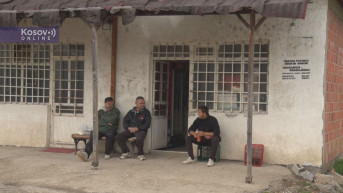
Two months have passed since the implementation of the CBK Regulation banning the dinar, and tension among Serbs in Kosovo is growing day by day. With salaries, pensions, and other incomes being withdrawn "in small bites", their daily lives are further disrupted. Although Pristina attempts to portray the CBK decision as a "technical issue," the problem is of a political nature, with decisions being made by those sitting in Brussels, for example, rather than those standing in lines outside the branches of the Postanska Stedionica Bank in Kosovo.
In many areas, there is a shortage of groceries and medicines, and it's increasingly difficult to access dinars, forcing many to travel more than 100 kilometers. "You can't buy a month's worth of life elsewhere," says one interviewee for Kosovo online.
Lajcak optimistically hopes that differences will be overcome at the meeting of representatives from Belgrade and Pristina this Thursday, while the US and EU continue to urge both sides to seek a solution through negotiations, although analysts assess that "seeking a solution" more likely refers to how to keep the CBK Regulation in force.
Even if that weren't the case, it's impossible to ignore the irony of the situation in which negotiations are needed for Serbs in Kosovo to receive what they've rightfully earned.
The greatest irony, however, is that dinars are precisely where they originated – in Kosovo.
"We're managing day by day," says one elderly resident of North Mitrovica for Kosovo online, describing the situation.
"When there's money, we take it, when there isn't – we don't. When I have dinars, I buy, and when I don't... you can't milk a bull with no horns," he emphasizes.
Radomirka Jovanovic notes that much has changed in two months.
"Even the small pension I've earned, I have nowhere to withdraw it. I have to go four times to collect it. I don't know what the situation is like at ATMs, but when you enter the bank, you wait and they don't give it to you all at once, you have to go four times for one pension, that's how it is. A lot has changed, nothing is good for us old folks. What can we do... as long as we can, we can," Jovanovic says.
"It's difficult, but we have to endure," says resident Ranko Janackovic from Priluzje.
"This is God-awful, it's hard for us. We are old, sick, you see, instead of being able to collect our salaries in our own town, we have to travel almost 100 kilometers," Janackovic said.
"It's hardest for people from the interior of Kosovo," says pensioner Rodoljub Vasovic, but he emphasizes that they will not be driven away from Kosovo.
"I'm a pensioner, our souls know what it's like for us. We're still close to Raska here, but for people from the interior of Kosovo, may God help them. What can I tell you, we're making do as best as we can. You can see the line outside the Postal Savings Bank, whether there's money or not, they give it out bit by bit. I would ask all international factors to do something about this issue, at least for those of us who have stayed here," Vasovic said.
"We manage to get groceries in our shops; whatever is not available here, we buy there. We're often used to going without some groceries because at that moment, you can't find them in our shops, and you can't buy everything in Raska. You can't buy a month's worth of life elsewhere; it's impossible; we've become adaptable," emphasizes Snezana Denic - Miljojkovic.
Tomislav Tomic from Klokot believes that it's hardest for the elderly who are in poor health.
"We were born here; we want to stay at home. There are no dinars; I'm still in good health, but there are people who can't go to central Serbia. How will they manage for money?" Tomic wonders.
The situation is the same in Strpce. As time passes, dealing with dinars becomes increasingly difficult, and the fact that Serbian goods are not available in stores, nor are medicines from Serbian manufacturers, further complicates matters. Svetozar Janicijevic emphasizes that he is in a difficult situation, especially because he has a wife whom he takes care of and for whom he cannot obtain medicines as before from local pharmacies.
"It's very difficult; I have a wife who cannot take care of herself and receives home care, and we both receive social benefits. It's very difficult; we don't have the money to go to the administrative crossing. We hope for the better and that something will be resolved," Janicijevic said.
The most affected by the implementation of the CBK regulation are the most vulnerable citizens, says political scientist Ognjen Gogic, summarizing the past two months since the regulation on the abolition of the dinar came into force. He reminds that the main problem was the physical prevention of dinar importation into the territory of Kosovo, which prevented citizens receiving incomes from Serbia from withdrawing dinars.
"That is actually the most significant change that has occurred and has made life more difficult for people. Of course, in the meantime, citizens have sought alternative methods to cope with this situation, so they started organizing themselves to go to central Serbia to withdraw money there. Meanwhile, modular facilities of the Postanska Stedionica Bank have been set up near the administrative crossings, and the Postanska Stedionica Bank managed to pay out part of these entitlements to citizens in euros," Gogic recalls.
As he points out, this somewhat mitigated the negative consequences that the CBK decision had on citizens of Serbian and other communities receiving money from Serbia.
"It has not yet produced the full effects, but the most vulnerable citizens have paid the highest price, primarily persons with disabilities or, for example, elderly individuals receiving pensions at the Post Office, where a solution has not yet been found. In the meantime, Pristina has maintained its, of course, irreconcilable, uncompromising stance, but has made some concessions. Firstly, it accepted to discuss this issue after all, although initially, this possibility was rejected because it was considered an internal issue of Kosovo that Kosovo could unilaterally address," our interlocutor emphasizes.
According to him, the CBK allegedly adopted certain adaptation measures "which no one knows whether they have even come into force, whether they are being implemented, and they certainly have not made this situation any easier."
"A transitional period of three months was introduced, during which Kosovo committed to refrain from enforcing repressive measures to implement this regulation. So, at the beginning of the month, we had actions by the Kosovo Police where dinars intended for pension and social assistance payments were confiscated in Ugljar, Kosovo Polje, and Gorazdevac in Metohija. This did not happen again. So, there was a very harsh reaction, primarily from the US, and after that, the KP was no longer used to ensure the implementation of that decision, and generally, Kosovo institutions refrained from, for example, punishing economic entities - catering facilities or retail stores, primarily in northern Kosovo, but also in other Serbian communities, which still accept dinars as a means of cash payment," explains Gogic.
The tactic that Pristina uses is to present the whole problem as a technical issue, but in fact, as he says, technical solutions are sought within the imposed framework.
"So, Pristina's stance is that the CBK decision is irrevocable and has come into force, and then they are allegedly ready to seek technical solutions within that decision, within the new reality it has created. It is primarily a political issue with which Pristina wanted to exert pressure on both Serbia and Serbs in Kosovo in the dialogue," Gogic believes.
He reminds that Pristina has previously employed this tactic "to create crises", always hoping to gain the international community's support, expecting that a way out of the crisis will be sought through an agreement between Belgrade and Pristina, which would imply at least de facto recognition.
Deputy Director of Community Building Mitrovica Nemanja Nestorovic says that Serbs in Kosovo have had the opportunity to experience the reality of life in Kosovo and the rash decisions of the authorities in Pristina over the past two months.
"As we know, ATMs have been installed along the administrative crossings with Kosovo, which has somewhat eased the lives of citizens, but this is not a long-term solution that can help correct the situation. We also have the stubbornness of the authorities in Pristina, as I said, those suspensions and decisions regarding the dinar, so it is still uncertain what the next period will bring," Nestorovic notes.
Our interlocutor emphasizes that the issue of the dinar could be resolved by establishing the CSM, but adds that the authorities in Pristina are unwilling to take such a step.
"We heard that delegations from Belgrade and Pristina had a meeting with Lajcak about ten days ago. Both sides, as before, came out with contradictory statements, accusing each other of being unconstructive. What we have on the table now are American proposals for resolving the dinar issue in Kosovo. However, what might solve the problem in the longer term and more concretely is the establishment of the CSM, which the authorities in Pristina are stubbornly unwilling to bring about," he concludes.
Nestorovic notes that he used to be more positive and thought that this political issue would be resolved, but he says it is evident that it has significantly worsened the lives of Serbs.
"We have a large number of people affected by this decision. People adapted to the situation shortly after the initial shock; however, there is no long-term and concrete solution in sight, and that is what adds to the fear. People still believe that this move by Pristina is another in a series of decisions aimed at driving Serbs away from Kosovo, and that's what we hear from people because we are citizens who live and work in Kosovo, and this is another move towards further complicating people's lives and their eventual departure, which people fear. We also have a situation with enormously high electricity bills. This has added even more unrest to the list of already unresolved issues affecting the community in Kosovo," Nestorovic concludes.
Aleksandar Sljuka from the NGO "Nova druStvena inicijativa" stated for Kosovo Online that the most vulnerable residents who do not have bank cards or cannot travel to collect income from the budget of the Republic of Serbia are the hardest hit by the regulation.
"This regulation has hit everyone hard, but the most affected are the most vulnerable categories, people receiving social assistance, sick pensioners, people who cannot withdraw income via ATMs, or those who do not have cards, like about 4,700 pensioners who receive pensions in cash. They cannot even use those modular ATMs near the crossings. It's hardest for them," said Sljuka.
He adds that currently, there are no dinars in northern Kosovo.
"There were some in some northern municipalities, and now there are none, or very few, from what I hear. People are now forced to go to Central Serbia and spend time and money on fuel because some need to travel up to 100 kilometers in one direction to reach their destination. Institutions of the Republic of Serbia that still operate in Kosovo, schools, hospitals, are affected, and they cannot function as before," emphasized our interlocutor.
When asked about his expectations for the Brussels talks on April 4th and whether he believes the dialogue can continue, he emphasizes his belief that some solution will be reached.
"However, we have already entered into some processes of dismantling institutions and changes within EU institutions. The elections have not yet taken place, but there was an announcement that the Special Envoy Miroslav Lajcak will most likely become the ambassador to Switzerland. He is already seen as someone whose mandate is expiring; he is not someone who can contribute to any key changes because he is at the end of his mandate, and I think the parties will exploit this period. Kosovo will postpone the solution to this decision on the dinar and further delay the formation of the Community of Serb-majority Municipalities (CSM). After that, we enter the European Parliament elections, we have the US elections in November, we most likely have the Kosovo elections, and we will also most likely have local elections in northern Kosovo, and these are all processes that will divert attention from the dialogue. Everyone is waiting for these processes to start so they can have an excuse to prolong everything and not start the normalization process," emphasized Sljuka.
In his opinion, the decision of Pristina regarding the dinar is a shrewd move by Albin Kurti, which he has implemented before, when it comes to license plates.
"He actually wants to integrate Serbian institutions and the Serbian community without implementing the Community of Serbian Municipalities. As we can see, he is succeeding in that, and here we see a conflict between what US and EU officials are saying and what is happening within the dialogue," emphasized our interlocutor.
He points out that the US and EU are seeking a solution for the decision of the CBK to remain in force, but some form and possibility of how Serbs and other communities will receive money that is due to them from the Republic of Serbia remain uncertain.
"Here we see one problem; they practically agreed that this would not be resolved within the formation of the CSM. Why they agreed, I'm not sure. One conclusion that suggests itself is that US and EU officials have done this because changes are imminent, not so much in the European Parliament, but perhaps there will be greater changes in America, maybe a new administration that will not be so sympathetic to Kosovo, and here we can interpret this decision on the dinar as a potential entry into the Council of Europe. They want to solidify Kosovo's sovereignty as much as possible until major changes occur in the international sphere, so in connection with that, we can interpret this decision on the dinar," concluded Sljuka.

0 comments