
Two years since the Agreement on the Path to Normalization between Kosovo and Serbia – Who holds the lifeline?
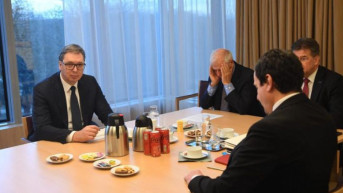
Countless calls from Brussels to Pristina and Belgrade to implement the Agreement on the Path to Normalization without delay over the past two years have yielded no results. As a result, analysts now diagnose it as "clinically dead." However, European capitals remind us that this document cannot expire and remains binding. Some believe that the U.S. might breathe life into it. Without a lifeline, its prognosis looks grim.
Written by Dusica Radeka Djordjevic
The Agreement on the Path to Normalization of Relations Between Kosovo and Serbia was accepted on February 27, 2023, by Kosovo's Prime Minister Albin Kurti and Serbia's President Aleksandar Vucic during a meeting with the then-EU High Representative for Foreign Affairs Josep Borrell and EU Special Representative for Dialogue Miroslav Lajcak.
"For Serbs in Kosovo, the agreement means more security, safety, and predictability when it comes to protecting their rights," Borrell stated after the deal was reached. However, in 2025, the reality for Kosovo Serbs appears to be the complete opposite.
For two years, Pristina has acted as if Article 10 of the agreement—which mandates the implementation of all previous dialogue agreements, including the formation of the Community of Serb Municipalities—does not exist. Meanwhile, Belgrade has been criticized for failing to respect Article 4, which states that Serbia will not oppose Kosovo's membership in any international organization.
The implementation of this so-called "historic agreement" has been reduced to mutual recognition of license plates.
Neither the document accepted in Brussels nor its accompanying annex agreed upon in Ohrid on March 18 has been signed. Despite the EU’s persistent claims that the agreement is legally binding for both parties even without signatures, Kosovo's Prime Minister Albin Kurti insisted on signing it as a guarantee for its implementation.
Today, the German embassy in Kosovo reiterated that the agreement remains binding for both sides and serves as the foundation for further negotiations. They emphasized that the Agreement on the Path to Normalization and its implementation annex cannot expire, expressing hope for new momentum in the dialogue under the leadership of the new European Commission and its High Representative, Kaja Kallas, along with the new EU Special Representative for Dialogue, Peter Sørensen.
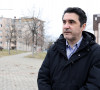
However, Pristina-based political analyst Artan Muhaxhiri does not share Berlin’s enthusiasm. He believes that Pristina and Belgrade’s willingness to engage in substantive rather than merely formal talks is nonexistent.
"The agreement is clinically dead. Given the current situation in Kosovo and Serbia—where both leaders face numerous internal issues, with Kurti struggling with his government and Vucic dealing with protests—I don’t see any changes happening. This was a missed opportunity because implementing the agreement would have been far better for both Kosovo and Serbia, as there is no alternative. Time has been wasted, and we are once again returning to the same positions as before," Muhaxhiri told Kosovo Online.
Speaking about the key points of the agreement that Belgrade and Pristina interpret differently, Muhaxhiri emphasized that the most important issue remains the formation of the Community of Serb Municipalities.
"Kurti surprised the public when he acknowledged that the CSM is included in the agreement. However, he then found a new issue with the timing, as he insists on a sequential implementation of the agreement, while Serbia wants to focus on the Association. This is all a result of a lack of political will—when there is a will, a solution can always be found. But neither Kurti nor Vucic have the will or the desire to finalize this agreement, and as long as the leaders lack the energy and determination, things will remain the same," says Muhaxhiri.
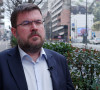
Dimitrije Milic, Program Director of the organization New Third Way, tells Kosovo Online that the Agreement on the Path to Normalization between Kosovo and Serbia has largely remained unimplemented because neither Belgrade nor Pristina saw any tangible rewards for fulfilling unpopular commitments.
"I assume that neither government was willing to sacrifice its political capital, as they did not perceive a quick and easily communicable benefit for their domestic audiences that would justify implementing controversial and unpopular measures—such as the Community of Serb Municipalities for Pristina, or allowing Kosovo to join international organizations for Belgrade," Milic explains.
He argues that political considerations have posed a greater obstacle than the content of the agreement itself.
"Both sides have used different political reasons to justify why certain elements have not been implemented. The real issue is that the political climate between the two ethnic communities has not improved over the past two years—in fact, tensions have escalated in several instances over the last year and a half. That is the biggest barrier," Milic points out.
He notes that while international partners have not exerted decisive pressure on both sides to implement the agreement, the EU has nevertheless incorporated elements of it into Negotiation Chapter 35 for Serbia's accession process.
"It is a setback that they did not insist on the agreement, but that is understandable given the crises in Europe and the world, especially with the wars in the Middle East and Ukraine, and now the uncertainty surrounding Trump's return and ongoing global instability," he assesses.
Discussing the EU’s likely approach to the agreement in the future, Milic reminds that it was supported by former German Chancellor Olaf Scholz and French President Emmanuel Macron, who remains in office until 2027.
"For Macron, this agreement is an important part of his legacy, and he will likely continue working on it in the coming years. Scholz is no longer in office. We will see to what extent the new German government under Chancellor Merz will be interested in implementing the agreement," Milic says.
Given that the Western Balkans Growth Plan ties financial aid to constructive dialogue between Belgrade and Pristina, Milic suggests that this could be a mechanism to pressure both sides into fulfilling their obligations.
"We will see to what extent European countries will insist in this direction. A complicating factor is that we still do not know what the new government in Pristina will look like in terms of format and strength, which will affect its position on the agreement. This has already contributed to the failure to implement at least some agreed-upon points. However, if Pristina's new government is weaker or requires coalition partners, the overall dynamics could shift," Milic explains.
Political analyst Predrag Rajic believes that the implementation of the agreement will depend on who forms the government in Pristina after the February 9 elections. As long as Albin Kurti remains in power, he argues, no previously signed, agreed, or coordinated agreements will be implemented, nor will any new ones be made in favor of the Serbian community.
"Kurti is an extremist and highly radical. His entire political agenda is focused on stripping Serbs of their rights, politically breaking the Serbian community in Kosovo and Metohija, and continuously portraying Serbia and the Serbian people as enemies of Albanians in Kosovo and Metohija. Through cheap populism, demagoguery, and chauvinism, he seeks to instill fear among Kosovo Albanians, turning them against their Serbian neighbors and using that as a means to keep them loyal to him—presenting himself as their protector against a so-called hostile Serbian factor," Rajic asserts.
According to Rajic, the European Union, as a mediator in the dialogue, would need to exert much stronger pressure on Kurti than it has so far in order to change his stance.
"It has become clear that the pressures applied so far have been cosmetic, superficial, and none of them have actually yielded any results. If the European Union truly wants change, it must be much more radical with Kurti, but I don't see a consensus among EU member states for such an approach. Some countries would certainly block that, and in fact, there are already countries openly advocating for the removal of all restrictive measures against Pristina, despite the fact that Pristina has not changed its behavior at all, and it was that very behavior that led to the imposition of those measures," says Rajic.
The only ones who could change the situation and compel Pristina to adopt a different approach, he believes, are the Americans.
When asked whether the new U.S. administration will focus on ensuring the implementation of the Agreement on the Path to Normalization or if it will aim to negotiate new agreements between the two sides, Rajic says both are possible.
"I wouldn’t be surprised if they try to initiate a new agreement that incorporates elements of previous ones. We, of course, continue to insist that what was signed in Brussels in 2013 and elaborated upon in 2015—specifically the Community of Serb Municipalities—be fulfilled. That is our ultimate demand, and we are not backing down from it. It was signed, and it must be implemented. If the Americans were to create a new agreement, it would certainly contain many elements from previous agreements, and I believe in the proactive approach of U.S. policy. I think Serbia is facing very good days in its relations with the Americans; that’s the natural state of affairs," Rajic concludes.

0 comments