
Rajic: With Kurti in power, the implementation of any agreement cannot be expected
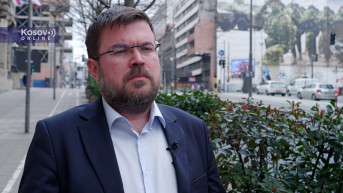
As long as Albin Kurti is in power in Pristina, we cannot expect the implementation of any agreement that has been signed, agreed upon, or previously harmonized, nor can we expect the conclusion of any new agreements that would benefit the Serbian people, analyst Predrag Rajic told Kosovo Online on the second anniversary of the Belgrade-Pristina Agreement on the Path to Normalization, reached as part of the Brussels dialogue.
Rajic is not optimistic that any agreement from the dialogue will be fully implemented while Kurti remains in power, nor that there will be an opportunity to reach a sustainable agreement as long as, as he puts it, Kurti holds the main influence over Albanians in Pristina.
"Kurti is an extremist and extremely radical, and his entire policy is aimed at stripping Serbs of their rights and politically breaking the Serbian community in Kosovo and Metohija. He continuously portrays the Serbian state and people as enemies of Albanians in Kosovo and Metohija, using cheap populism, demagoguery, and chauvinism to instill fear among Albanians and turn them against their Serbian neighbors. This is how he tries to maintain his power, presenting himself as their protector against what he characterizes as an enemy factor – namely, the Serbian factor. Kurti seeks to cover up his lack of success in other areas, such as fighting corruption, building infrastructure, or strengthening the economy, by adopting such stances," Rajic states.
According to him, the European Union, as a mediator in the dialogue, must exert far stronger pressure on Kurti than it has so far in order to change his stance.
"It has been shown that the pressures so far have been merely cosmetic and superficial, producing no real results. If the European Union truly wants change, it must take a much more radical approach toward Kurti. However, I do not see a consensus for such a move among EU member states. Some countries would certainly block such an approach, and there are already states openly advocating for the removal of all restrictive measures against Pristina, despite the fact that Pristina has not changed its behavior in the slightest – the very behavior that led to the imposition of those measures in the first place," our interlocutor explains.
The only ones capable of changing the situation and persuading Pristina to behave differently, in his view, are the Americans.
"My only hope is that Kurti may be forced to act differently, or that a future government in Pristina will behave differently under American pressure. The United States is the only entity with sufficient leverage to push the Albanians toward a different course of action. The EU is a bloc of 28 states with widely differing views, and for them to agree on a more radical policy, a miracle would have to occur. Unfortunately, in this context, miracles are rare," Rajic emphasizes.
When asked whether the new US administration will focus on implementing the Agreement on the Path to Normalization or aim to reach new agreements between the two sides, Rajic says that both are possible.
"I wouldn’t be surprised if they try to initiate a new agreement that incorporates elements of previous agreements. Of course, we continue to insist on the implementation of what was signed in Brussels in 2013 and elaborated in 2015 – the establishment of the Community of Serb Municipalities. This is our ultimate demand, and we will not give up on it. It was signed and must be implemented. The Washington Agreement also stated that previous Brussels agreements should be implemented, yet Pristina has done nothing in that regard, while we have fulfilled all our obligations. If the Americans were to create a new agreement, it would likely be largely based on elements of previous agreements, and I believe in this proactive approach by US policy. I think Serbia has very good days ahead in its relations with the US, as this is the natural course of events," Rajic asserts.
For most of history, he adds, Serbs and Americans were allies, and their cultures are compatible. "The sad period" of the 1990s and its aftermath was an unfortunate episode, but now things are returning to their natural course, where Serbs and Americans can once again be friends, good partners, and even allies.
"And when that happens, I believe that what is at least the minimum, and later the optimum, of Serbian national interests – everywhere, including in Kosovo and Metohija – can be recognized," Rajic concludes.



0 comments