
Milic: Agreement on the Path to Normalization an important part of Macron’s legacy
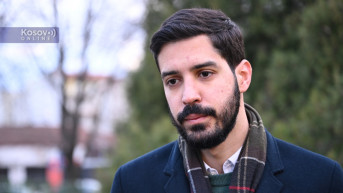
The Program Director of the New Third Way organization, Dimitrije Milic, told Kosovo Online that the Agreement on the Path to Normalization between Kosovo and Serbia, reached two years ago today, remains largely unimplemented because neither Belgrade nor Pristina saw any tangible reward for fulfilling unpopular commitments.
"I assume that neither government was willing to sacrifice its political capital, nor did they see a quickly attainable and easily communicable reward for their domestic audiences that would justify implementing major controversial provisions, such as the Community of Serb Municipalities for Pristina or allowing Kosovo’s membership in international organizations for Belgrade," Milic stated.
He emphasizes that political factors were a greater obstacle than the content of the agreement itself.
"Both sides have used various political justifications to explain why certain elements were not implemented. The real issue is that political relations between the two ethnic communities have not improved in the past two years; in fact, tensions have escalated in multiple instances over the past year and a half. That is the biggest barrier," Milic pointed out.
He says that although international partners have not been firm in pressuring both sides to implement the agreement, the EU has incorporated elements of the deal into Negotiation Chapter 35.
"It is a setback that they did not insist more on its implementation, but this is understandable given the crises in Europe and the world, especially the wars in the Middle East and Ukraine, as well as the uncertainty surrounding Trump’s return and ongoing global instability," Milic assessed.
Discussing the EU’s likely approach toward the agreement moving forward, Milic notes that the deal was originally backed by former German Chancellor Olaf Scholz and French President Emmanuel Macron, who remains in office until 2027.
"For Macron, this agreement is an important part of his legacy, and he will likely continue pushing for it in the coming years. Scholz, however, is no longer in power, so we will have to see to what extent the new government under Chancellor Merz will be interested in implementing the agreement," Milic said.
The arrival of Donald Trump and strained US-EU relations further complicate the agreement’s implementation, Milic added.
"Not because of the Balkans specifically, but due to broader geopolitical issues. The Western Balkans might be an area where their interests still align, but that does not necessarily mean they will act in sync as they did during Biden’s administration," he explained.
Milic reminds that in the 1990s, when Western nations faced fewer global challenges, the Western Balkans was one of their primary concerns, and yet, even then, it took years to resolve the war in Bosnia and stabilize the region.
"Now, with far more global problems, including internal challenges and instability within these societies, attention and resources are more scattered. The question is how much capacity international actors will allocate to dealing with our region," Milic noted.
Given that financial support from the EU’s Growth Plan for the Western Balkans requires constructive dialogue from both Belgrade and Pristina, Milic suggests that this could be a mechanism to push both sides toward fulfilling their obligations.
"We will see how strongly European countries insist on this. A further complication is that we still do not know what the government in Pristina will look like in terms of its format and strength. This has been a key factor in the consistent failure to implement certain agreed-upon provisions. However, if a new government emerges with a weaker mandate or a coalition instead of a single dominant party, the entire dynamic could shift," Milic concluded.


0 comments