
U.S. Congressmen’s initiative for Kosovo in NATO: Consensus among member states the main obstacle
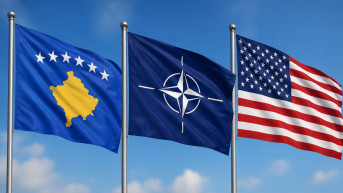
U.S. Congressmen Keith Self and Mike Lawler last week introduced a resolution in the House of Representatives expressing support for Kosovo’s membership in NATO. While Pristina expects the initiative to bear fruit, Kosovo Online’s interlocutors say it carries little political weight, that the four countries which do not recognize Kosovo are the main obstacle to its integration into NATO, and that there is currently little room for enlargement of the Alliance. For that reason, they argue, Kosovo should focus on domestic and regional issues, as well as on improving cooperation with the United States. NATO says that any further step in cooperation with Kosovo requires consensus among NATO members.
Written by: Jelena Novakov
The draft resolution submitted by Self and Lawler states that Kosovo’s integration into NATO would serve as a counterweight to “hostile forces destabilizing the region,” but that the four NATO members which do not recognize Kosovo’s independence — Spain, Slovakia, Greece, and Romania — are an obstacle to that goal, noting that the admission of new members is impossible without the consensus of existing members.
In addition, the resolution calls on these four countries to reconsider their position, stating that Kosovo’s NATO membership is necessary in order to close the strategic gap in Southeast Europe that “adversaries seek to exploit.”
As expected, the draft resolution was welcomed in Pristina. Kosovo politicians praised it, while Acting Foreign Minister Glauk Konjufca said that Kosovo is ready to contribute to the security of the region and the transatlantic community.
On the other hand, Serbian President Aleksandar Vučic said that Serbia would fight against this initiative, pointing precisely to the support of the four countries that do not recognize Kosovo.
Consensus Among NATO Members
Commenting on the resolution, a NATO official stressed that any further step in relations between the Alliance and the institutions in Kosovo requires the consensus of all members of the military alliance.
NATO called on the institutions in Kosovo to show flexibility and make progress in the Belgrade-Pristina dialogue.
“We encourage the institutions in Kosovo to strengthen good governance for the benefit of all citizens living in Kosovo and to show flexibility and make progress in the EU-facilitated dialogue on the normalization of relations between Belgrade and Pristina. That should be the focus. This will help strengthen Kosovo’s Euro-Atlantic aspirations and consolidate security in the Western Balkans region,” the NATO official said in a written response to Kosovo Online.
A Dead Letter
Security studies researcher Nikola Vujinovic told Kosovo Online that the draft resolution by the two U.S. congressmen carries minimal force and is practically a “dead letter,” because the U.S. Congress does not decide who becomes a member of NATO, while Kosovo faces the obstacle of four countries that do not recognize it when it comes to membership in the Alliance.
He noted that the resolution is addressed to the U.S. administration and that, even if adopted by Congress, it would not oblige the government in Washington to take any action on the issue.
And even if Washington did wish to engage on the basis of the resolution, Vujinovic pointed out that NATO is an alliance that includes four members which do not recognize Kosovo.
“Since a new member is admitted by consensus, I think that is an obstacle they cannot overcome,” Vujinovic said clearly.
He said that, if the resolution is adopted, it will be more interesting to see who supported it within the U.S. Congress.
“How many Republicans, how many Democrats, how many of those somewhat closer to the Serbs or the Albanians. That is more interesting than the formal path, because essentially the U.S. Congress does not decide who becomes a NATO member,” Vujinovic stressed.
Speaking about NATO members that do not recognize Kosovo, Vujinovic said that Spain has a firm position on the issue, while opinions in Greece vary.
“We know that Spain and Slovakia are strictly opposed to Kosovo. Romania, due to its increasingly specific relations with the United States regarding military bases and its role in the Ukraine conflict, has a somewhat softer position, but it remains strongly opposed to Kosovo’s independence. Greece is the most problematic, because we have seen certain calculations and considerations regarding recognition of Kosovo’s independence. Greece, for example, gives full support to Kosovo federations joining international sports associations. On the other hand, they still have not formally recognized it, because there are obviously certain tensions in relations between Albania, Edi Rama, and the Greek government over their bilateral issues,” Vujinovic stated.
Vujinovic also warned that possible Kosovo membership in NATO would be disastrous for the security of the region and Serbia.
“If that happens, Serbia would be restricted in its actions toward Kosovo as part of its own territory, and that would mark the final end of our relations with the collective West and with the United States, because we cannot accept that part of our territory is occupied. At this moment, while it is neither here nor there, we can somehow ‘digest’ it. If it were formally completed, if Kosovo sat at NATO meetings and Article 5 of the Washington Treaty applied to it, that would be extremely damaging to the security of the region and Serbia, because the patience that I attribute to Serbia and the Serbian people in the region at this moment would become meaningless, and we would enter into calculations that we do not need,” Vujinovic said.
Cooperation with the United States and Non-Recognizers
James Carafano, Senior Counselor at the Heritage Foundation and a U.S. security expert, told Kosovo Online that there is currently not much room for NATO enlargement, which, he notes, is not crucial for Kosovo’s progress.
“As someone who has long supported NATO enlargement, I think there is not much appetite for enlargement today. To be completely honest, I do not believe NATO enlargement is essential for Kosovo’s future security and growth,” Carafano said.
For that reason, he believes Kosovo should focus on issues of regional recognition and improving relations with the United States, recalling that Albin Kurti’s government has not had good cooperation with Washington.
“I do not think the government cooperates well with the United States, but if that cooperation were stronger, the United States could be a better advocate and would have stronger influence, especially on Greece, Cyprus, and Romania, which are strong U.S. allies. The United States has a great deal of influence, and I think these are countries that could be brought to the negotiating table when it comes to recognition of Kosovo,” Carafano assessed.
He noted that Pristina should be a better partner to the United States, because that is in the interest of the people in Kosovo.
“I do not think the question should be ‘how do we get into NATO’ or ‘how do we get into the EU’; the question should be ‘how do we improve security, stability, and the economy.’ They should focus on those things and not worry about the others. Those other things are entangled in geopolitical developments that may never align with the interests of the countries in the region. As someone who has long supported NATO enlargement, I think there is not much appetite for enlargement today. To be completely honest, I do not believe NATO enlargement is essential for Kosovo’s future security and growth,” Carafano said.
A Signal from Washington, but Without Political Weight
Robert Benson, Director for National Security and International Policy at the Center for American Progress in Washington, told Kosovo Online that the resolution is a signal from the U.S. Congress about the importance of integrating the Western Balkans, especially Kosovo, into the transatlantic framework, but that it does not carry much weight.
Benson explained that, given that the U.S. administration is not particularly inclined toward Euro-Atlantic integration, Congress is trying to show strength and push back, but that this realistically does not carry much weight.
“When it comes to political reality, this does not carry much weight. It is not going anywhere at the moment. I can explain why. The Western Balkans appears to be primarily a political issue, which means that some NATO countries, outside the United States, still do not recognize Kosovo as an independent state. Countries such as Spain and Slovakia. That has to be resolved within Brussels before any progress can be made toward substantive integration into the EU. And when it comes to NATO, both of those countries are also Alliance members, which represents an additional obstacle to Kosovo’s NATO membership,” Benson said.
He noted that progress should not be expected in the near future, since the administration in Washington does not have the Western Balkans in focus when thinking about relations with the European Union or relations with NATO.
“Failing to take seriously the need for the Western Balkans to become part of the European family, part of the transatlantic security community, exposes the region to various forms of malign influence from Russia, China, and even capital from Gulf countries. This must be taken very seriously. In the absence of U.S. engagement in the Western Balkans, a security vacuum could emerge. That is why it is important for our European partners to approach the integration of the Western Balkans seriously. There is a lot of room for progress. For years, only minimal progress has been achieved. Washington should make it clear that this is unacceptable. But the problem is that the administration does not have the Western Balkans in focus when thinking about relations with the European Union or relations with NATO. Therefore, progress should not be expected in the near future,” Benson assessed.
The Influence of Congress
Nevertheless, military-political analyst Fadil Kajtazi believes that the draft resolution supporting Kosovo’s NATO membership will bear fruit, because, as he says, every U.S. objective regarding the Balkans since 1989 has stemmed from an initiative by the U.S. Congress.
“An initiative by U.S. congressmen on issues concerning U.S. foreign policy usually implies a procedure through which the State Department wants to achieve a certain foreign policy objective. If we take into account the period from 1989 to 1999, the period when the former Yugoslavia began to decompose, everything the Americans wanted to achieve in this region began in the form of resolutions in Congress,” Kajtazi told Kosovo Online.
He therefore believes that the resolution supporting Kosovo’s integration into NATO is part of a procedure that could lead to that goal.
“The best example that hostilities cease is the example of the military balance between Croatia and Serbia, where Serbia’s policy ceased to be aggressive toward the stronger side and turned toward the weaker side — Kosovo. Because of this logic, and because of major changes at the level of global politics, I believe that the initiative by the U.S. congressmen will bear fruit,” Kajtazi concluded.



0 comments