
Benson: Draft Resolutions are a signal from Congress, but carry little political weight
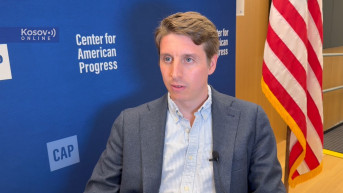
The draft resolutions supporting Kosovo’s integration into NATO and the continued presence of U.S. troops within KFOR are a signal from the U.S. Congress regarding the importance of integrating the Western Balkans, particularly Kosovo, into the transatlantic framework, but they do not carry significant weight, says Robert Benson, Deputy Director for National Security and International Policy at the Center for American Progress in Washington.
In an interview with Kosovo Online, Benson explained that Congress, given that the current U.S. administration is not particularly inclined toward Euro-Atlantic integration, is trying to demonstrate strength and offer resistance, but that in reality this has little practical impact.
He noted that no progress should be expected in the near future, since the administration in Washington does not view the Western Balkans as a priority when considering relations with the European Union or NATO.
How do you interpret the latest initiatives by U.S. congressmen supporting Kosovo’s integration into NATO and the continuation of the U.S. military presence in KFOR — what do these moves signal about Washington’s assessment of security in the Western Balkans?
“You used the word ‘signal,’ which is exactly what is happening here. Essentially, this is a signal from the U.S. Congress about the importance of EU integration, the importance of integrating the Western Balkans into the transatlantic framework, and in this particular case especially Kosovo. I think it is important to understand the context in which this is happening. The administration in Washington is not particularly supportive of Euro-Atlantic integration. European security in a broader sense is not considered a priority. If anything, the priority is transactional profit-making in the region. That has become clear. Congress is trying to demonstrate its strength and push back. But when it comes to political reality, this carries very little weight. At the moment, it is not leading anywhere. I can also explain why. It appears that the Western Balkans remains above all a political issue, meaning that certain NATO countries outside the United States still do not recognize Kosovo as an independent state. Countries such as Spain and Slovakia. That issue must be resolved within Brussels before any meaningful progress toward substantive EU integration can occur. And when it comes to NATO, both of these countries are also members of the Alliance, which creates an additional obstacle to Kosovo’s NATO membership.”
Do these initiatives indicate that the security situation in Kosovo remains fragile, and what could they mean for the security and position of the Serbian community on the ground?
“Of course, this is a highly sensitive issue. The Western Balkans is a sensitive part of Europe. Historically, it always has been. The problem is not only the security situation, but also the fact that there are unresolved political disputes. And that brings us back to the previous answer. Kosovo does not enjoy full recognition from all NATO members, nor from all EU member states. There is still an unresolved issue in relations with Serbia. There are also unresolved issues within the European Council. In order for there to be any movement out of this deadlock, there first has to be political progress. Only then can security integration follow. One cannot happen without the other.”
Given that several NATO members still do not recognize Kosovo, how realistic is its path toward NATO membership, and do these U.S. initiatives risk exposing or deepening divisions within the Alliance?
“I think that is extremely important. Failing to take seriously the need for the Western Balkans to become part of the European family, part of the transatlantic security community, exposes the region to various forms of malign influence from Russia, China, and even capital from Gulf countries. That must be taken very seriously. In the absence of American engagement in the Western Balkans, a security vacuum could emerge. That is why it is important for our European partners to seriously approach the integration of the Western Balkans. There is substantial room for progress. For years, only minimal advances have been achieved. Washington should clearly state that this is unacceptable. But the problem is that the administration does not have the Western Balkans in focus when thinking about relations with the European Union or NATO. Because of that, no progress should be expected in the near future.”
How critical is the continued presence of U.S. troops within KFOR, and do these Congressional efforts indicate concern in Washington about potential instability or escalation in the region?
“There is concern in Washington about instability and the possibility of escalation in the region. There are several parallel processes causing concern and requiring caution. You have developments in Republic of Srpska. You have Milorad Dodik increasingly openly advocating withdrawal from the federation. In addition, there are unresolved issues between Kosovo and Serbia. There are also minority-related issues in North Macedonia. All of this together creates a highly sensitive situation. However, the problem is that those who are concerned in Washington do not actually possess the levers of power. The administration cannot be counted on as an actor that pays attention to or is concerned about the region, except in the context of potential economic benefits and travel to the region. Essentially, this White House is a corrupt political project that views the region as an opportunity to extract additional concessions and privileges. That is how they see this region — as an opportunity for real estate investments, not as a space requiring attention, where there is a risk of a security vacuum and a need to encourage European and NATO partners to seriously approach the integration of the Western Balkans. It is not in their focus, but it certainly should be.”


0 comments