
US for the transition of the KSF into the Territorial Defense Forces: What will happen to Pristina's plan to form an army?

The process of transforming the Kosovo Security Forces into an army began five years ago, with the adoption of a set of three laws that regulate this issue, even though it contradicts current international documents on Kosovo. NATO does not formally support this intention of Pristina, but some member states have acted differently "on the ground" in previous years, primarily through training, weapon donations, and joint exercises with members of the KSF. The question therefore arises, what does the recent statement of the American ambassador in Pristina, Jeffrey Hovenier, that "the US supports the transition of the KSF into a multinational, professional Territorial Defense Force" tell us on this topic.
Interlocutors of Kosovo Online see Hovenier's statement as a message that nothing will come out of the Kosovo army, at least in the near future.
The former Chief of General Staff of the Army of Yugoslavia and the Army of Serbia and Montenegro, General Branko Krga, indicates for Kosovo Online that it is probably not a coincidence that Ambassador Hovenier did not use the term "army", but territorial defense", when he spoke about US support for the transformation of the KSF. Our interlocutor also sees Hovenier's political motives, but also legal and essential reasons, given that, as he says, the status of Kosovo has not yet been resolved, and the issue of the formation of the Kosovo army is prevented by international documents, the key of which is Resolution 1244 of the United Nations Security Council.
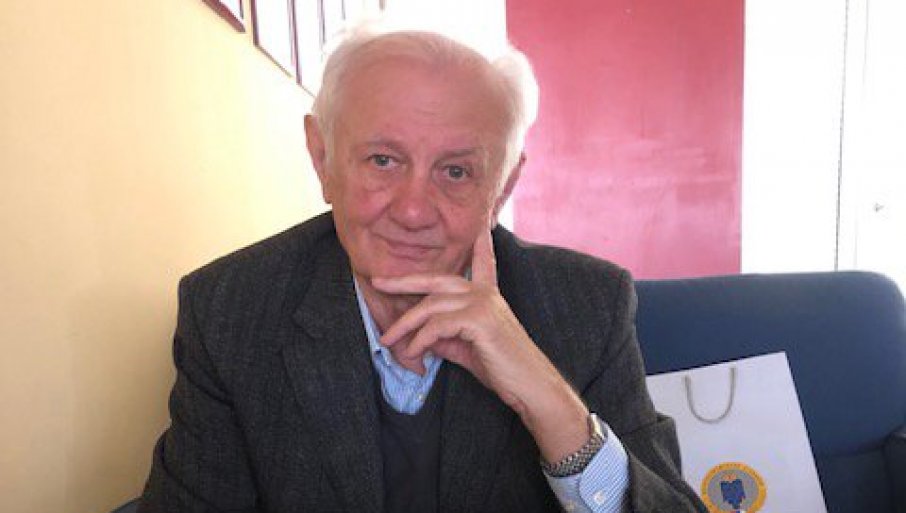
"I assume that Hovenier did not accidentally avoid using the word army, so as not to provoke Belgrade and further complicate the circumstances, especially while the efforts towards the normalization of relations between Belgrade and Pristina continue. This whole process, as we have seen, is very delicate, and that is all the more reason not to emphasize something that Serbia is against, and that is against international law and agreements," Krga says.
He indicates that the Territorial Defense is a lower level than the classic army, in terms of operational organization, readiness, and armament. He reminds that in the SFRY until 1991, the armed forces consisted of the Yugoslav People’s Army and the Territorial Defense, which was subordinated to the headquarters in the Yugoslav republics.
"When it comes to the army of Kosovo, one should start from the key document that regulates that issue, which is Resolution 1244 of the UN Security Council, where it is clear that such forces should not exist in Kosovo at all. In Kosovo, KFOR is an armed force that guarantees the safety of all citizens of Kosovo. However, the number of KFOR has been significantly reduced, probably due to costs or some other reasons. Essentially, in previous years, the Pristina authorities took step by step in the direction of the illegal creation of armed forces, and they had the support of most NATO countries. The US, of course, starts from the fact that it has recognized Kosovo and Metohija, treats it as a state, and counts that, if it is a state, then it can also have the attributes of an armed force, which go with every state.
Our interlocutor also believes that linguistic gymnastics is not important, whether the armed forces of Kosovo will be called "Army" or Territorial Defense", but the key is whether and how many of these forces will have weapons and equipment; how they will be organized and trained.
"Territorial Defense Forces, as a rule, have a lower level of weapons and training than the classic army. For example, they can have air forces, but less, in the form of helicopters of a certain type, but not combat aircraft as the army has," Krga explains.
The fact that Hovenier stated that the US supported the transformation of the KSF into multi-ethnic forces, according to General Krga, is a kind of maneuver to avoid the essence - whether such forces are legally and politically allowed to exist at all.
"It is not difficult for those forces to have, as Hovenier says, a multi-ethnic character, it is enough to include a few Serbs, Bosniaks, and members of other minority communities, and with that, Pristina and their allies will be able to make the argument of multi-ethnicity. Those forces may be multi-ethnic. the key question is not answered - whether they are allowed to exist at all according to the relevant international documents or not," he says.
Krga points out that the "limitation" for the Kosovo army is not only Resolution 1244 of the UN Security Council but also the Constitution of Kosovo, which, according to our interlocutor, Albin Kurti constantly refers to when he refuses to form the Community of Serb-majority Municipalities. Namely, the current Constitution of Kosovo does not provide for the army, and in order for such changes to the highest legal act to be implemented, it is necessary to support them in the parliament by two-thirds of the deputies, including two-thirds of the deputies of the minorities, who have guaranteed seats in the Assembly. So, says Krga, the formation of the Kosovo army cannot be done without the Serbs.
The president of the Europa Asia Security Forum, retired general Mitar Kovac, also believes that Hovenier used the term "territorial defense" for legal reasons, but also because of a sensitive political and security moment.
"When the authorities of the so-called state of Kosovo announced that they were starting to form an army, America was among the first to announce that it was not the time for that because the issue of the status of Kosovo and Metohija had not been resolved. Hovenier's message in this sense could be 'read' that the time for that hasn't come yet. I especially think that the US does not want to jeopardize the negotiation process between Belgrade and Pristina at this moment," Kovac says.
He, however, adds that the current positions of the US do not mean that at some point they will not rapidly start rounding up the Kosovo army.
"It was America that at one time instructed to proceed with the construction of the so-called Security Forces of Kosovo. It also gave instructions that the leading members of NATO, as well as others who wished to, donated various combat equipment to Pristina and train their units. The goal is that one day they will be at such a level of training and readiness that they can fulfill the tasks that the army of any country fulfills. Another goal is for Kosovo to join NATO," Kovac concludes.
In December 2018, the Kosovo Parliament adopted three laws related to the transformation of the Kosovo Security Forces into the Kosovo Army - the Law on the Ministry of Defense, the Law on the Kosovo Security Forces, and the Law on Service in the Kosovo Security Forces. Last week, the Pristina government adopted the draft law on the establishment of a military intelligence agency. In previous years, the budgets for the Ministry of Defense and the KSF were constantly increased, so for this year it is expected to amount to 123 million euros.
KSF currently does not have heavy weapons, helicopters, or airplanes. As for the weapons, they have automatic rifles, snipers, hand grenades, and smaller armored vehicles, primarily of American production. At their disposal are armored personnel carriers "Otokar Cobra 17", Land Rovers, and Hummers. Although it is planned that the regular composition of the KSF has about 5,000 members and another 3,000 reservists, those compositions are still not filled.


0 comments