
The Washington Agreement and Trump’s Words Through Osmani’s Lens: Points Scored or a Missed Goal?
Written by Dusica Radeka Djordjevic – Kosovo Online
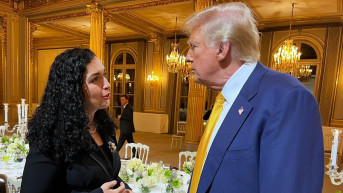
Kosovo’s Presidency stated that President Vjosa Osmani’s meetings in the United States aimed to deepen the strategic partnership between Kosovo and the United States. However, numerous analysts in Pristina believe that with her “irresponsible and inaccurate” statements, Osmani missed the mark. By claiming that the Washington Agreement had been implemented and that Donald Trump’s words about preventing conflict between Serbia and Kosovo referred to current threats, analysts speaking to Kosovo Online suggest Osmani attempted to warm relations with the U.S. and secure a path to a second presidential term — but whether she succeeded remains in question.
Vjosa Osmani’s assertion that the 2020 Washington Agreement had been implemented drew widespread criticism from Pristina. Director of the KIPRED Institute, Lulzim Peci, stated that Prime Minister Albin Kurti’s government had not implemented the agreement, and that Osmani’s claim was incorrect.
“If the Washington Agreement had been implemented, Kosovo would today have gas and be a distribution hub for northern Albania, Montenegro, and Serbia — as well as a vital regional node for road and rail infrastructure. Furthermore, the issue of managing the Gazivode Lake with Serbia would have been resolved. The Government of Kosovo didn’t even consider the feasibility study provided by the U.S. — they simply discarded it,” said Peci.
Zafir Berisha, a member of the Presidency of the NISMA party, also criticized Osmani, stating that she is “wide awake, dreaming of a second term, even though she was one of those, along with Albin (Kurti), who rejected the September 4, 2020 agreement signed in Washington.”
It is worth noting that in early January 2021, Osmani publicly stated that once the Biden administration came to power, Pristina should seek to review the agreement signed during Donald Trump’s presidency, arguing that the deal—signed on Kosovo’s behalf by then-Prime Minister Avdullah Hoti (LDK) at the White House—contained harmful provisions.
Milos Pavkovic, associate of the European Policy Centre in Belgrade, told Kosovo Online that only two or three provisions of the Washington Agreement were implemented, while the majority remained unfulfilled.
“What was implemented includes Serbia halting its derecognition campaign, Kosovo refraining from applying to international organizations for one year, the much-discussed recognition of Kosovo by Israel, and the clause on 5G security related to Huawei. However, key infrastructure projects that were vital for the normalization process — the Belgrade–Pristina railway, the Nis–Pristina Peace Highway, and direct air links between Belgrade and Pristina — were not realized. These would have contributed to economic normalization on the ground and paved the way for broader political normalization,” Pavkovic explained.
He added that from Pristina’s perspective, Israel’s recognition and the ability to resume its international membership campaign were viewed as the most crucial elements.
“From their point of view, if those items were fulfilled, then the entire agreement was fulfilled. But Kosovo did not join the then-called ‘Mini-Schengen’ or Open Balkan initiative, despite committing to do so. All of these could have supported normalization — but five years on, no one even talks about them anymore,” Pavkovic noted.
Political analyst Shkëlzen Maliqi also argued that the agreement was not implemented, mainly because the government changed soon after its signing. Albin Kurti became Prime Minister, and Vjosa Osmani, who had opposed the agreement, became President.
“It was practically not implemented, although many of the ideas in that agreement are still valid. A substantial amount of funding was planned for investments in both Kosovo and Serbia, but that is unlikely now. Circumstances have changed,” Maliqi told Kosovo Online.
Since the signing of the Washington Agreement, Maliqi noted, the European Union has in some ways formalized the Belgrade–Pristina dialogue by securing a “mutually agreed international agreement” — one that Serbian President Aleksandar Vučic and Kosovo Prime Minister Albin Kurti accepted without signing, even though both have worked to avoid implementing it.
Petar Donic, from the think tank Novi treci put (New Third Way), viewed Osmani’s claim that the Washington Agreement had been implemented and that Kosovo should now “move beyond it” as a form of political positioning.
“They’re likely trying to say that they’ve fulfilled their side of the agreement — even though that’s not really true — or at least mostly fulfilled it, and now it’s time to move on. It’s a way to politically position themselves at this moment, as if to say: ‘look, we’ve been the good students,’” Donic told Kosovo Online.
He added that the agreement reached in the White House was, by nature, short-lived, as it came at the end of Donald Trump’s first presidential term, after which Joe Biden took office.
“From the U.S. side as well, many of the agreement’s provisions lost momentum and political weight. It’s now time to think seriously about a new agreement if the goal is to reach one,” Donic stated.
Another controversial message Osmani delivered during her visit to the U.S. was her claim that Donald Trump had made an “exceptional contribution” in preventing regional destabilization “in recent weeks.”
This statement prompted a sharp rebuke from former U.S. Special Envoy for the Belgrade–Pristina Dialogue, Richard Grenell, who stated that it was shameful for Osmani to manipulate President Trump’s words. Grenell reminded the public that Trump had been nominated for the Nobel Peace Prize for his role in promoting peace and economic normalization between Kosovo and Serbia in 2019 and 2020, especially through the signing of the Washington Agreement.
“Osmani was not a part of that deal. Pretending that something new is happening now is absurd,” Grenell said.
According to Maliqi, Osmani’s remarks about Trump’s contribution were a personal attempt to create a political “exit strategy,” as she likely hopes to secure a second term.
“For a year now, she has been cautiously criticizing Kurti. She is also trying to rebuild ties with the U.S. and the West in general. However, that effort shouldn’t be based on personal ambitions but on the interests of Kosovo and all its citizens,” Maliqi said.
Pavkovic reiterated that by invoking Trump’s legacy, President Osmani aimed to present herself as a potential partner and to improve relations between the current U.S. administration and Pristina, but that her words met with strong resistance from Richard Grenell.
“The focus wasn’t really on whether there were genuine indications of armed conflict in Kosovo — Osmani was simply trying to use that narrative to build a connection with the White House. Of course, there may be developments behind the scenes that we aren’t aware of, but I believe the main goal was to leverage Trump’s statement to forge some sort of link between the current President of Kosovo and former U.S. President Donald Trump,” Pavkovic concluded.



0 comments