
Vassallo: Serbia must bridge divisions in society and open dialogue on what the European path really entails
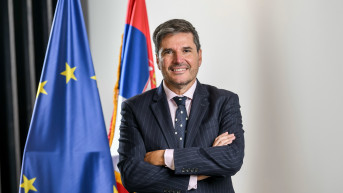
Technical alignment cannot compensate for democratic backsliding, and progress in individual chapters cannot substitute for progress on the fundamentals, which is why the new government will face a demanding agenda, Chargé d’Affaires of the European Union Delegation to Serbia Julian Vassallo said in Novi Sad today.
“Serbia will have to bridge divisions within society, rebuild trust in institutions, restore independence and pluralism in the media, and also create space for an honest dialogue on the issues that matter, including what the European path actually entails,” he said while presenting the European Commission’s 2026 Annual Report on Serbia.
Vassallo said that the EU accession process must be driven by facts and open debate rather than “manipulation and a distorted picture of reality,” N1 reports.
“Candidate country status requires a credible commitment translated into concrete action. We welcome the willingness expressed by the winning list to place democracy and the rule of law at the heart of its policies. The European Union sees a strong and democratic Serbia as part of our Union, and we are ready to work closely with the new government and support its reforms,” Vassallo said.
He also said that on October 25, Serbian citizens had made it very clear that they wanted the fight against corruption, an independent judiciary, free media, democratic institutions and respect for human rights, adding that these were precisely the things the European Union expected as well.
“These are the issues that have held back Serbia’s progress on its path toward membership, and the issues that lie at the very heart of this year’s report. They also represent common ground and a genuine opportunity to move forward,” Vassallo said.
The Chargé d’Affaires of the EU Delegation to Serbia noted that Serbia was among the candidate countries with the highest level of alignment with the EU acquis and was also well prepared in the areas of the single market and competitiveness.
Vassallo warned that a future in the European Union required moral clarity, stressing that the glorification of convicted war criminals was incompatible with European values.
“It undermines trust, it undermines efforts to build good-neighborly relations among communities in this region, and it also undermines the prospects of the entire region joining the European Union,” he stressed.
Vassallo said the report had found that Serbia’s alignment with the EU’s Common Foreign and Security Policy remained low, which was an important issue for a country aspiring to become a member of the European Union.
Commenting on declining public support for European integration among Serbian citizens, Vassallo said that the most difficult reforms for successive governments had been those concerning the judiciary, the rule of law and media independence, but that the future government had placed precisely these fundamentals at the heart of its political platform.
Vassallo said that the way public debate was conducted needed to change “from the ground up,” arguing that once the media were free and civil society was no longer viewed as a threat, an open public debate on EU membership and European integration would become possible.
“Then we will have a debate based on facts rather than a distorted picture of reality. I believe Serbs are an educated people who think for themselves and who will be best placed to reach their own conclusion about what is best for their country,” Vassallo said.


comments