
What answers will the Munich Security Conference offer on the state of the international order?
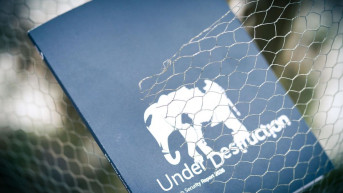
“It is time to address the elephants in the room” is the message from the organizers of the Munich Security Conference, which begins today and will bring together around 60 heads of state and government. This year’s 62nd conference is expected to be pivotal for relations between the European Union and the United States, according to interlocutors of Kosovo Online from Belgrade, Pristina, Tirana, and Skopje. Greenland, they assess, will be a “hot topic,” while the dominant themes will be the war in Ukraine and the Middle East. Some expect that over the next three days the main actors will outline the contours of a new world order. In this “competition,” they agree, the Western Balkans is not among the most challenging flashpoints.
Written by: Dusica Radeka Djordjevic
The latest Munich Security Report, published annually ahead of the conference and serving as a basis for discussion at the forum, concludes that more than 80 years after its construction began, the international order led by the United States after 1945 is now under strain.
“The most powerful among those dismantling existing rules and institutions is U.S. President Donald Trump,” the report states.
A response to such assessments will likely come from U.S. Secretary of State Marco Rubio, who is heading the American delegation in the Bavarian capital.
When the United States sent Vice President J.D. Vance to Munich last year, the tone was rather inflammatory, notes Petar Donic of the New Third Way. Now that Marco Rubio has been chosen, a more moderate and conciliatory message is expected.
“Last year in Munich, J.D. Vance in some ways set the stage for what would follow in U.S. foreign policy in 2025. We now see that they have opted for Marco Rubio, a neoconservative who plays a more significant role and maintains better relations with all actors in the Alliance. In the current situation, although rhetoric is sharpened and relations are strained—especially regarding President Trump’s performance-the United States in no way departs from NATO or from its alliances in general. Several parameters are clear: America must secure the Atlantic front, which is impossible without NATO and a strong and effective defense along that front,” Donic told Kosovo Online.
He stresses that a dominant issue will be whether a clearer agreement on Ukraine might be reached in 2026. That discussion, he adds, is somewhat overshadowed by the situation in Iran, which is significant for the United States but less so for Europe.
“A further major factor will certainly be defense spending levels within NATO and where the Alliance will procure its weapons. Europeans will likely insist—something also supported by the Trump administration—on achieving Europe’s strategic autonomy in procurement and continental defense. The question is whether any of this will materialize, as Europe tends to convert declarations into political action rather slowly. This will undoubtedly take longer than the Americans would prefer,” Donic notes.
This year’s Munich conference will, in fact, be the largest since its founding in 1963, with more than one thousand participants from over 115 countries.
According to political analyst and lawyer Edmond Petraj from Tirana, this forum will be a crucial moment at which U.S.–EU relations will either return to the right track or further deteriorate.
He points out that relations between America and the EU have gone through many moments of tension and that there are significant disagreements regarding Ukraine.
“The United States did not bring the EU closer to the negotiating table on Ukraine, which created considerable dissatisfaction in Brussels. European leaders also oppose any changes to borders, and this is the ‘Achilles’ heel’—the greatest problem today. EU leaders do not want territorial exchanges, border changes, or redrawing of boundaries established in the past, as this could revive numerous ethnic conflicts. The EU does not accept this approach as a solution, considering it the opening of ‘Pandora’s box,’ since the EU itself is a borderless space,” Petraj said.
In his view, the conference will focus heavily on Ukraine, yet no agreement on Ukraine or a security arrangement is likely to be reached.
“The United States has shown interest in Greenland, and I believe Greenland will be a ‘hot issue,’ as we know that in such cases Article 5 of the NATO Charter obliges all member states to defend Denmark and Greenland and to respond against an aggressor,” he stated.
He adds that there are already strong signals pointing toward the re-emergence of a Germany–France–United Kingdom axis.
“This axis is being reconstituted. The United Kingdom has begun distancing itself from the United States, even though Americans themselves have British roots. Under these circumstances, I believe this conference may indicate the direction future developments will take. Debates will be intense. It is possible that no agreement will be reached on many issues by the end of the conference, yet it appears that much is happening ‘below the surface,’” Petraj emphasizes.
Diplomat Albert Prenkaj from Pristina believes that over the three days in Munich, the principal actors will present the contours of a new world order, delineating the Global North, the Global South, and the Western Hemisphere.
“At the World Economic Forum in Davos, state officials emphasized that what they call a ‘rupture’ of the old world order has already occurred and that a new one has begun, one with which we must ‘learn to live.’ With its new National Strategy and the National Defense Authorization Act for fiscal year 2026, the United States is setting the course for this new world order,” Prenkaj said.
A sharpening of debates due to the crisis in transatlantic relations is also to be expected in Munich, according to Ismet Ramadani, President of the Euro-Atlantic Council of North Macedonia. Nonetheless, he hopes that, despite expressed misunderstandings, messages will emerge aimed at resolving crisis hotspots, such as the war between Russia and Ukraine, and at improving relations between the United States, the European Union, and NATO.
“Despite certain misunderstandings, particularly regarding Greenland and statements by President Trump, I expect that this conference will nevertheless send messages toward finding solutions through talks, negotiations, and dialogue, in order to calm the world somewhat amid all these tensions and flashpoints among major powers,” Ramadani stated.
He singles out as particularly interesting debates those concerning U.S.–EU relations and the responsibility of the United States and China in maintaining peace.
More Challenging Issues Than the Western Balkans
Ramadani observes that the Western Balkans is not featured in dedicated sessions.
“This security conference is focused on more challenging topics—Ukraine, the Middle East, Iran, Greenland, Venezuela,” he notes.
Donic similarly assesses that it is uncertain whether significant attention will be devoted to the region, which, in a broader context, enjoys a certain degree of stability despite many unresolved issues.
President of Serbia Aleksandar Vucic has arrived in Munich and announced meetings with numerous officials, including European Council President António Costa and Commissioner for Enlargement Marta Kos, as well as China’s Foreign Minister Wang Yi and representatives of a large number of companies.
Kosovo’s Prime Minister Albin Kurti will participate in conference events, while Kosovo President Vjosa Osmani has canceled her attendance due to, as stated, institutional obligations and domestic priorities.
Albania will be represented by Prime Minister Edi Rama, and North Macedonia by Prime Minister Hristijan Mickoski.



comments