
Donic: It is not certain that our region will receive significant attention in Munich at a time of intensified major hotspots
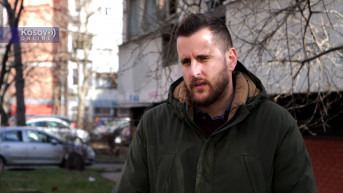
Associate of New Third Way Petar Donic assesses for Kosovo Online that it is not certain that significant attention will be devoted to our region at the Munich Security Conference, which in a broader context enjoys a certain degree of stability, although many issues remain unresolved.
As he points out, today more than last year and more than in previous decades there are highly significant intensified major geopolitical hotspots, such as the situation in Ukraine that is not coming to an end, the opening of the Iran issue, while there is also “talk” about Taiwan.
“What is certain is that there will be less understanding from the West for our region when it comes to defense relations with Russia and China,” Donic states.
The Munich Security Conference begins today, and he says that this forum is quite significant in defense terms, gathering a large number of Western actors, more than 50 leaders from various countries, a large number of NATO representatives and, in addition, representatives of the economy and the defense industry, which is why strong messages are sent from it every year.
He recalls that last year it was quite heated when America sent Vice President J.D. Vance, who in a way provided an introduction to what would shape American foreign policy during 2025.
“Now we see that they have opted for Marco Rubio, who is a neoconservative and has a more significant role and better relations with all actors in the Alliance, and it is expected that he will deliver a milder, more conciliatory message. In this whole situation, although the rhetoric is quite intensified and relations strained, especially when it comes to President Trump’s performance, America is in no way stepping back from the NATO alliance and alliances in general. There are several clear parameters, and that is that America must have a secure Atlantic front, which is impossible without the NATO alliance and a good and strong defense on that front,” our interlocutor says.
The dominant topic, in his assessment, will be the Ukrainian issue and whether in 2026 there will be some clearer and better agreement for Ukraine. On that topic, he says, the situation in Iran somewhat casts a shadow, which is significant for America, but less so for Europe.
“What will also certainly be a major factor is how much funding is allocated to NATO and from where NATO will procure weapons. Europeans will certainly demand, which the Trump administration also supports, that there be strategic autonomy for Europe in terms of procurement and the defense of the continent. The question is whether any of that will materialize, since Europe tends to slowly convert statements into political action, and that will certainly take a longer period of time, certainly longer than the Americans would like. But the definitive trajectory is clear that Europeans are lifting their heads out of the sand and understand that they must react,” Donic states.



0 comments