
Ramadani: Possible intensification of debates in Munich, we hope for messages on resolving crisis hotspots
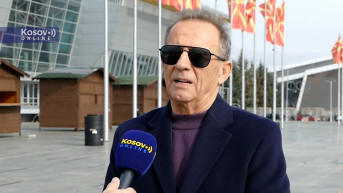
President of the Euro-Atlantic Council of North Macedonia Ismet Ramadani says that this year's debates at the Munich Security Conference could become somewhat sharper due to crises in transatlantic relations between the United States and the European Union, which also includes the United Kingdom. Nevertheless, he hopes that despite expressed misunderstandings, messages will be heard about resolving crisis hotspots such as the war between Russia and Ukraine and about improving relations between the United States, the European Union, and NATO.
Ramadani points out that the most important leaders of major countries are participating in the Munich Security Conference.
“The conference will be opened by German Chancellor Merz, and speeches will certainly be delivered by Macron, von der Leyen from the European Union and key figures from the strongest countries. Most importantly, especially on the first day when the plenary conference is held, will be the appearance of Marco Rubio, the US Secretary of State. His address is expected to follow the usual tone seen recently between the Trump administration and the European Union. Around 50 US congressmen are also participating, and the debate will first focus on US-European Union relations,” Ramadani says.
Another interesting debate, in his view, will concern the responsibility of the United States and China for maintaining peace.
“For the first time, a special platform called ‘Ukrainian House’ is appearing, where support for Ukraine is expected and where Ukrainian President Zelensky will also be present. Of course, NATO’s role will also be addressed, and the usual topics are defense, cyber issues, and hybrid warfare. According to my information, the invitation was canceled only for Iran’s foreign minister due to the recent demonstrations in Iran,” our interlocutor states.
In addition to the war in Ukraine, which is the main focus of interest, he notes that the Middle East and crisis hotspots in Africa will also be topics. In thematic debates, he adds, there is sometimes sharp rhetoric due to global challenges, but he hopes that messages of peace will be heard.
“We hope that these will be messages aimed at harmonizing positions and resolving crisis hotspots, especially the war between Russia and Ukraine. The messages will most likely concern improving relations between countries, between the United States and the European Union and NATO. Regardless of certain misunderstandings, especially regarding Greenland and statements by President Trump, I expect that this conference will nevertheless send messages toward finding solutions through talks, negotiations, and dialogue, so that the world calms down somewhat in relation to all these misunderstandings and hotspots among major powers,” Ramadani says.
It is customary, he notes, that at the end of such conferences the conclusions and messages are directed toward preserving peace, making the world safer, and finding ways for all hotspots and wars to come to some kind of end so that the world can move toward something more humane, meaning economic development.
He observes that the Western Balkans is not featured as a separate topic in special sessions.
“At this security conference, the more challenging topics are the war in Ukraine, the Middle East, Iran, Greenland, and Venezuela. I do not know whether I can say that the Balkans is an easier issue, because with more serious diplomacy by the US administration in agreement with the European Union, matters could calm down quickly. For example, if relations with Russia improve, then by some ‘default’, the situation in Serbia-Kosovo relations or the Serbian Krajina would also calm down. The focus is nevertheless on the crisis situations I mentioned, which are somewhat easier to resolve once major powers reach an agreement,” Ramadani concluded.



0 comments