
What are the extents of the cooperation between the Kosovo Security Force (KSF) and the Iowa National Guard?
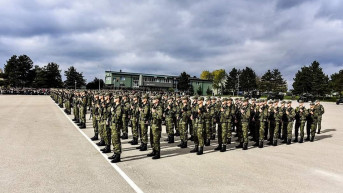
The transition of the Kosovo Security Force (KSF) into armed forces, according to announcements from the government in Pristina, will be completed by 2028. The goal of the Kosovo authorities is for the KSF to have 5,000 active members by then and to be equipped with modern weapon systems according to NATO standards. They are being assisted by Turkey, the United Kingdom, Albania, the USA, and others. The Iowa National Guard, which has been cooperating with them for 13 years, also contributes to this effort. Simultaneously, UN Security Council Resolution 1244, which recognizes the KFOR mission as the only security force in Kosovo, remains in effect.
Written by Dusica Radeka Djordjevic
In statements by Kosovo officials, the Iowa National Guard is often proclaimed as the main support for the development of the KSF. The commander of this guard, Major General Steven Osborn, visited Kosovo in mid-June at the invitation of KSF Commander Bashkim Jashari, and during that visit, they agreed on the implementation of a joint cooperation plan for 2025 and 2026. The cooperation so far has been rated as excellent.
"Our relationship with the Kosovo Security Force allows for the exchange of knowledge, skills, and experiences in the field of defense and security," Osborn said last fall, explaining how the US State Partnership Program works in this specific case.
In addition to military ties, political ties are also being built with Iowa. For instance, last year, Kosovo President Vjosa Osmani and Iowa Governor Kim Reynolds signed a sister state agreement aimed at fostering closer ties between Kosovo and this US state in areas such as education, trade, agriculture, and energy.
However, when it comes to the ten-year transformation of the KSF into the Kosovo Armed Forces, which began in 2018, security experts speaking to Kosovo Online state that the Iowa National Guard is not involved in donating combat equipment or training KSF members to use advanced military technologies.
Nikola Lunic, Executive Director of the Council for Strategic Policies, told Kosovo Online that the cooperation between the Iowa National Guard and the KSF does not significantly contribute to the transformation of these forces into an army, which entails investments in combat systems. He emphasizes that the cooperation with the Iowa National Guard focuses on raising the interoperability of KSF members, and if there are any potential donations from the USA, they will come from federal reserves.
"The Iowa National Guard participates in raising the interoperability of KSF members for participation primarily in multinational operations worldwide, whether under the UN, EU umbrella, or as independent bilateral involvement. The Iowa National Guard can also help in building civilian infrastructure and providing humanitarian assistance in case of emergencies, but significant donations cannot be expected from them, unlike some countries like Turkey and potentially others that have recognized Kosovo," Lunic said.
He explains that the cooperation between the KSF and the Iowa National Guard is part of the state partnership program presented in the USA in 1993 as cooperation between certain states and their national guards with countries that emerged after the breakup of the USSR. This involved the exchange of experiences, knowledge, joint training, and occasionally technical assistance, which continues to be the focus of state partnership programs today.
Last year, the KSF, as Lunic notes, announced the establishment of the first infantry regiment, the second infantry regiment is scheduled for this year, and the establishment of the third infantry regiment is planned for 2025. Serbia is already facing a security challenge: what will these armed forces look like.
"Will these be mono-national or multinational armed forces, and what capabilities will they possess? Will they develop aviation or heavy armored mechanized units, or do they not need these? It would be logical for a country of such size, with such a gross national income, to focus on specific capabilities and develop them. However, the foreign factor and their interests should not be overlooked. Therefore, in my opinion, our political leaders and decision-makers should include the security factor in negotiations on the normalization of relations between Belgrade and Pristina. We need to know what is expected in the security context and what these forces in Kosovo and Metohija will look like, whether we will be long-term partners or create animosities and a potential arms race, and possibly a frozen conflict?" Lunic said, adding that in a military context, the phrase 'frozen conflict' does not exist; it exclusively represents the preparation of the entire society, especially the military, for war.
"If we think that we can respond to such security challenges solely through armament, I believe we are mistaken. Therefore, I think the security context should be included in the negotiations with Pristina. I believe we should create a partner army in Kosovo and Metohija, which will also have members of Serbian nationality in its command structure, such as, for example, a deputy chief of the General Staff. In this context, we might be able to have reliable long-term partnership relations," Lunic assessed.
Evaluating the cooperation between the KSF and the Iowa National Guard, security studies researcher Nikola Vujinovic said that from a military forces standpoint, it does not hold as much significance as it does when viewed from a political dimension.
"This program is very significant for the United States, which collaborates with 106 countries worldwide, and through its cooperation with Kosovo, it sends a message that Kosovo is a democratic state that respects the values of the Western world. By deepening this cooperation, they are sending Kosovo the message 'you are on the right path to Euro-Atlantic integrations,' and a message is also being sent to Serbia, which also participates in this program at a much higher level with the Ohio National Guard. For Serbia, the political message is that Kosovo is an independent state and that it needs to come to terms with that," Vujinovic said to Kosovo Online.
He states that the cooperation of the Iowa National Guard with Kosovo is predominantly in the medical field, but noteworthy are those trainings of KSF members that concern internal security, where other countries take the lead.
"The Kosovo Security Force will not go to war with anyone in the Balkans without NATO, but they play a role in internal unrest, in combating civil disobedience, and demonstrations, where the role of the United Kingdom is particularly significant. They train the security forces, whether police or these so-called military forces, which should not even exist according to Resolution 1244 and the Kumanovo Agreement. The United Kingdom trains these forces to combat protests and demonstrations," our interlocutor states.
0 comments