
What is behind Kurti's decision to withdraw some of the police from municipal buildings in the north?
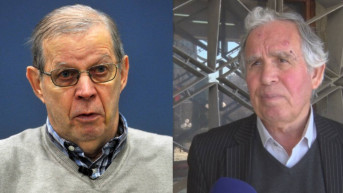
Behind the decision of the Kosovo government to withdraw 25 percent of police officers from municipal buildings in the north is a political maneuver to buy time by Prime Minister Albin Kurti, who is thus trying to appease Washington and Brussels after the announced punitive measures, but they will not fundamentally lead to calming down the situation, diplomat Zoran Milivojevic believes, while the Professor of Constitutional Law from Pristina Mazllum Baraliu points out that Kurti's change of heart was due to external and internal factors and believes that he will withdraw the Special Forces completely.
For diplomat Zoran Milivojevic, there is no doubt that this political maneuver by Kurti, as he states, is supported by the West, and indicates that the withdrawal of 25 percent of the Kosovo police will not fundamentally lead to de-escalation.
This is supported by Kurti's own clarification that the police did not withdraw from the north of Kosovo, as demanded by the Serbs, but that they were moved from municipal facilities.
In Kurti's "offer" for de-escalation, about which he says he agreed with the EU, there is no willingness to give up the imposition of illegitimate Albanian mayors elected in elections where the turnout was only 3.5 percent and which the Serbs boycotted, there is not even a word about the release of the arrested Serbs, as well as the formation of the Community of Serb-majority Municipalities, obligations assumed more than a decade ago by signing the Brussels Agreement.
"This is now a pure maneuver by Kurti to remove obstacles in his relations with the West. There is nothing essential to calm the situation. De-escalation is the withdrawal of absolutely all police forces and a return to the original state, as well as the removal of the mayor, and the formation of the Community of Serb-majority Municipalities and that is something that literally leads to peace and a complete calming of the crisis in the essential sense. Everything else is maneuvering, whether it's about Pristina, whether about Western power centers,” Milivojevic said.
He pointed out that by supporting "this maneuver" the Western power centers showed that they understood Kurti's policy and indirectly supported it. On the other hand, the diplomat points out, Kurti wants to make it known that he is not giving up on his policy and that he remains committed to changing the factual situation in the north and controlling the north at any cost. That's why this withdrawal of 25 percent of the police is in fact a symbolic and political gesture of Kurti, which finds understanding in the West, Milivojevic assesses.
"Kurti insists on the law, and the EU insists on elections, and they agree on that and he accepts the elections, but of course on his own terms, which is unacceptable for the Serbs, on the other hand. And there we have pressure for the Serbs to accept those elections, as they say, without conditions, to participate unconditionally. This would mean the legalization in the full sense of the Pristina government and the acceptance of everything that Kurti has done so far - it would legalize his approach and his commitment to, as he says, the rule of law, the application of law and the establishment of a legal regime,” Milivojevic explains.
He emphasizes that in this plan for de-escalation, which was "offered" by Kurti, there is no mention of the release of the arrested, of the cessation of repression, of the CSM, nor of the fulfillment of previously undertaken obligations.
"It is completely clear what it is about, that is what President Vucic is talking about as a trick. We also see that Lajcak's invitation to the two negotiators Bislimi and Petkovic to a meeting is on the line of the Ohrid Agreement, so it means the platform of the West and the EU, which they treat as a legally binding agreement with which Kurti also agrees, and which actually forces Serbia to de facto recognize Kosovo," he said.
He points out that everything else that has happened in the past two months is on the back burner and that no one is talking about what caused the escalation, neither KFOR nor UNMIK, which are responsible for maintaining order and protecting the Serbian population, are making any announcements.
"According to the volume, it is completely clear that this is a Western scenario in which Kurti fits in one way, with one symbolic gesture and with one gradual behavior, all in order to break Serbia in the meantime and for Serbia to make concessions, accept such scenario and meets the goals, I would say, of both the western power centers and Pristina, in order to resolve the Kosovo issue in the shortest possible time in accordance with their interests," Milivojevic concluded.
When asked whether the withdrawal of a part of the police from the north could be an indication of Kurti's yielding to pressure from outside, but also on the domestic political scene, Milivojevic says that it is a sign that Pristina is under some pressure, but that this move does not fundamentally solve the problem that led to escalation.
"This is a sign that there was still some pressure, but the moves agreed to by Kurti do not address the essence of the problems that led to the escalation. Secondly, Kurti does not give up his policy and strategy. Thirdly, the West has not actually taken any measures until now against Kosovo and Kurti, he essentially did not suffer any damage, because there was only talk about sanctions," the former diplomat said.
All these threats to cancel some diplomatic meetings, he points out, do not call into question the effects of Kurti's policy - "the change in the factual situation in the north, the establishment of control in that part and that by the use of force, outside of legal means, by arresting the Serbs, repression and with KFOR and UNMIK which are silent".
Milivojevic believes that, when all that is taken into account and especially since KFOR and UNMIK do not advertise, Serbia's request for an urgent session of the United Nations Security Council is justified and important.
"Vucic's conversation with the Secretary General of NATO is also important, for two reasons, firstly to remind the Alliance of its mandate and to act through KFOR according to Resolution 1244, according to which it should carry out its mandate and protect the Serbs. Everything else doesn’t matter and Kurti's moves are only the removal of possible further consequences that he could suffer both externally and internally," Milivojevic concluded.
Constitutional law professor Mazllum Baraliu pointed out for Kosovo Online that the decision of the Kosovo government to reduce by 25 percent the presence in and around municipal buildings in the north led to a de-escalation of the situation in the north, indicating that it should have been done earlier, and that he believed that the Special Forces would withdraw completely.
"The meeting between Bislimi and Lajcak on Monday was announced as an internal agreement for the gradual de-escalation of the situation in the municipalities in the north. The same was confirmed yesterday by the Government of Kosovo. It seems that the process has started to develop, I think we are now on the right track. This should have been done earlier, but it's never too late to make good decisions. It's a joint plan of the EU emissary Lajcak and the Kosovo government; I think it was agreed upon at the request of the EU, which insisted on a three-point plan. The plan is divided into several parts, and I hope that will be carried out to the end," Baraliu added.
When asked what made Kurti decide to de-escalate in the north at this moment, Baraliu replied that two factors had influenced it.
"Since there was not enough pressure from the international community, there had to be internal pressure from the opposition, which acted in the sense of blocking and boycotting the Assembly of Kosovo. It seems that the government changed its mind because of those factors and agreed to the EU plan," Baraliu said.
He explained that the agreement between Lajcak and Bislimi did not provide for the withdrawal of only 25 percent of the Special Forces from the north.
"It's only the first level, of course, there will be some other percentage at the second level, in fact, the Special Forces will finally withdraw completely by the end,” Baraliu said.
When asked whether a new move by Kurti that would cause a renewed crisis could still be expected, Baraliu stated that the Kosovo government had changed its mind due to external and internal factors and that he did not expect a new escalation.
"It is not easy for a country that is still not consolidated, and which is economically the most backward, which also has social problems, to now also have political problems and pressure from external and internal factors. Most likely, they gave in because of such pressures. We all hope that the Government is serious and that this kind of situation will end, in order to create a normal state. It should be like that because ordinary citizens have many problems," Baraliu added.
Baraliu believes that the opposition in Kosovo now has no reason to blame Kurti for "withdrawal" because all this time they demanded the acceptance of the European plan for de-escalation.
"The opposition has its influence and a role; it has not proven that it is unique and successful. It was not serious and could not do anything in the parliament. However, now it has no argument to attack. If the de-escalation process develops properly, they have no reason to boycott sessions of the Assembly and the adoption of laws and international treaties. I think the opposition will also stop playing the game, which is not really a game because it is not right to abuse the trust of the citizens that it has received in such a way. And according to the laws, they are obliged to take part in the adoption of laws and decisions," Baraliu concluded.

0 comments