
What is behind Pristina's announcement that it will suspend licenses for 48 companies in Kosovo?
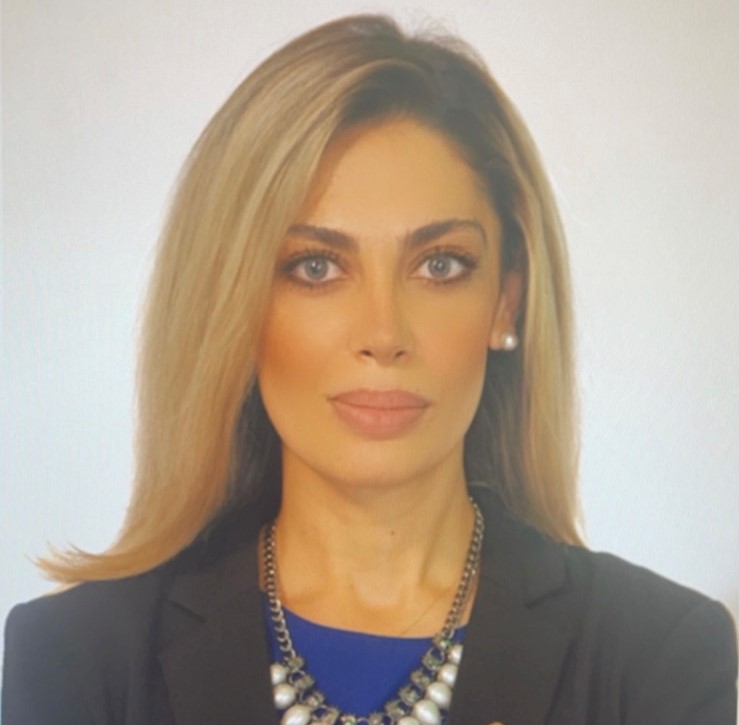
The announcement by the Minister of Trade, Entrepreneurship, and Industry Rozeta Hajdari that 48 companies will be left without work permits because they used the terms "Serbia" or "Kosovo and Metohija" in their registration documents is seen by Kosovo Online's interlocutors as pressure on the Serbian community and they believe that such moves have nothing to do with the economy, but that they have a political sign, and that, if Hajdari's announcements come true, it will lead to a new political and security crisis in Kosovo.
Namely, on the list of companies published by the media in Albanian, there is also MTS d.o.o., Komercijalna banka a.d., branch in Mitrovica, Beogradska banka a.d., Pec branch, Edukativni Centar Code, Silur d.o.o., PTU Miljana...
Hajdari, let's recall, stated that during the inspection it had been found that 48 files of companies registered in the Business Registration Agency have "disputable terms" and announced that their work permits would also be suspended, as had been done in the case of Television Klan Kosova.
She stated that those companies listed "Pristina-Kosovo and Metohija", "Pec-Republic of Serbia", "Gnjilane-Serbia", and "Djakovica-Serbia" in the column "country and residence" and that the Ministry established the Commission on July 6 for the re-verification of files in the Business Registration Agency, "especially those with suspicious documentation with unconstitutional terms".
The Coordinator of the National Convention on the EU for Chapter 35, Dragisa Mijacic, tells Kosovo Online that this statement by Rozeta Hajdari should be viewed in the context of spinning the Kosovar public in order to divert attention from the cancellation of the license for the Klan Kosova media house, but also that if Hajdari's announcements are confirmed that it will certainly lead to new political and security crises in Kosovo.
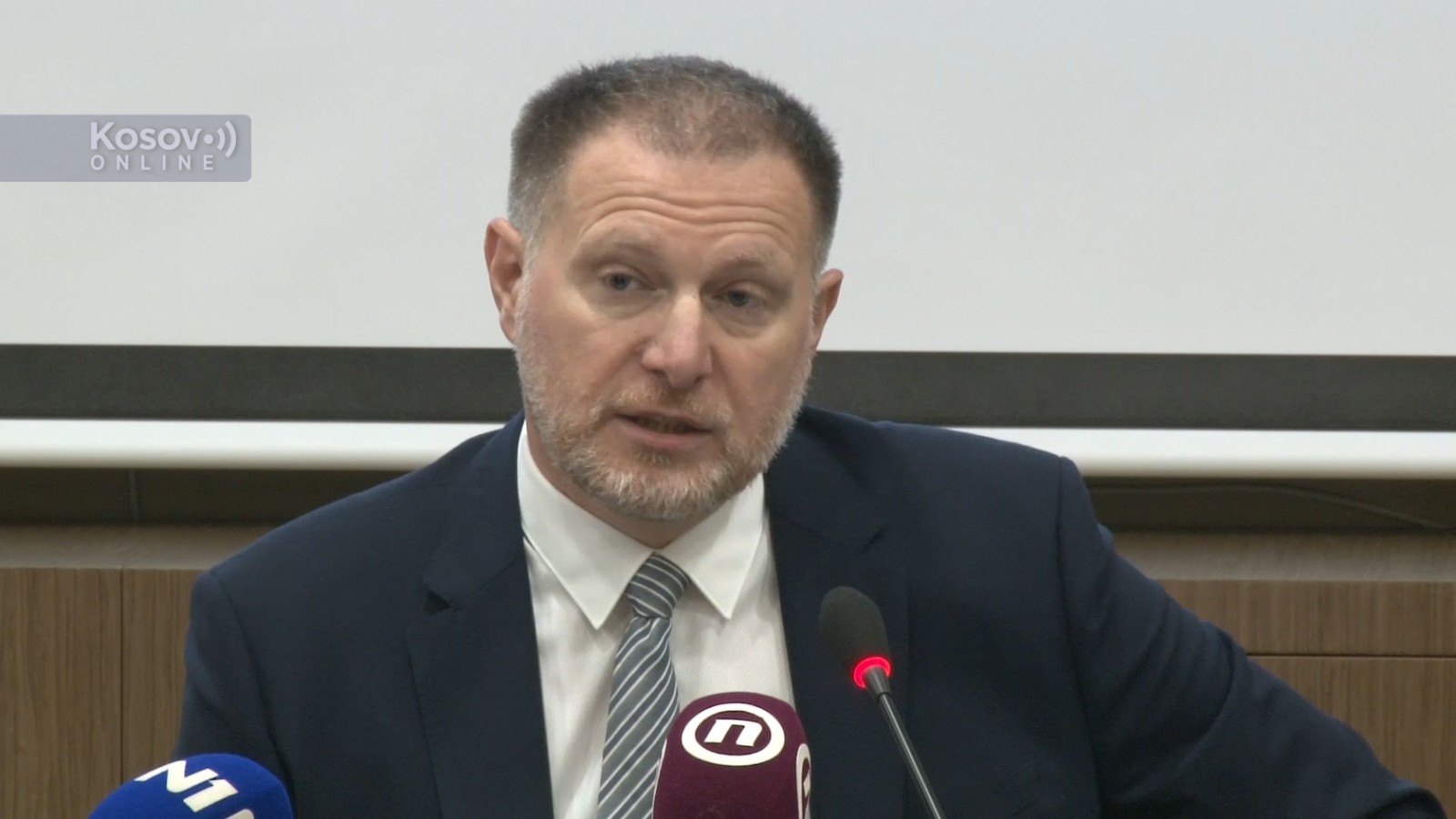
"According to an already well-tried recipe, whenever the Government of Kosovo has political problems on the domestic scene, it looks for a way out in the unilateral violation of the Brussels agreement and pressures on the Serbian community. Namely, among the 48 companies mentioned by Minister Hajdari is MTS d.o.o. which was registered in 2015 as a part of the implementation of the 2013 Telecommunications Agreement. Revoking the operating license of this company would be a violation of the Brussels agreement. Apart from MTS d.o.o. there is also Komercijalna banka, which operates in Serbian areas in Kosovo, in many of them as the only commercial bank present in those municipalities. If the announcements of Minister Hajdari are confirmed and the licenses for the aforementioned companies are revoked, it will certainly lead to new political and security crises in Kosovo, a further collapse of trust between the Government of Kosovo and local Serbs, but also an additional tightening of relations between the Government of Kosovo and Serbia, Brussels and Washington," Mijacic says.
The President of the Association of Serbian Businessmen, Sasa Sekulic, tells Kosovo Online that he thinks Hajdari's announcement of suspending business licenses is another in a series of political decisions by Pristina.
"After the decision to ban the import of goods from Serbia, now, after 23 years, someone remembered that it also bothers them. What will happen next? After this, if this passes, will schools and health centers be attacked, because they have the same name, for example, "Health Center Gracanica-Serbia"? What worries me is the mild reaction of the authorized representatives of the Serbs. They must introduce the international community, EULEX, UNMIK..., to what was signed 23 years ago. If this also goes through, it will be the turn of the other thing I said," Sekulic is worried, who is also the owner of a company for the production of Turkish delight.
As he tells us, both he and other businessmen have double-registered companies with both the Kosovo Business Registration Agency (ARBK) and the Serbian Business Registers Agency (APR).
"However, five or six years ago, in one of the Brussels dialogue rounds, it was agreed that we work only based on how we are registered in the Kosovo system, so with those papers and that registration, we will not have any problems either exporting goods or to import. My company, which is registered with the APR, no longer makes sense and had no function, so it was shut down two years ago, and only the one that is registered with the Kosovo Agency remains," Sekulic explains.
He believes that companies that were registered before 1999 should not have problems now.
"The goal of Pristina has been known for a long time, that there should be as few Serbian goods here as possible. And, I look at it pragmatically - they punish their own population in that way. It is not a problem to replace goods of the same quality, but those goods will be more expensive by some 20 to 25 percent according to our data, because they come from Poland and Turkey. This is where the cost of transportation plays a very important role. In this way, they also punish their own population, to pay for more expensive goods," Sekulic assessed.
Political analyst Mimoza Gavrani tells Kosovo Online that the moves announced by Minister Hajdari harm the entire society of Kosovo, regardless of the nationality of the company owners and what the companies do. The focus is clear, she says, to somehow destroy all the people, companies, and agencies..., who do not agree with the policy of the current government.
"The Government of Kosovo has formed a Commission that works with the Busniness Registration Agency and they are trying to find companies that are registered in Kosovo with the name of Serbia. I think it's a registration problem and it's more technical than political, but this Government is trying to focus on that, the re-verification of these companies. These actions have a focus on somehow destroying businesses, people, agencies, and persons who do not agree with the specific policies currently coming from the Kosovo Government. I think it is a big loss as far as the economy of Kosovo is concerned and let's not forget that we are currently under the sanctions of the US Government and that we have other very big political problems on which the Government of Kosovo should concentrate, such as talks with Serbia, business talks and integration of minorities, mainly of Serbian nationality, but also of all others," our interlocutor says.
Gavrani reminds that the first to be attacked by the Ministry of Industry, Entrepreneurship, and Trade was Television Klan Kosova, which they accuse of "violating the Constitution of Kosovo" because their registration documents mention two cities - Pec and Djakovica, but as a part of Serbia. Gavrani believes that this is the heaviest attack on media freedom since the war in Kosovo.
"Our colleague, a well-known journalist, Berat Buzhala spoke in a show and explained that the owner of Klan Kosova, and this is a truth we all already knew, was a Kosovar Albanian who had a Serbian passport, and that in the registration of Klan Kosova as a company, Serbia was listed as official state in documentation. Klan Kosova was registered for the first time in Macedonia. The one who registered Klan Kosova in Macedonia has a Serbian passport and is a Kosovar Albanian. In the database it says Djakovica-Serbia. He received the document, went to the Kosovo Business Registration Agency, and registered his company in Kosovo as well. They accepted the registration," Gavrani said and added that the Government of Kosovo should resolve it with the Business Registration Agency, which registered the company.
As she notes, shutting down the media kills democracy and communication with citizens.
Rozeta Hajdari's message was assessed by Ljubomir Maric, a member of the Serbian Parliament from Kosovo, as a terror on an economic level. He believes that this sends a message to the Serbs in every way that they are not welcome.
"It is about the continuity of the terror of Albin Kurti and his Government, which wants a pure and mono-ethnic Kosovo, cleansed of the Serbs and everything Serbian. They practically shut down businessmen in Serbian areas. It is a continuation of the narrative - that everything Serbian should not and cannot exist in Kosovo and Metohija,” Maric said.
According to him, Pristina is trying to further weaken the Serbian community in the economic sense, while the international community is still only warning, without strong enough pressure.

comments