
Citizens on the consequences of banning the import of Serbian products: Everything is more expensive, and there is no food we are used to
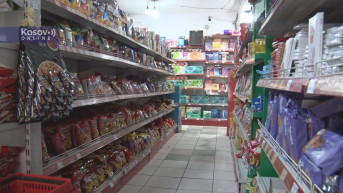
The Serbs from Kosovo, both from the north and from the central part, say that the ban on the import of goods from Serbia, which was introduced by the Government in Pristina back in June, has significantly affected the quality of their lives and that they are missing some groceries that they used every day, but also that those offered as substitutes for Serbian products are more expensive.
As the reporters of Kosovo Online report, in central Kosovo, stores remain without stock, and customers without their favorite products. There are fewer and fewer products from Serbia on the shelves. Citizens are very dissatisfied with the prices of "substitute" products from the region because they are used to Serbian products and their quality.
The team of our portal found Svetozar Zivic from Gracanica in the procurement of groceries for the celebration of St. Patron’s Day. He is dissatisfied, he says, both with the range of products and the prices.
"We've been to a couple of stores, there's no basic - low-fat mayonnaise, no Serbian beer, no milk, no yogurt. A lot of things. We're really endangered in that regard, but I hope it will get better. The prices are catastrophic, very high for our standard," Zivic says.
The Serbs here are used to buying products from central Serbia, so some goods are irreplaceable for them.
"There is a lack of goods, you can see it in the shops. It is completely empty. Here are the merchants, ask them what is missing, there is a lack of "Plazma", which is the most wanted for children, milk," Branislava Krasic tells us.
"There are not enough Serbian goods, but that's it. We buy the goods that are available, what is brought," Lazar Stakic says.
Jugomarket, located in the center of Gracanica, says that they are running out of stock and that customers are looking for Serbian products.
"At the moment, we are running out of goods. We are now getting goods from Albanian suppliers. The shelves are almost empty, there is very little stock, and we do not know how long this will last, I guess the authorities will do something to enable us to get the goods through and to be better supplied. Most of them are used to Serbian products. Let it be 80 percent of the people who are looking for our goods, but there are very few goods, so we don't know how long we will be like this. We hope for the better," Olivera Maksimovic says from "Jugomarket".
Ratomir Milanovic from Leposavic tells Kosovo Online that there is a shortage of some products.
"In Leposavic, there is a shortage of consumer goods, milk, and dairy products. We are still getting by with greens, but there is also a lack of other goods, dried meat. As for medicines, we have not had them for a long time, only in private pharmacies, and now that has also decreased For medicine, we have to go to Raska or somewhere further away," Milanovic says.
Bozidar Ratkovic confirms that there are no medicines and that the price increase is noticed.
"There is no medicine, there are no Serbian goods. It is difficult and the goods are more expensive. You see how much milk costs, it is cheaper in Raska than here, also meat, everything is more expensive," Bozidar Ratkovic says.
While some notice that there is a lack of goods, Ljubisa Miljojkovic does not have that impression but says that he is worried about the next period.
"Everything is supplied. When I come to the store, there is yogurt, milk, cheese, and everything I need. However, I am worried that there will be a shortage because one does not know what will happen in the future, when I see what the situation is, it will be difficult." Miljojkovic states.
Economic expert Safet Gerxhaliu claims that the latest events are not in favor of Kosovo, Serbia, or the Western Balkans.
"No one will come to invest here from foreign and big brands. At the end of the day, we have to understand, if we have learned anything from all this that has been happening in the last few years in the Balkans, especially when it comes to the relations between Kosovo and Serbia, it is that without political stability there is no economic perspective. In that context, I think we have also learned another thing, that dialogue has no alternative, the sooner we realize that, we will surely do something good for the future. Otherwise, if we continue like this, talking about economic results is a pure utopia. I hope that all this will pass and that common sense will prevail, that people will think rationally, not always with political connotations, but with economic calculations. When that starts, surely such barriers will remain in the past," Gerxhaliu believes.
As he points out, the opinion that only "Plazma" is imported from Serbia is wrong.
"A few days ago, we created an import structure - what we bought in 2022 from Serbia. You will not believe that more than 73 percent of everything that is imported is either raw materials or semi-finished products that are finalized as the product 'made in Kosovo'. That is the first analysis. The second is that for more than 61 million (euros) we bought finished wheat and wheat for sowing, for about 60 million we bought iron for concrete networks for export. Then we bought a lot of motor oil and petroleum, and various fertilizers. The important thing is, that there is wood production in Kosovo, furniture is exported, and the import of chipboard from Serbia amounts to somewhere around eight million. When you add to all that, a step has been taken recently when it comes to the export of non-alcoholic drinks in various cans, we only bought lids for cans worth four million, so you can see that it is not just Plazma biscuits," Gerxhaliu said.
On June 14, the Kosovo Government banned trucks with Serbian goods from entering Kosovo. Kosovo Prime Minister Albin Kurti then said that those were "security measures", not economic measures.



0 comments