
Did decision on Serbian judges and prosecutors show that EU messages have no influence on Kurti?
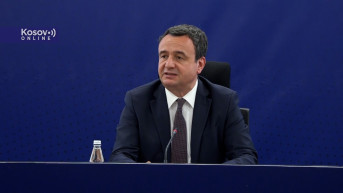
Criticism and recommendations from the European Union have little influence and, moreover, do not appear to affect Self-Determination leader Albin Kurti, Kosovo Online’s interlocutors agree. This was also the case with Serbian judges and administrative staff, whose requests to return to Kosovo institutions were rejected despite Brussels’ efforts to facilitate their reintegration—efforts that some interlocutors believe came too late and lacked sufficient resolve.
Written by: Veljko Nestorovic
The European Union stated that it had consistently called on Kosovo to enable the reintegration of Kosovo Serb judicial personnel in accordance with Kosovo law and agreements reached within the Dialogue, and that the decisions of the Kosovo Judicial Council and Kosovo Prosecutorial Council appeared incompatible with Kosovo law, due process, and the general requirements of the rule of law in Kosovo.
On the other hand, Acting President of Kosovo Albulena Haxhiu welcomed the decision, while Kosovo’s caretaker Justice Minister Donika Gervalla said that the decision of the Kosovo Judicial Council (KJC) to reject the request to withdraw the resignations submitted by Serbian judges and court staff in 2022 and to propose their dismissal had been made in accordance with Kosovo’s Constitution and laws.
At the same time, despite reactions from the EU, OSCE, UNMIK and others, demolitions at Lake Gazivode continued today, even though Brussels had also called for them to be suspended until a sustainable solution was found.
Before leaving Pristina, Acting Head of the EU Office Eva Palatova called on Kosovo’s authorities and political actors to cooperate constructively with the EU. Meanwhile, Dirk Schuebel assumed his duties as European Union Ambassador to Kosovo on September 2.
Political scientist Ognjen Gogic told Kosovo Online that Kosovo’s caretaker Prime Minister Albin Kurti had become accustomed to the fact that the EU’s strong words and rhetoric were not followed by concrete consequences, adding that the situation involving Serbian prosecutors and judges in Kosovo was unprecedented and, more generally, absurd and bizarre.
Gogic recalled that even when Kosovo was subject to measures imposed by the EU over developments in the north in 2023, their impact was not really felt.
“They were essentially imposed more as a formality. Kurti has therefore learned that disregarding and ignoring the Union’s recommendations will have no practical consequences. That is why he can continue doing so. The only situation in which things were different was when, regarding the laws on foreigners, he agreed to compromise and introduce exemptions for Serbs. Just before the final deadline, there were clear messages that failure to do so would have consequences for his relations with EU member states, so he had to comply. In other situations, however, he knows that there will be no consequences,” Gogic said.
Gogic said that situations such as the one involving judges and prosecutors had not occurred frequently, noting that Brussels generally reacted only after the fact.
“When something happens—for example, when Serbian institutions are closed and the European Union says that this must be done differently, in coordination and agreement with the Serbian side—that always comes afterward, when the matter has effectively already been concluded. In other words, once it has become a fait accompli. So there have not been many examples in which something was explicitly ruled out in advance and he simply ignored that. Perhaps the best, or closest, example is the ban on the dinar, over which there were negotiations with Serbia. That was a process that lasted for a long time. It unfolded over a certain period—first the entry or transfer of cash and money from Serbia into Kosovo was prevented, and then branches, post offices, exchange offices and other institutions were closed,” Gogic said.
Law professor Kol Krasniqi told Kosovo Online that the recent decisions by the Kosovo Judicial Council and Kosovo Prosecutorial Council concerning Serbian judges and prosecutors did not imply abandoning the relevant agreements or the principles of a multiethnic judicial system.
Krasniqi said that the decisions instead represented a rejection of the automatic and collective reinstatement of Serbian judges and prosecutors who had left Kosovo institutions in an organized manner in 2022.
“Their resignations were part of a coordinated political action and, consequently, produced legal and institutional consequences. Judges and prosecutors exercise state authority and must be independent of any political or ethnic influence, as well as of authorities outside Kosovo’s constitutional order. Therefore, it cannot be demanded that, after almost four years, they collectively return to their positions as though their resignations had produced no legal consequences. However, Kosovo remains obliged to preserve the multiethnic character of its judicial system. The fairest solution would be to announce new, open and transparent competitions, to which former Serbian judges and prosecutors could also apply individually, with their integrity, professionalism, impartiality and independence from political influence being assessed,” Krasniqi said.
He also believes that the EU cannot dictate to the Judicial Council and Prosecutorial Council how they should decide.
“Their independence means independence not only from the Kosovo Government and political parties, but also from Belgrade, Brussels and any other external authority. The European Union can make recommendations, call for the implementation of agreements and mediate in reaching new agreements, but the final decision rests with the competent Kosovo institutions, in accordance with the Constitution and the law,” Krasniqi said.
Nevertheless, he stressed that the European Union should have become involved much earlier.
“For almost four years, the legal status of these resignations remained unresolved. As facilitator of the Dialogue, the EU could have helped establish a legal, individualized and transparent mechanism for their gradual reintegration into Kosovo’s judicial system, instead of now, after four years, calling for their collective and automatic return,” he said.
At the same time, Kosovo institutions have not always complied with European Union requests for prior coordination.
Political analyst Nedzmedin Spahiu believes that the resignations of Serbian judges and prosecutors were a mistake and a major blow to Kosovo’s judiciary, but that accepting those resignations was also highly detrimental to Kosovo. He said they were high-quality judges, but that new personnel and judges would now have to be recruited.
“We have lost judges who had experience and were professionals in their work. It is a major loss for Kosovo’s judiciary. On the other hand, when it comes to the European Union’s recommendations, I think Albin Kurti’s government has become immune to such criticism, so that is not really the major issue. The major issue is that Kosovo is losing judicial quality,” Spahiu told Kosovo Online.
Spahiu believes that rejecting EU recommendations cannot cause Kurti political damage.
“I think Kurti will suffer politically when people see that he is doing nothing, that he surrounds himself only with incompetent people and that he has achieved nothing. His only success is that he took control of the north away from the Serbian state and transferred it to the state of Kosovo, and that is all. Everything else has been a major failure, so that political credit cannot sustain him forever. People have already begun to forget about it, and in the end they will decide based on what he does—or does not do—in Kosovo,” Spahiu concluded.


0 comments