
What did Pristina boast to Brussels about, what has it implemented from the dialogue obligations?
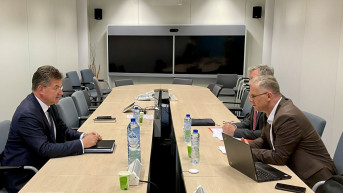
At a time when it has been over 4,100 days since the Kosovo authorities failed to fulfill their obligation to form the Community of Serb Municipalities, officials from Pristina have almost presented it as an achievement that they submitted comments on the plan for implementing the agreements reached last year in Brussels and Ohrid to the European Union within the set deadline, spanning seven pages. This formality might not have even drawn attention if the Kosovo Government had not stated that they had presented arguments in the document submitted to Brussels showing that Kosovo has fulfilled part of its obligations.
Written by Dusica Radeka Djordjevic
"Some of the issues addressed by the Kosovo Government through the submitted comments relate to the full implementation of the agreement, all its articles in their entirety, and of course the acceptance of the agreement by both sides, considering Serbia's frequent, even public, opposition to the Basic Agreement," Klisman Kadiu, advisor to Deputy Prime Minister Besnik Bislimi, stated a few days ago.
According to him, "arguments have been presented showing that Kosovo has fulfilled part of its obligations."
What part of its homework has Kosovo done? And, is sending comments and suggestions regarding the implementation of the agreement a hint that Pristina will be more diligent in implementing the agreed terms in the continuation of the negotiation process, or is this just another simulation of participation in the dialogue?
In truth, the Pristina delegation handed over the remains of three Serbian civilians killed in 1999 to the Belgrade delegation twice in June, and then another one. However, it should be noted that according to the records of the Serbian Government's Commission on Missing Persons, 567 people of Serbian nationality are listed as missing in the conflicts in Kosovo and Metohija.
Pristina may have mentioned something entirely different in its letter to the EU, but experts in the dialogue process told Kosovo Online that the Kosovo side actually had nothing to boast about.
The Serbian side also sent its comments to Brussels within the set deadline (by July 18), as confirmed to Kosovo Online by the Office for Kosovo and Metohija.
Milos Pavkovic from the Center for European Policy tells Kosovo Online that Pristina has fulfilled minor tasks from the agreements reached last year within the Brussels and Ohrid dialogues, which, as he says, can be categorized as an indirect implementation of the agreements, while the central issues – the Community of Serb Municipalities, autonomy for the Serbian community, and the issue of the Serbian Orthodox Church – have not been touched.
According to Pavkovic, Pristina's submission of seven pages of comments on the implementation plan to Brussels is merely a distraction from Pristina's inactivity in fulfilling obligations not only from the Ohrid and Brussels agreements but from all others as well, and an attempt to shift responsibility onto Serbia.
"There are very few things we can discuss regarding the implementation carried out by Pristina. If we take into account that Serbia first recognized Kosovo's license plates, and then, through reciprocal measures, Kosovo recognized Serbia's license plates, this can be interpreted as part of the agreement's implementation. Or when we talk about the return of land to the Visoki Decani Monastery, which was primarily related to the process of joining the Council of Europe, since the status of the Serbian Orthodox Church is mentioned in the articles of the Ohrid Agreement, this too can indirectly be seen as implementation of the agreement. The declaration on the missing persons and the return of the remains of some individuals who lost their lives in Kosovo and Metohija during the 1990s war can also be considered implementation. However, these are all minor, subtle parts, while the core issues, which are the central topics – the Community of Serb Municipalities, autonomy for the Serbian community, and the issue of the Serbian Orthodox Church, have not been addressed in Pristina's implementation, and that seems to be the essence of any discussions on the implementation of the agreement and the further process of normalizing relations," Pavkovic says.
Simply sending proposals on the implementation plan, as he assesses, is not enough to expect that the Kosovo side will be more constructive in the dialogue in the near future.
"On the contrary, I think this is a way for Pristina to divert attention from its inactivity and shift responsibility to Serbia, thereby creating fertile ground for further non-constructive policies they have pursued so far. In that sense, I do not expect any better approach or change in Pristina's approach, especially considering that in the next six months, we are facing elections in Kosovo and Metohija, and the government of Albin Kurti will likely try to politicize the dialogue with Serbia as much as possible," Pavkovic evaluates.
For Jovana Radosavljevic, the executive director of the NGO New Social Initiative, the fact that the Kosovo side sent its suggestions to Brussels is not a sign that Pristina will be more willing to cooperate in the dialogue. She emphasizes that what Kosovo has done amounts to the complete disintegration of Kosovo Serbs, that is, Serbian institutions in Kosovo.
"I would say this is a kind of simulation of constructiveness in the dialogue process, not their genuine desire to make some concrete progress on normalizing relations with Belgrade. In these circumstances, it is very unlikely to expect any constructive steps from both Belgrade and Pristina, at least not this year, as we are also waiting for the American elections in November, as well as the Kosovo elections. It seems that the Kosovo side is very focused on changing the situation on the ground, specifically on forced territorial integration, not the integration of the population in northern Kosovo, nor on normalizing relations and communication with its citizens," Radosavljevic assesses for Kosovo Online.
She explains that in September last year, a plan for the implementation of the agreement, which Serbia accepted, was proposed, and in the meantime, Kosovo came out with its suggestions to "perhaps show that they are the constructive side in the dialogue, that they want to come to the negotiating table, even though the situation on the ground looks completely different."
"Essentially, they do not want any progress, at least not in the format and sequence proposed by the EU. Specifically, I mean the formation of the Community of Serb-majority Municipalities, which is a priority, as we have heard countless times from European representatives, other international officials, and Serbian representatives, that the CSM is the primary issue that must be addressed before anything else. Meanwhile, the Kosovo side has a different sequence, where at least this government focuses on recognition first, then everything else," Radosavljevic says.
She points out that ten years after the signing of the First Brussels Agreement, all those institutions that were integrated in the meantime have been disintegrated, that Serbs are outside the institutions, and that there is an unwillingness on the part of Kosovo to do anything regarding the implementation of the CSM. She emphasizes that Pristina is dealing with individual elements that fall under the CSM, but in a manner that is not in the format of dialogue with Belgrade.
"This is treated as an internal issue of Kosovo. And here we come to the key issue, which is the issue of the dinar, as a unilateral decision of the Central Bank of Kosovo and countless attempts by European mediators to reach a solution on this issue. Now we also have the final decision on the passports of the Coordinating Directorate so that they fall under the EU visa-free regime, and a very sharp reaction from Kosovo officials, led by Foreign Minister Gervalla-Schwarz, who accuse certain European officials of working on the disintegration or separation of Kosovo Serbs, even though, essentially, Kosovo and Serbia were on the verge of mutually recognizing passports in addition to personal documents," Radosavljevic says.
According to Besfort Rrecaj, a professor at the Department of International Law at the University of Pristina, the situation with the agreements reached last year within the dialogue has become very complicated because Kosovo and Serbia are presenting confusing objections regarding their legality, while on the other hand, the European Union is quite clear that these are agreements in a formal sense and in accordance with international law.
He says this has also complicated the criteria for determining the fulfillment of the agreements.
"Our Prime Minister, Albin Kurti, believes that the agreement must be signed to be in force, while on the other hand, Vucic does not want to sign the agreements and claims they are verbal. He sends confusing signals to Brussels by sometimes stating that these agreements are not legally binding. This whole situation complicates the process of reporting on the fulfillment of obligations because there must be some kind of common understanding as to whether one side or the other has met a certain condition. Of course, the European Union will have the final say, as it has been chosen as the arbiter in this process, which will condition further aid and further processes of European integration for both sides according to the fulfillment of the obligations assumed by the agreements," Rrecaj emphasizes for our portal.
He points out that from a legal standpoint, last year's agreements are in force and in accordance with the Vienna Convention on the Law of Treaties.
"The physical signing of these agreements would not help much if the parties are not willing to fulfill them because we also have problems with other agreements that have been signed but are not being properly implemented, so a signature does not guarantee that the parties will fulfill them. The fulfillment of agreements under international law should be in good faith by the parties, and if there is no willingness among the parties or if there is a willingness to bypass or somehow evade the agreements and interpret them in a way that is not in line with the intentions of the parties, then problems arise even in cases where the agreements are signed," Rrecaj points out.



0 comments