
What did voters say in the local elections — and who needs to hear them?
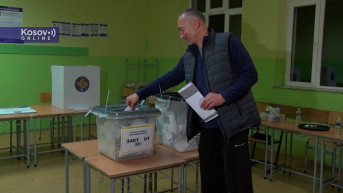
After two and a half years, Serbian mayors are returning to the municipalities in northern Kosovo, while Gracanica will continue to be led by a representative of the Serb List, despite the joint attempt of four Albanian parties to change this outcome. Analysts interviewed by Kosovo Online hold differing views on how Pristina will approach the north after these political shifts — some believe the pressure might ease slightly, while others expect tensions to persist if the north continues to be viewed as a political battleground.
Written by: Dusica Radeka Djordjevic
Votes for municipal assemblies are still being counted, but when it comes to future mayors — at least in the majority-Serb municipalities — the results are already clear.
Candidates of the Serb List won in North Mitrovica, Zvecan, Zubin Potok, and Leposavic, as well as in five Serb-majority municipalities south of the Ibar River. The mayoral race in Klokot will be decided in the second round.
“Four municipalities in the north have been returned to those to whom they belong — our citizens,” said Serb List president Zlatan Elek after results were announced on election night.
Gracanica remains in Serbian hands, even though four Albanian parties — the ruling Self-Determination and three opposition parties — united under the “Albanian Alliance” and ran a joint candidate, Leutrim Ajeti.
Newly elected Gracanica mayor Novak Zivic of the Serb List won 7,120 votes (62.54%), while Ajeti received 2,635 (23.15%). Igor Rasic (For Freedom, Justice and Survival) followed with 1,468 votes (12.9%), and Goran Marinkovic of the Kosovo Alliance received 161 (1.41%).
According to Ivan Nikolic from the NGO Communication for Social Development, these figures send a serious signal — the number of votes for the Albanian candidate is unusually high. He urged the Serbian community to take this trend seriously, warning that, if not at the next election, within a decade the mayoral race could reach a runoff between Serbian and Albanian candidates.
From Belgrade, the key message following the elections was that “Serbian unity prevailed.”
The Director of the Office for Kosovo and Metohija, Petar Petkovic, said the results would “enable the Serbian people to reverse the catastrophic consequences of years of imposed rule by Albin Kurti’s occupation regime.”
His deputy, Milos Terzic, specified that with the return of political control to the north, it would be possible to annul the decisions made by “illegitimate Albanian authorities” who governed those municipalities for nearly three years.
Will the pressure continue?
Marko Milenkovic of the NGO New Social Initiative noted that the illegitimate administrations in the north, in place since 2023, had made numerous problematic decisions that may now be difficult to reverse.
“Nevertheless, with a serious approach, positive change is possible. The key challenge will arise if there is no political change at the central level — because the central government determines the approach and dynamics locally. If there’s a change of government in Pristina, we might see improvement, but if not — or if the process of institutional formation remains blocked — tensions between central and local authorities will persist, causing ongoing communication problems and political friction,” Milenkovic told Kosovo Online.
He added that much depends on how Self-Determination and other parties perceive the north:
“Will they continue to treat it as an electoral battleground — a platform for fighting Serbia — or will they accept these results and recognize the new mayors as legitimate representatives with whom they must cooperate? That would improve interethnic relations in Kosovo.”
Historian Stefan Radojkovic believes that despite these elections, Pristina’s pressure on the Serbian community will likely continue — though perhaps slightly reduced, given that local governments and assemblies will again be led by Serbs.
However, he pointed out that the absence of Serbs from local governance in the past two years has led to shifts in municipal staffing:
“In that period, many Albanians and other non-Serbs were likely employed in northern municipal administrations. Because of this, the impact of local political change may be limited.”
He added:
“The pressure might ease somewhat, but considering the practices established under Kurti’s caretaker government, I doubt that any future government in Pristina will significantly alter its stance toward the Serbian community.”
Radojkovic also expressed concern over a growing number of voters in Serb-majority areas supporting Albanian parties:
“That suggests demographic shifts — particularly in Novo Brdo and Gracanica. There are even attempts to alter the population balance in northern Mitrovica, which is troubling.”
He noted that elections in Serbian areas of Kosovo traditionally mirror political dynamics in central Serbia:
“It was clear that the Serb List, backed by the Serbian Progressive Party in Belgrade, enjoyed a major advantage in resources that translated into votes. Still, new challengers emerged in the Serbian community — notably Marko Jaksic and Aleksandar Arsenijevic, who campaigned even from the Jarinje crossing. Overall, the Serb List won clear majorities in nearly all Serb municipalities.”
Self-Determination failed to project national power locally
Milenkovic observed that Self-Determination was dissatisfied with its local election results:
“Almost all opposition parties declared victories in certain municipalities, while Self-Determination remained reserved. Compared to previous local elections, the situation is similar — they’ve never had much influence at the local level. Compared to parliamentary dynamics, however, Self-Determination clearly failed to transfer its national-level dominance to local politics. This is most evident in Pristina and South Mitrovica, where they had their strongest focus — and both are now heading into a second round,” he said.
According to him, Self-Determination’s weakness lies in its neglect of local issues:
“They don’t focus on citizens’ daily problems or local governance — their message is primarily nationalist, which explains why their results fell short of expectations.”
Polling station irregularities
Dusan Radakovic of Democracy in Action reported over 100 cases where voters were reassigned to polling stations in completely different municipalities, even in areas with which they had no connection.
“For example, people who have lived their whole lives in northern Mitrovica were told to vote in Istok,” he said.
Despite such irregularities, Serbian voter turnout was exceptionally high — the highest in Kosovo since 2001, according to Serbia’s Minister for European Integration, Nemanja Starovic.
“After four years, Serbs have united and clearly expressed their stance toward everything Albin Kurti has done, showing their support for the Serb List as the only political structure maintaining institutional ties with Belgrade,” Starovic stated.
Inclusion in institutions
University professor Mazlum Baraliu emphasized that it is vital for the Serbian community in Kosovo to be integrated into society and institutions. He added that all political parties, including the Serb List, must listen to the citizens rather than act in the interest of a narrow elite.
“One must think carefully — it is better to be part of any society. Reality dictates that we must work for our families and communities. They must learn that lesson and work for the common good. They should understand that they have the majority in those municipalities and must serve the community, not personal or group interests,” Baraliu said.
He also highlighted the emergence of new political parties and civic initiatives in this election cycle:
“It doesn’t matter how many votes they received — what matters is that they had the courage to participate. Some succeeded, some didn’t, but that already changes the picture. Things will no longer be as before, with the Serb List having the first and last word. Everyone must act within the law, and if something is wrong, a complaint should be filed — that’s part of the rule of law. Every citizen should have equal opportunity in this civic country — it doesn’t belong to the Albanian majority or to minorities, but to all its citizens.”
Who awaits the second round?
According to the CIK, 21 municipalities elected mayors in the first round, while 17 will hold a runoff on November 9.
In the Serb-majority municipality of Klokot, the second round will be between Bozidar Dejanovic of the Serb List (41.62%) and Srecko Spasic of Serbian People’s Unity (31.43%).
Runoff elections will also be held in Pristina, South Mitrovica, Orahovac, Prizren, Pec, Junik, Dragas, Djakovica, Kacanik, Fushë Kosova, Suva Reka, Gnjilane, Vitina, Vucitrn, Obilic, and Klina.


0 comments