
What does the 2025 U.S. National Security Strategy bring for our region?
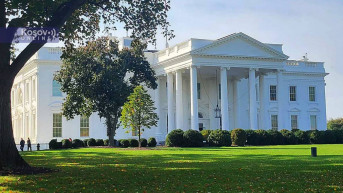
In the new U.S. National Security Strategy, signed by President Donald Trump, Serbia and Kosovo are mentioned primarily in the context of peace negotiations conducted during Trump’s second term. However, analysts interviewed by Kosovo Online point out that the region as a whole—and its fundamental challenges—are not a priority for the current U.S. administration. They emphasize that the Strategy reflects Washington’s intention to deepen relations with the states of Southeast Europe through commercial and political cooperation, while also underscoring that developments in Ukraine—identified in the document as a primary American interest—will strongly shape dynamics in this region.
Written by: Dusica Radeka Djordjevic
The Strategy opens with the assertion that, “Not every country, region, problem, or cause—no matter how worthy—can be at the center of America’s strategic focus. The purpose of foreign policy is to safeguard the nation’s core interests, and that is the sole focus of this Strategy.” The document was released by the White House on 4 December.
Echoing many of Trump’s public statements, the Strategy asserts that he has “cemented his legacy as a president of peace.” It states that during the first eight months of his second term he secured peace in eight conflicts worldwide, including “negotiating peace between Kosovo and Serbia.”
“Preventing regional conflicts from escalating into global wars that engulf entire continents merits the attention of the Commander-in-Chief and is a priority of this Administration. A world in flames, with wars reaching our shores, harms U.S. interests,” the document stresses.
While the White House does not outline concrete plans for the Western Balkans, the section dedicated to Europe—entitled “Advancing European Greatness”—states that U.S. policy toward Europe should prioritize building resilient nations in Central, Eastern, and Southern Europe through trade links, arms sales, political cooperation, and cultural and educational exchanges.
Across two and a half of the Strategy’s 29 pages, the European chapter notes what it describes as Europe’s declining confidence vis-à-vis Russia, an economic downturn overshadowed by the risk of “civilizational erosion,” and the U.S. interest in negotiating a rapid cessation of hostilities in Ukraine to prevent unintended escalation and restore strategic stability with Russia.
These passages have drawn sharp commentary in several European media outlets. Le Monde observed that no previous U.S. national security document has displayed such indifference toward adversaries and such overt disregard for traditional allies—especially in Europe.
“Trump Highly Critical of the EU”
Bogdan Stojanovic of the Institute of International Politics and Economics in Belgrade told Kosovo Online that the Strategy makes clear the United States’ primary interest: ending the war in Ukraine as swiftly as possible—a process that will inevitably affect Serbia. He believes that negotiations between Belgrade and Pristina will remain sidelined until the Ukrainian conflict is resolved.
“Serbia—and Kosovo as part of Serbia’s territory—is not explicitly mentioned in the Strategy. But we are a small country, and any global turbulence affects us: from energy flows to industrial functioning and daily life. In that sense, resolving the war in Ukraine will strongly influence us,” Stojanovic noted.
He adds that every U.S. president adopts such a strategy during his term, and Trump’s 2025 document contains several notable departures from previous approaches. Remarkably, neither China nor Russia is framed as an immediate security threat to U.S. interests, while the European Union—ostensibly a close ally—faces the sharpest criticism.
“The Strategy portrays Europe as undergoing civilizational decline and cultural disintegration and encourages right-wing, nationalist forces within EU states to take power. The overarching conclusion is that America’s primary interest is ending the war in Ukraine due to the risk of unintended escalation—an escalation Trump argues could be triggered by the EU itself,” he said.
Given these dynamics, when asked who might play a leading role in the Belgrade–Pristina dialogue—the U.S. or the EU—Stojanovic stresses that Russia’s role must also be considered.
“It seems we are bargaining chips in the world’s major geopolitical divides. Today’s global confrontation may even surpass Cold War levels. Trump seeks to portray himself as a peacemaker, claiming to have stopped several wars, including the one ‘between Kosovo and Serbia,’ which is far from reality. But until Ukraine is resolved, Kosovo will remain low on Washington’s priority list,” he concluded.
“Language on the Balkans Is of No Consequence”
Former CIA Balkan analyst David B. Kanin told Kosovo Online that the Strategy makes clear the U.S. is stepping back from global leadership and aiming for a friendlier posture toward Russia. Regarding the Balkans, he argues, the Strategy contains “language without significance.”
“The language is boilerplate, except for the section on Europe. It shows that the U.S. seeks closeness with Russia and is distancing itself from European allies,” Kanin said, describing the Strategy as a branding exercise rather than a serious policy framework.
He emphasized that the Balkans are not a priority:
“All the so-called conflicts Trump claims to have ended—none of them are true. The Balkan knot is irrelevant to this administration. What matters is what enhances President Trump’s personal prestige. He wants a Nobel Peace Prize. He would like to claim it for Kosovo or other issues. The region’s essential problems simply do not matter to this administration.”
Kanin added that while there has been no armed conflict since NATO’s 1999 bombing campaign, “the core issues between Serbia and Kosovo remain unresolved” and that the lack of EU unity on recognition ensures continued regional tension.
NATO No Longer Viewed as an Expanding Alliance
Dragoslav Raseta of “Novi treci put (New Third Road)” emphasizes that the U.S. Strategy maintains the status quo toward the Western Balkans, as President Trump views the region—where the U.S. has limited investment and influence—as one that should be economically connected to America so Washington can advance its interests.
According to Raseta, the U.S. seeks deeper relations with states in Eastern, Central, and Southeastern Europe through commercial and political partnerships. He also notes Trump’s position that NATO should no longer be viewed as an ever-expanding alliance; in practical terms, this places the responsibility for Euro-Atlantic integration primarily on the EU.
Raseta believes that the Brussels-led Belgrade–Pristina dialogue will continue, with the U.S. offering supportive—though not leading—engagement. He also points out that congressional opposition to withdrawing U.S. troops from Europe demonstrates the limits of the Strategy’s implementability.
He concludes that the 2025 Strategy bears Trump’s personal imprint, unusually intertwining domestic ideological themes—immigration, cultural issues, and “traditional values”—with foreign-policy priorities, a departure from typical U.S. strategic documents.
Europe Left to Its Own Devices
Diplomat Albert Prenkaj underscores that, despite criticisms directed at Europe, the U.S. still regards Europe as strategically and culturally vital. Yet he concludes that “in security terms, Europe has been left to fend for itself.”
Quoting Kremlin spokesperson Dmitry Peskov, Prenkaj notes that Moscow welcomed Trump’s Strategy as aligned with Russia’s vision of global order. He argues that the emerging geopolitical landscape—U.S.–Russia negotiations, unresolved war in Ukraine, and growing transatlantic divides—raises the question of whether the Western Balkan region is ready to assume a more proactive role within a new world order.
Prenkaj predicts that the EU will need substantial resources to develop a European Defence Mechanism and a pan-European defence industry, potentially involving enthusiastic EU states and non-EU partners like the UK and Norway.
Vision or Implementable Strategy?
Stojanovic believes Trump will not be able to fully implement the Strategy during his final presidential term. U.S. foreign policy, he argues, “is like a large tanker—it cannot quickly change course.” While some trends may evolve, he doubts that dramatic outcomes, such as the collapse of the EU or NATO, could occur in such a short time.
Raseta notes that, conceptually, the new Strategy does not diverge sharply from earlier documents regarding major geopolitical rivals. Indo-Pacific priorities and concerns over China remain central, while immigration receives unusually high prominence.
Ultimately, he concludes, the Strategy reflects the immediate political priorities of the current White House and serves, to some extent, as a domestic political instrument.



0 comments