
What has changed in relations in the region and Serbia's position after the vote in the Council of Europe on Kosovo's request?
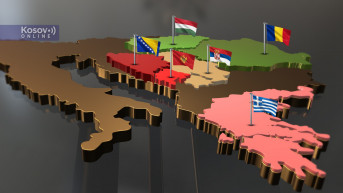
The statement by the member states of the Council of Europe (CoE) about the beginning of the procedure for Kosovo's admission to that organization, as announced by Serbian officials, would lead to significant changes in Belgrade's foreign, especially regional, policy. For the interlocutors of Kosovo Online, there is no doubt that the vote in the CoE was also a kind of "test" that Serbia can really count on in the international arena, and they welcome the announcement that in the future the foreign policy course will be carefully traced and "measured", primarily based on the relations of other countries regarding the Kosovo issue and the territorial integrity and sovereignty of Serbia.
According to our interlocutors, this particularly applies to Montenegro, whose representative in Strasbourg voted for Kosovo's application, and Bosnia and Herzegovina, which abstained. An unpleasant surprise were also Greece and Slovakia, which, although they are among the five EU member states that do not recognize Kosovo, also abstained. On the other hand, Hungary, which recognizes Kosovo, did not support Pristina's application, which, according to our interlocutors, will positively affect the relations between Belgrade and Budapest.
The messages sent by Serbian officials to Rajko Petrovic from the Institute for European Studies after the vote on Kosovo and CoE indicate that "Serbia is seriously planning to change its foreign policy towards countries that do not respect our territorial integrity and sovereignty, in contrast to Serbia which in principle respects whatever country it is".

"It is quite clear that Serbia, especially today in such complex geopolitical relations, can no longer tolerate the fact that some countries assume that we will respect their territorial integrity and sovereignty, and when it comes to Serbia, they believe that they have the right to treat it the way as they wish at a given moment. I think it's a good thing for us, that after this vote we could see who are our fake and who are real friends and which countries might at some point recognize the so-called Kosovo as an independent state," Petrovic says.
Regarding the fact that the representative of Bosnia and Herzegovina in the Council of Europe abstained when voting on the application of Kosovo, Petrovic says that official Belgrade has respected Bosnia and Herzegovina as a country all these years.
The existing relations between Serbia and Bosnia and Herzegovina have been shaken
"Whenever Serbian officials spoke about Bosnia and Herzegovina, the first sentence would always be that Serbia respects its territorial integrity and sovereignty and that it respects the Republika Srpska, that is, its competencies within the framework of Bosnia and Herzegovina. The relations between Serbia and Bosnia and Herzegovina regarding mutual respect for territorial integrity and sovereignty, as they have been until now, are unsustainable. Again, I repeat the matrix that political Sarajevo considers that an independent, sovereign, complete Bosnia and Herzegovina is some kind of "golden calf" that everyone should worship and that the issue of Kosovo and Metohija is a long overdue issue. I absolutely agree that we should radically change our policy towards Bosnia and Herzegovina. As long as political Sarajevo does not accept the fact that the Republic of Kosovo should be an integral part of Serbia, we should use the same rhetoric and methods and say the same for the Republika Srpska, although the two examples are not comparable, due to the fact that Serbia was internationally recognized by the Dayton Agreement. Of course, it is part of Bosnia and Herzegovina, but if we look at historical arguments and numerous facts, according to the logic of things, Serbia and the Serbs have far more rights to call for the Republika Srpska to become part of Serbia, and it is understood that the Kosovo and Metohija is certainly part of Serbia," our interlocutor explains.
He also referred to the countries that had not recognized Kosovo, which had acted differently in the CoE - Romania, which had been against it, and Greece, which had abstained. He says that, when it comes to Romania, "we owe that country a huge debt of gratitude, it is a neighbor with which we have no open issues and the support of an increasingly strong and powerful country and at the European level is of great importance to us".
"On the other hand, Greece really acted in a rather strange way. There are some voices in Greece that this could be a prelude to the recognition of the so-called Kosovo. I'm not sure if that will happen. But I am sure that this reticence of Athens regarding the reception of so-called Kosovo in CoE is harming Greece itself. First of all, in its territory, there is an Albanian national minority in the northwest, which has aspirations to become part of the so-called project of "Greater Albania". On the other hand, we should not forget that so-called Kosovo during the existence of the Islamic State, provided the largest number of volunteer warriors on the battlefield per capita in Europe, and it became a breeding ground for extreme, Islamist radicalized movements and people, and that this could also pose a problem for Greece and the entire Balkans. I think that Greek foreign policy should think carefully about whether it will turn to the Albanian side or whether it will remain on the course of a centuries-old friendly relationship with Serbia and the Serbs," Petrovic says.
He says that he is in no way surprised by Montenegro's vote in the Council of Europe. He emphasizes that it is a country that recognized the independence of Kosovo in 2008 and that after the parliamentary elections on August 30, 2020, and after the presidential elections in which Jakov Milatovic defeated Milo Djukanovic, it was made clear that these new political groups do not plan to change their position on the issue of relations with Prishtina and a number of other issues.
"I think that the citizens of Serbia and the Serbian leadership all these years, and it has been 15 years since Podgorica recognized so-called Kosovo, passed over that fact too lightly. Nevertheless, it is an extremely hostile act and does not speak at all about elementary good-neighborly relations, let alone some fraternal relations between Serbia and Montenegro. Of course, the opinion of the citizens of Montenegro is completely different, but it is still an internal issue of Montenegro and it is not good for it if its government implements some policies that contradict the opinion of 60-70 percent of the citizens," Petrovic says.
Time to say "enough" to the official Podgorica
He reminds that Montenegro has not returned the Serbian ambassador yet and that its officials do not miss the opportunity to congratulate the Albanian leaders in Kosovo on numerous holidays.
"I think it is time for some kind of reciprocal relations between Serbia and Montenegro, and I sincerely hope that this change in our foreign policy, textual, as announced, will also include Podgorica, because it is high time that the people of Montenegro realize that they cannot do to Serbia what they want, while on the other hand, they expect education, health system services and many other benefits that they still have in Serbia," Petrovic believes.
Historian Srdjan Graovac, an analyst of the Center for Social Stability, tells Kosovo Online that President Vucic announced that our regional policy would change, that is, adapt to the new circumstances that had arisen after the vote in the Council of Europe on Kosovo. He does not expect radical changes, but that Serbia will use every opportunity to make it known that it is not satisfied with the behavior of certain neighbors and their attitude toward the territorial integrity of Serbia.
"There, our neighbors showed their attitude towards Serbia and their attitude towards the most important issue for Serbia, which is Kosovo and Metohija. Of course, this will have a special effect on each country, and it will also depend on the intensity of Serbia's bilateral relations with those countries. All this should be viewed from a special aspect. That relationship will not be reflected in the same way towards Greece or Bosnia and Herzegovina, or some other country with which we may not have meaningful and intense relations and to which we are not so attached," Graovac points out.
Our interlocutor continues that it can be concluded that this will be most reflected in the case of Bosnia and Herzegovina, in the sense that Serbia, which insisted on getting closer to Bosnia and Herzegovina, especially the Bosniak factor, that it always emphasized that it respected the territorial integrity of Bosnia and Herzegovina, first of all, will change the rhetoric.
"Certainly, Serbia will make it clear to the authorities in Sarajevo that it has taken note of their decision to be restrained this time and that at the very least they can expect Serbia's restraint in terms of their territorial integrity," Graovac points out.
When it comes to Montenegro, the fact that they voted for Kosovo in CoE was expected to happen, according to Graovac.
"Those who are in power in Podgorica are racing to prove their loyalty to the political West and of course, they will take the lead in their anti-Serbian attitude. Unfortunately, they prove their loyalty to the West primarily with their anti-Serb attitude, and the issue of Kosovo and Metohija is the best example," he says.
Dimitrije Milic, program director of the "New Third Way" organization, believes that, when it comes to Serbia's foreign policy in the future, we should not expect too many changes.
"If Belgrade's foreign policy were to relate to European partner states only through the lens of relations with the issue of Kosovo, then Serbia would very quickly be completely isolated because a small number of countries in Europe do not recognize Kosovo's independence. Serbia will probably pay more attention to this issue in its foreign policy as a criterion for the quality of partnership, but it is not the only criterion. The biggest problem in this sense can be expected in relations with Greece and Ukraine because their positions were the mildest of the countries that did not recognize Kosovo. In the context of Ukraine, this is the biggest burden, because that country's territorial integrity is also threatened," he says.

Milic believes that in the matter of Serbia's relationship with Montenegro, we should also not expect major changes, because we are talking about a country that recognized Kosovo back in 2008.
"In the case of Bosnia and Herzegovina, this vote will probably be remembered and at some point, it will be reciprocated in a political sense on another occasion," Milic says.
Hungary's vote may be a prelude to the withdrawal of recognition of Kosovo
When it comes to Hungary, which voted against Kosovo in the CoE, according to Milic, Budapest wanted to show its partnership with Serbia with its vote symbolically, because that vote, he says, did not make a difference in the final outcome in the Council of Europe.
On the other hand, Rajko Petrovic points out that it is a very important matter.
"I think this is the first time that Hungary has made a concrete move against the so-called Kosovo and that shows that Hungary really respects Serbia. I hope that it could be a good introduction for Hungary to withdraw its recognition of the so-called Kosovo," Petrovic says.
And Srdjan Graovac points out that "Hungary is one of the few sovereign countries in Europe that makes decisions independently and therefore has no need to prove itself or flatter anyone, as some of our neighbors do."
"Certain countries and leaders, in order to meet the West, prove their pro-Western orientation precisely on the issue of Kosovo and Metohija and the territorial integrity of Serbia. In addition, Vucic and Viktor Orban managed to establish extremely good and close relations, which were reflected in the relations between the two countries. By doing so, they showed that they are statesmen who do not look exclusively to the past. Of course, they do not ignore it and consider it important, but they try not to allow the future of the two countries to be a prisoner of the past. That's why they made a big step forward and made the relations between the Serbs and Hungarians probably the best in history. Hungary, behaving in accordance with the fact that Serbia is one of its closest friends in Europe, made such a decision regarding Kosovo in CoE," Graovac points out.

0 comments