
What message was sent to the Western Balkans from the EPC Summit in Tirana – Is cooperation possible, have doubts been dispelled?
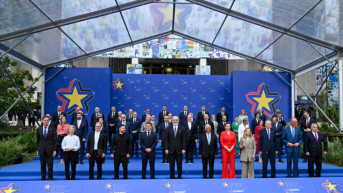
At the European Political Community (EPC) Summit—held for the first time in a Western Balkan country—the message sent from Albania yesterday, according to analysts from Tirana, Pristina, Belgrade, and Skopje speaking to Kosovo Online, was that the EU is keeping its doors open to the region. However, it's clear that the EU’s top priority remains continental security and the outcome of the war in Ukraine. The unofficial closing sentiment of the summit, one that all participants might agree on, could be summed up by Elvis Presley’s “Suspicious Minds,” which Albanian Prime Minister Edi Rama chose as the soundtrack to a video about the summit posted on his Facebook page.
By: Dušica Radeka Djordjevic
The sixth meeting of the European Political Community, held in Albania, gathered 47 leaders from across Europe under the slogan “A New Europe in a New World: Unity – Cooperation – Joint Action.”
European Council President António Costa stated in Tirana that EU enlargement with the Western Balkans is the Union’s most significant geopolitical investment. A similar message came from Italian Prime Minister Giorgia Meloni.
“European integration of the Western Balkans is an investment in Europe’s security. It is important for the countries in the region to have a clear European perspective, even though it brings new challenges,” she noted.
French President Emmanuel Macron, who originally proposed the EPC as a political framework, emphasized that more significant steps should be taken toward integrating the Western Balkans into the EU, while also coordinating responses to external threats. Host of the summit, Albanian Prime Minister Edi Rama, stated that the enlargement process could now accelerate—but may slow down if the current momentum is not used.
Summing up the messages from European leaders, Aleksandra Joksimovic, Director of the Center for Foreign Policy and former Serbian Ambassador to the UK, told Kosovo Online that the summit conveyed encouraging messages regarding the EU’s focus on enlargement, which had already been signaled with the formation of the new European Commission.
She emphasized that the issue of the Western Balkans and EU enlargement falls under the EU’s current core concern—security—as the Union seeks to fully define and secure its borders.
“I would say the EU will push for new enlargement before the end of the current Commission’s term. Right now, the frontrunners are Montenegro and Albania, as confirmed during the summit. Serbia was once in that group, but has slipped due to problems with the rule of law and alignment with the EU’s common foreign and security policy. However, we also heard that Serbia could make progress and regain a favorable position in the process. That’s an encouraging sign—there’s still a chance for Serbia to join the list of the next member states,” Joksimovic said.
According to her, summit discussions focused on Europe’s key current concerns—security, the economy, and migration—with a special emphasis on security, especially in relation to the war in Ukraine.
Given the ongoing negotiation efforts between Russia and Ukraine, organized in Istanbul, many summit guests, she noted, focused their discussions on the potential outcomes of those talks.
The European Political Community, she explained, lacks a formal structure or secretariat, but its format is widely accepted and no leaders declined the invitation to attend in Tirana.
“It’s a custom that summits alternate between EU and non-EU countries. This was the first time the EPC was held in Tirana, in the Western Balkans, and the choice of venue alone carries a strong message,” Joksimovic emphasized.
In addition to thematic roundtables, many bilateral meetings took place. Joksimovic noted that these side meetings are always welcome at major summits.
“Informal conversations don’t bring solutions directly but can lead to information sharing and planning future joint activities or clarifying topics that remained vague in earlier talks. In that sense, it’s important to consider with whom leaders can have one-on-one discussions in a more relaxed setting,” she added.
Armand Pljaka, lecturer at Epoka University in Tirana and political analyst, said the EPC initiative was initially met with skepticism, but now appears to be an effective tool in sustaining hope among regional countries regarding EU membership.
“The Western Balkans appears to have open doors to the EU, despite internal skepticism within the Union. Of course, these countries must complete their ‘homework.’ Let’s not forget that debates on the EU accession of our countries were among the drivers behind the creation of the EPC,” Pljaka told Kosovo Online.
He said holding the EPC summit in Tirana was particularly significant for the region—and especially for Albania—as a host country, marking a recognition of its progress.
Pljaka also emphasized the need for a united stance on the Ukraine crisis and “future peace,” noting that one of Europe’s biggest challenges since the outbreak of the war has been inconsistent positions among countries.
“While there has generally been unity, countries like Hungary, Slovakia, and others have at times taken divergent positions from the EU’s official stance. In that context, uniting the positions of Western Balkan countries is crucial—alongside those of other EU and non-EU countries. That is the main message of this summit. Even among EU-aspiring states like Albania, Montenegro, and Serbia, there are differing views. I’m referring especially to the stance of official Belgrade regarding Russia, which is not aligned with that of Albania or other EU-leaning nations,” Pljaka said.
From Pristina, political analyst Blerim Burjani stated that the main message of the EPC summit was the need to preserve peace and stability and to stop the war in Ukraine. As for EU enlargement, he believes the topic will remain on hold.
Burjani does not expect any progress on enlargement until 2030.
“The most important issue for the EU is its own defense. The EU will soon be heavily armed. Peace and stability are the top priority right now—enlargement is not. It’s on hold,” Burjani told Kosovo Online.
Meanwhile, Skopje-based analyst Petar Arsovski said that holding the EPC summit in Tirana sent a clear message that the EU remains interested in the region’s European integration—and that Albania is viewed as a leader in the process.
“The message is relatively clear: there is a desire for the Western Balkans to move closer to the EU, and Albania is seen as a relative leader in that process. The EU’s appetite for enlargement—or more accurately, its appetite for successful enlargement stories from the Balkans—will focus only on Montenegro and Albania,” Arsovski told Kosovo Online, stressing that the burden still lies with the region’s countries to do their homework.


comments