
What messages from Washington might Grenell bring if he visits Pristina soon?
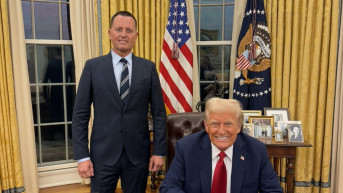
On the eleventh day of Donald Trump’s presidency, his special envoy for special missions returned from a visit to Venezuela with six freed Americans who had been detained in that country. Speculation is growing over what Richard Grenell might bring back to Washington—or, in this case, what he might leave behind—if he visits Kosovo in the coming days. Many analysts link a possible visit to negotiations on forming a new Kosovo government, while others believe Grenell’s messages would concern the entire region.
Written by: Dusica Radeka Djordjevic
There has been no official announcement of Grenell’s visit to Kosovo, but security expert Drizan Shala has stated that there are indications he will arrive soon. According to Shala, Trump’s envoy will undoubtedly meet with officials in Pristina as well as opposition party leaders.
Shala noted that the purpose of the visit is to present the White House’s strategy for further improving the situation in Kosovo and the Western Balkans under the broader U.S. policy framework.
Analyst Dardan Islami views Grenell’s possible visit in the context of Kosovo’s elections held on February 9 and believes that his arrival could facilitate the formation of a new government.
"I see that Grenell is coming next week, and I know that we are no longer the ones deciding—we have voted, and now others are making decisions for us. No one is asking us," Islami said earlier this week.
It is not difficult to predict who in Kosovo would welcome the visit of the former U.S. envoy for the Belgrade-Pristina dialogue during Trump’s first term—and who would not—especially after the recent “debate” between him and Kosovo’s Prime Minister Albin Kurti regarding the current state of relations between Washington and Pristina.
Two days before the Kosovo elections, Grenell stated on the social media platform "X" that Prime Minister Albin Kurti was mistaken in claiming that Kosovo-America relations had never been better.
"The relationship has never been worse. Albin Kurti has been condemned by the first Trump administration, the Biden administration, NATO, the EU, the U.S. embassy, and Antony Blinken...," Grenell wrote.
Kurti responded by saying that Grenell's criticism of him had been ongoing since 2020.
"His opposition to me as a politician and prime minister did not start during the campaign—it has been continuous for the past five years. However, we consider the U.S. our unwavering ally, friend, and special partner," Kurti stated in an interview at the Munich Security Conference.
During a possible upcoming visit to Pristina, Slobodan Zecevic, director of the Institute for European Studies in Belgrade, believes Grenell could convey Washington’s stance on the organization of power in Kosovo and relations with the Serbs.
"The arrival of Richard Grenell will send a message from the new U.S. administration to the Albanian authorities—clarifying their position on the crisis in Kosovo and the government there. That is the key purpose of Grenell’s visit, in my view. The administration and the situation have changed. Grenell knows this region well; he was here when the Washington Agreement was made. Therefore, I believe he will convey U.S. positions on both the organization of power in Kosovo and relations with the Serbs," Slobodan Zecevic told Kosovo Online.
He emphasized that the key issue now is how the U.S. perceives Albin Kurti.
"Do they still see him as a viable leader for Kosovo’s future government, and with what kind of program? I have the impression that this U.S. administration is quite critical of Kurti’s track record and his behavior in recent years regarding Serbian-Albanian relations. That will be the interesting question—whether the U.S. still considers Kurti a key political figure in Kosovo," Zecevic stated.
Nemanja Bisevac, former president of the North Mitrovica Municipal Assembly, told Kosovo Online that Grenell’s visit to Kosovo would, in itself, be a strong message that resolving the Kosovo issue is a high priority for the Trump administration.
Bisevac expects Grenell to meet with all political actors, including Serb List.
"Since Trump took office just over a month ago, many things in the world have changed. Some issues that the international community, led by the U.S., had been unable to resolve for the past five years are now being addressed. I expect a swift improvement in the situation, particularly in northern Kosovo and Metohija, leading to a long-term solution for peace and prosperity in the region," Bisevac said.
He added that given Grenell’s previous role as Trump’s envoy for the Belgrade-Pristina negotiations and his recent public statements about Kosovo before the February 9 elections, his visit could have a significant impact on the formation of the new government in Pristina.
University professor Nexhmedin Spahiu holds a different view, believing that the U.S. will not interfere in the government formation process.
"If the U.S. administration had wanted to influence the formation of the government, they would have done so ten or more days ago rather than waiting until the last moment. The government will be formed based on the election results," Spahiu told Kosovo Online.
He noted that the opposition Democratic Party of Kosovo (DPK) is hoping Grenell will come to Kosovo and "intimidate" representatives of minority communities, discouraging them from joining a coalition with Albin Kurti, which would prevent him from forming a government.
Spahiu finds it difficult to predict what message Washington would send if Grenell were to visit soon, considering that Trump has been in office for just over a month.
"The message Trump sent to Kosovo’s President Vjosa Osmani on the 17th anniversary of Kosovo’s independence was a strong show of support. He called Kosovo a determined and resilient nation—words that even Kosovo’s own leaders rarely use to describe it. Grenell echoed similar sentiments, though he also had some ‘sharp’ remarks for Albin Kurti, even without mentioning him directly. He praised Hashim Thaçi, which was effectively a criticism of Kurti, though it still represented support for Kosovo as a state and an entity. Looking at these statements together, we can conclude that nothing significant will change," Spahiu assessed.



0 comments