
What price is Kosovo paying for delays in forming institutions?
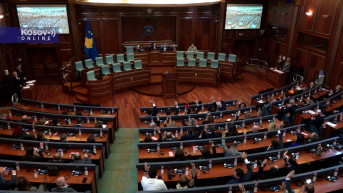
Three electoral processes in 16 months have cost Kosovo millions of euros, while delays in forming institutions have created additional losses for the Kosovo economy. However, the price Kosovo is paying for dysfunctional institutions is reflected not only in the economic sphere but also in politics, strategic dialogue with allied countries, and public trust, Kosovo Online interlocutors say.
Written by: Milena Miladinovic
While votes from the June 7 elections are still being counted, calls are coming both from Kosovo and the European Union for institutions to be formed as soon as possible.
According to the current election results, it appears increasingly likely that Self-Determination will secure enough seats in the Assembly of Kosovo to form a government. However, the key question remains the election of a president, which will require compromise among political parties—something that has not been achieved in the past.
It was precisely the inability to reach such a compromise that left Kosovo without fully functioning institutions in recent months.
Economists, business representatives, and foreign diplomats have warned that it is time for Kosovo to return to political normality.
Kosovo Online’s interlocutors argue that the cost of delaying the formation of institutions is both economic and political—and significant in both respects.
Security studies researcher Nikola Vujinovic stated that the cost of delaying the formation of institutions in Kosovo is reflected economically through declining investments and delays in payments from the EU Growth Plan, and politically through growing dissatisfaction among citizens and the European Union.
“Everything comes down to one need, and that is the implementation of the Growth Plan. As we know, the European Union approved certain funds at the end of last year after the government of Albin Kurti was formed following the December elections. By doing so, Kosovo accepted a specific Roadmap outlining how various issues would be addressed. In order to implement those measures and fulfill the Growth Plan, you must have a government with a full mandate. The European Union insists that institutions be established so they can operate at full capacity. Therefore, we can reduce the political consequences to a halt in integration and strategic dialogue with major powers, and the economic consequences to the loss of Growth Plan funds, or rather delays in their disbursement,” Vujinovic told Kosovo Online.
Another price Kosovo’s politicians may pay if institutions are not formed within the legal deadline following the elections is voter apathy and even lower turnout in future elections, which Vujinovic believes could be held sooner rather than later.
“Citizens of Kosovo from the Albanian community have sent a message to their political representatives that they do not accept this kind of behavior and this kind of delay in forming institutions,” he said.
He also noted that representatives of business chambers in Kosovo have called for the rapid establishment of institutions because investors are unwilling to invest in Kosovo.
“So, from the economic perspective, it is about investment losses, and from the political perspective, dissatisfaction among voters and the European Union,” he added.
According to him, the international community, particularly the U.S. and German ambassadors, has the ability to influence politicians in Pristina to resolve the institutional crisis as quickly as possible.
“They are extremely irritated by these delays and by nearly two years of institutional problems. They hold the strongest cards. Why they are not using them is the question of all questions, because it is quite obvious they are not influencing the actors to reach an agreement. If they were, an agreement would have been reached on election night,” Vujinovic said.
Impact on the Economy
President of the Kosovo Business Alliance, Agim Shahini, said that the political crisis in Kosovo has had a major impact on the economy and has resulted in rising inflation, increased imports, declining exports, and reduced production.
“If we look at the statistics, we have inflation of nearly seven percent, declining exports, higher imports, falling production, and a growing percentage of Kosovo citizens among the poorest people in Europe after Moldova. There is no growth. Kosovo has many projects that need to be completed, but the government has decided to block all those projects because it believes that is the best way to prevent corruption,” Shahini told Kosovo Online.
According to him, Kosovo’s politicians must work harder and honor the promises they made during the election campaign because the economy is deteriorating.
“Politicians in Kosovo have many obligations to act in accordance with their programs and the promises they made during the campaign. That would be beneficial. If they fail to do so, we do not know what lies ahead, but we do know that the economy is declining every day,” he said.
Shahini also noted that the elections were peaceful but that all political parties emerged as losers.
“They all lost, collectively, almost 200,000 votes. That is a message to all politicians that they are not working for the good of the state or for the benefit of voters. They should accept that. If they were guided by political morality, they would all resign. The people are tired of a politics that serves neither the citizens nor the state, but only politicians’ own positions on the political scene,” he said.
He added that in the coming period he expects a technical government that would complete certain projects, including the American gas initiative, and advance the dialogue with Serbia, after which new elections could follow.
“Everyone wants the position of prime minister, and no one is willing to give it up. Everyone wants the position of president, but no one has enough votes. Therefore, if there is no agreement, there is a greater chance of a technical government than of new elections.
Ultimately, there may be new elections, but the result will likely be even worse than the current one,” Shahini concluded.
Economic Sustainability at Stake
Political scientist Ivan Tomic pointed out that the formation of institutions in Kosovo has long since ceased to be merely a political issue and has become a question of economic sustainability.
He recalled that, according to International Monetary Fund reports for 2024 and 2025, Kosovo’s economic growth slowed from 4.6 percent to 3.6 percent.
“In addition to that, Kosovo faces a trade deficit problem, meaning high levels of imports. We also have inflation that continues to rise from day to day and month to month. These are all economic indicators showing that the issue of forming institutions is extremely important for the economy and its functioning. The economic reasons for establishing institutions are more than evident because institutions are necessary for adopting budgets, implementing major infrastructure projects, aligning with European Union reforms, and securing funds from the EU Growth Plan, which remain locked for those reasons,” Tomic told Kosovo Online.
The political need for forming institutions is equally evident, he said.
“It may even be more alarming than the economic aspect because every new attempt to form institutions that ends in failure further deepens the political crisis in Kosovo and creates the impression within the international community that Kosovo is incapable of establishing stable and strong institutions capable of implementing reforms and carrying out agreements reached in previous years,” Tomic explained.
He stressed that it is crucial for all these factors to come together in the coming period in order to facilitate the formation of institutions.
“I believe that what will ultimately prove decisive is the combination of pressure from citizens, pressure from the international community, and the clear economic necessity of forming institutions in order to return to normal processes and unlock all the economic benefits that could be achieved through further European integration, enabling Kosovo to regain its footing economically,” Tomic concluded.


0 comments