
What significance did the seventh Summit of the European Political Community have for the region?
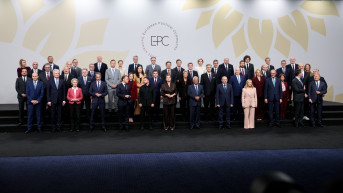
The integration of the Western Balkans into the European Union was not the dominant theme among European officials gathered at the European Political Community (EPC) summit in Copenhagen. Issues of financing further aid to Ukraine and the general security situation in Europe took center stage. Still, for leaders from our region, as at previous EPC summits, the very fact of having a seat at the table where discussions are held almost on equal footing with EU members is of great significance, Kosovo Online interlocutors point out.
Written by: Dusica Radeka Djordjevic
The seventh meeting of the European Political Community in Denmark gathered 47 invited leaders, including all heads of state or government of EU members, as well as leaders from outside the Union—among them those of the Western Balkans, the United Kingdom, Ukraine, Moldova, Switzerland, Georgia, and the NATO Secretary-General.
The summit also focused on economic security and migration, while on its sidelines, regional leaders held numerous bilateral meetings.
Serbian President Aleksandar Vucic and Kosovo President Vjosa Osmani held separate talks with NATO Secretary-General Mark Rutte.
Vucic stated that he spoke with Rutte about the situation in the Western Balkans and Serbia’s role in preserving stability and peace amid the complex circumstances in which the Serbian people live, especially in Kosovo. With German Chancellor Friedrich Merz, Vucic discussed Serbia’s European path and cooperation with Germany.
Osmani said she highlighted to Rutte NATO’s key role in guaranteeing regional stability, as well as Kosovo’s commitment to being a reliable partner in addressing common challenges. In talks with Dutch Prime Minister Dick Schoof, she requested support for lifting the punitive measures the EU had imposed on Kosovo.
Albanian Prime Minister Edi Rama declared from Copenhagen that his country is not merely waiting for EU membership but is “running toward it at great speed,” while Montenegrin President Jakov Milatovic used the occasion to reiterate that Montenegro is the most advanced EU candidate in the region.
Nikola Dencic, editor of the foreign affairs section of Radio Belgrade’s first program, told Kosovo Online that the European Political Community cannot serve as a substitute for deeper European integration, but it can provide valuable communication channels and ensure that the voices of non-member states, including those of the Western Balkans, are heard at a high level.
EPC summits are often conducted in an informal tone, Dencic noted, since the EPC is not established as an international organization. Still, it is certainly a platform where all European states—not only EU members but also partners from across the continent, along with certain international organizations—can meet several times a year to exchange views and attempt to find solutions to acute problems and crises.
“All the leaders who spoke yesterday emphasized that support for Ukraine is necessary so it can at least hold its current positions on the front line in light of potential future negotiations. At the same time, this strengthens Europe’s security and leads toward greater independence for the European Union and perhaps later for Europe more broadly, in order to achieve a degree of autonomy, especially given the signals coming from Washington since the beginning of the year. The continent is beginning to focus on taking care of its own security. These were the main themes,” Dencic explained.
As for Serbia’s delegation, led by President Vucic, Dencic observed that they were preoccupied with more urgent issues.
“There wasn’t much time to talk about Serbia’s European future, given that we currently face problems in the energy sector, announced sanctions against NIS, and the question of procuring gas from other sources. Our diplomatic activities in Copenhagen were therefore directed primarily toward solving these urgent issues, leaving little room for other topics. Although we heard that Kosovo and Metohija, other security issues, and regional stability were also discussed,” he said.
The theme of the European path was perhaps more prominent in the cases of Montenegro and Albania, he added, since Montenegro has long been the regional frontrunner in European integration, while Albania has recently surged ahead. Rama once again became at least the media star of the summit, while in Bosnia and Herzegovina, internal issues dominated the agenda.
“When it comes to Pristina, it is already customary for such gatherings and meetings with high-level European officials to be used to present their positions and to demonstrate that the current authorities in Pristina enjoy a certain legitimacy—which is increasingly being called into question,” Dencic stressed.
Since French President Emmanuel Macron initiated the EPC, Dencic recalled, there has been considerable uncertainty, as it followed proposals for different models of EU enlargement—different circles and different speeds of accession.
“When the initiative was launched, it could be interpreted as merely a substitute for membership, or at least as a way to appease candidate and potential candidate countries, given how lengthy the negotiation processes are. Even if that may have been the initial idea, it seems to be changing now,” he said.
Simonida Kacarska, director of the European Policy Institute in Skopje, said that the Copenhagen summit did not bring major decisions and that discussions were devoted to issues such as migration and illegal trade, of particular concern to the UK and France.
She emphasized, however, that EPC summits generally do not produce major decisions or resolutions but are rather forums for discussion.
“It is a symbolic forum. There were some minor initiatives when the summit was held in Moldova, in the area of digital security and the like. At these forums, EU candidate countries can contribute—not as equals, but at a higher level than they are usually accustomed to,” Kacarska told Kosovo Online.
She added that EU candidate representatives sit at the same table as EU member representatives, participate actively, and have the opportunity to see themselves as policy-shapers, rather than merely policy-takers.
Kacarska said the EPC is a concept significant in the context of a broader understanding of Europe.
“After Russia’s invasion of Ukraine, the goal was to establish dialogue with other actors geographically located in Europe—such as the United Kingdom, Turkey, and some Caucasus countries—in the context of building common approaches to the new situation, and to some extent that has been achieved. At that time, it was very important for candidate countries to be treated as equal actors and not in a subordinate position. Here, candidate countries’ representatives are on the same level as all other EU leaders,” Kacarska stressed.
Compared to the EPC summit held in Tirana in May this year, political analyst Ili Pata, editor at the daily Tema in Tirana, observed that the Copenhagen summit barely addressed the Western Balkans at all.
He noted that leaders in Denmark were focused on urgent problems facing the Baltic and Scandinavian states regarding what they describe as the “Russian threat.”
“Attention was also devoted to the Caucasus, which is increasingly seen as part of the EU’s new partnership sphere. Countries of the Caucasus, or those bordering Russia—Moldova, Georgia, Azerbaijan, Armenia—have already gained special significance,” Pata emphasized.
Moldova’s elections, held last week, became a subject of geopolitical debate. He recalled that a month ago, the German chancellor, the French president, the European Commission president, and other EU leaders traveled to Chișinău and, as he put it, “swore a kind of allegiance” and displayed great affection toward Moldova.
“Moldova and Albania are two small countries that have suffered the most during the post-communist transition—poor countries that endured organized crime, corruption of high officials, and also a certain stereotyping in European countries, which often use Moldovans, or even Romanians, as a negative cliché for political purposes. Today, love for Moldova has suddenly ‘exploded’ in these countries, which is nothing more than a geopolitical instrument,” Pata remarked.
What some may remember most from the seventh EPC summit, however, was a joke made by Albanian Prime Minister Edi Rama at the expense of U.S. President Donald Trump.
On the sidelines of the summit, speaking with French President Emmanuel Macron and Azerbaijani President Ilham Aliyev, Rama humorously recalled Trump’s slip when he confused Armenia with Albania, referring to an “Albanian-Azerbaijani conflict” instead of the dispute between Armenia and Azerbaijan.
“You should congratulate Aliyev and me. Trump ended the conflict between us—and he put in a lot of effort into it,” Rama told Macron yesterday.

comments