
Dencic: EPC cannot be a substitute for EU membership, voice of Western Balkans heard at high level
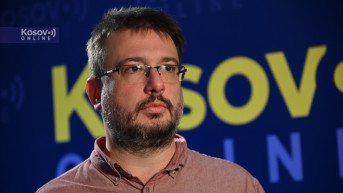
Nikola Dencic, editor of the foreign policy section of Radio Belgrade’s first program, told Kosovo Online that, as previously announced, the main topics at the European Political Community (EPC) summit in Copenhagen were Ukraine and strengthening European security. He noted that although the Western Balkans Six may have wanted to push other issues, these could not be discussed in depth either during the plenary session or in panels. He emphasized, however, that it is certainly good to use this platform both for bilateral meetings and for broader discussions.
“All leaders who spoke yesterday stressed the need to support Ukraine so that it can at least maintain its current positions on the frontlines in light of possible future negotiations, while at the same time strengthening Europe’s security. The idea is also to work toward greater self-reliance, primarily of the European Union, and possibly later more broadly, to reach a certain level of autonomy given the signals coming from Washington since the beginning of the year and that the continent must start taking care of its own security. These were the main topics,” Dencic said.
As for Serbia’s representatives, he noted that President Aleksandar Vucic, who led the delegation, had to deal with more urgent issues.
“There wasn’t much time to talk about the European future, given that we are now facing problems in the energy sector, the announced sanctions against NIS company, and the issue of gas supplies from other sources. Our diplomatic activities in Copenhagen were primarily focused on solving these urgent problems, and there wasn’t much opportunity to address other issues. Although we did hear that the talks also touched upon the situation in Kosovo and Metohija, other security matters, and regional stability,” Dencic said.
He added that the topic of the European path was perhaps more pronounced in the cases of Montenegro and Albania, since Montenegro has long been the frontrunner in European integration in the region, while in the past year Albania has also moved into the spotlight. Albanian Prime Minister Edi Rama, he said, once again stole the show, at least in media terms, by joking in his own style about certain issues. As he noted, in Bosnia and Herzegovina, however, the focus was on internal matters.
“As for Pristina, it has become customary at such gatherings and meetings with high-ranking European officials to use the opportunity to present its positions and to show that the current authorities in Pristina still have a certain legitimacy, which is increasingly being called into question,” Dencic noted.
He pointed out that EPC summits are often held in a rather informal tone, since the EPC has not been established as an international organization, but it is certainly a platform where all European countries, not only EU members, but partners from across the continent, along with certain international organizations, can meet several times a year to exchange views and try to find solutions to urgent problems and crises.
Since French President Emmanuel Macron launched the EPC initiative, Dencic recalled, there had been much debate, since it followed proposals about what format the EU should use to continue its enlargement, with ideas about different circles and speeds of accession.
“When the initiative was first announced, it could have been understood as merely a substitute for membership, or at least a way to ‘appease’ all candidate and potential candidate countries, given how long the accession processes actually take. If that idea did exist at the beginning, it now seems to be changing. The European Political Community cannot be a substitute for membership in a solid international organization such as the European Union. But it has certainly proven to be a good platform and model of communication between all these states, which meet several times a year in one place and can talk about all important issues,” he explained.
Dencic said that in Copenhagen, statements could be heard from some EU officials that, although it is true that agreements reached at EPC summits often do not carry the weight or validity of binding international treaties, they are nevertheless a good way to launch certain initiatives.
“It was said that discussions have already been held about joint projects and that in certain areas, for example, the fight against organized crime, there have been successes and agreements that stemmed directly from EPC meetings. From that perspective, at least at this stage, especially given the global situation and instability in the world, this form of gathering, while by no means a substitute for stronger European integration, can provide good channels of communication and ensure that the voices of non-member states, including the Western Balkans, are heard at a high level,” Dencic concluded.

0 comments