
Kacarska: European Political Community summit without major decisions, discussions focused on migration

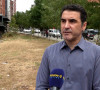
The Director of the European Policy Institute from Skopje, Simonida Kacarska, told Kosovo Online that yesterday’s European Political Community (EPC) summit in Copenhagen did not result in major decisions and that the discussion was dedicated to certain issues related to migration and illegal trade, primarily of interest to the United Kingdom and France.
Kacarska notes that the EPC summit was overshadowed by the EU summit with which it overlapped, since Denmark currently holds the EU presidency, and at the EU summit, she says, much larger, substantive issues were considered, primarily in the field of security.
The Director of the European Policy Institute from Skopje, however, points out that EPC summits generally do not bring major decisions, nor do they result in large resolutions, but rather serve as forums for discussion.
“It is a symbolic forum. There were some smaller initiatives, for example when the summit was held in Moldova, concerning digital security and similar issues. At these forums, EU candidate countries can contribute, not as equals, perhaps, but at a higher level than they are usually accustomed to,” our interlocutor explains.
She adds that representatives of EU candidate countries at EPC meetings sit at the same table as EU member state representatives, act as active participants, and have the opportunity to see themselves as policy-shapers, since they are often in the position of policy recipients.
Kacarska recalls that the European Political Community is a concept announced three years ago by French President Emmanuel Macron, and that it is significant in the context of a broader understanding of Europe.
“Following Russia’s invasion of Ukraine, the goal was to establish dialogue with other actors geographically located in Europe, such as the United Kingdom, Turkey, and some Caucasus countries, in the context of building joint approaches to the new situation, and that was at least partially achieved. At that time, it was very important for candidate countries to be treated as equal actors, not in a subordinate position. Here, representatives of candidate countries are on the same level as all other EU leaders,” Kacarska emphasizes.


0 comments