
Elections in the north of Kosovo without the participation of the Serbs: What is Pristina's plan and what consequences can arise?
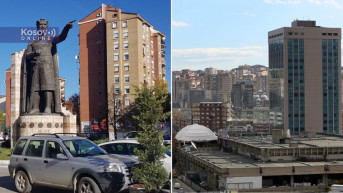
Extraordinary elections for mayors in North Mitrovica, Leposavic, Zubin Potok, and Zvecan are scheduled for April 23. The Serb List, which received the most support from the Serbs in the previous elections, decided not to take part in them. The interlocutors of Kosovo Online agree that elections without the participation of the Serbs in the north are not legitimate and democratic and that the consequences of elections in such circumstances can be dangerous.
The local elections were previously scheduled for December 18 last year, but Kosovo President Vjosa Osmani postponed them to April 23 at the initiative of the international community.
At that time, she said that there was a complete consensus of the political parties regarding the postponement of the elections, and added that the report forwarded by the Central Electoral Commission had been taken into account.
The Serb List has repeatedly pointed out that the formation of the CSM was one of the conditions for the participation of that political party in the elections.
The ruling Self-Determination Movement presented its candidates for mayors in four northern municipalities and Kosovo Prime Minister, Albin Kurti guaranteed security during the election process during a meeting with the candidates.
Given that in the north, the Serbs make up the majority, and the Albanians are only two percent, we asked our interlocutors what the elections would look like without the participation of the Serbs.
The president of the Center for Social Stability, Ognjen Karanovic, tells Kosovo Online that elections without voters cannot be called elections.
"What could we say about elections in which the Serbs do not participate, are they really elections? According to common sense, according to reason, and according to all the democratic principles and European values to which the political West refers, in accordance with those principles it certainly cannot be elections, they cannot be called that, because first of all, voters do not participate in them, or relevant political entities. Therefore, there is no question of elections, especially if less than or more than one percent of the electorate do not participate, what legitimacy and legality of the electoral process are we talking about," Karanovic said.
As he added, Pristina plans to intimidate the Serbs in the elections and provoke an ill-advised move by Belgrade.
"Everything that Albin Kurti does since he is in the position of the so-called prime minister is actually a provocation. He is a very debatable person from a mental and psychological point of view, unpredictable. However, when it comes to political activity there is a certain consistency, everything he does is based on forms of physical violence, and the violent implementation of the electoral process despite the will of the Serbs is nothing more than naked violence, in this case, we cannot even talk about legal violence because the law does not recognize it. His goal is to intimidate and expel the Serbs, he wants a "Greater Albania". and in his vision of a "Greater Albania," there is no place for the Serbs. He wants to instill fear in the Serbian community so that they leave Kosovo and Metohija, and on the other hand to provoke some hasty steps by the official Belgrade. He is aware that he has the President of Serbia, Aleksandar Vucic, in front of him, who is an experienced diplomat and the most experienced politician in Europe, which he has proven in the past ten years, especially when it comes to Kosovo," Karanovic stressed.
According to his words, the consequences of holding the election may be such that Kurti can find his political subjects from the Serbian community, whom he would place at the head of the institutions in the north with "paid votes", through which, as he states, he would sabotage the formation of the CSM.
"Now the most important thing is to preserve the unity of the Serbs in Kosovo, we need to avoid Kurti creating his own political entities that he would then call Serbian and which would then be established in the north of Kosovo with the help of a few bought votes that would be installed as executive power in local self-governments. He would then refer to them, if there are representatives of the Serbs who are legitimately elected representatives of the local self-government, and such would serve him so that he sabotages the realization of the establishment of the CSM until the end. That is his short-term and long-term plan. With this plan, Kurti is trying to challenge Serbia to react so that it would be blamed by the West for interrupting the negotiation process or for escalating the crisis. Belgrade will not allow this because it has enough wisdom and readiness to protect the Serbs," Karanovic said.
He pointed out that elections in which one percent of voters would participate could not be legitimate.
"If someone in the West thinks that one or less than one percent of the population can elect legitimate representatives of the executive, legislative or local self-government; if someone thinks that this is in accordance with European principles, then we are all on the wrong track of history. It is something that cannot be legitimized as a legally valid process," Karanovic said.
He believes that the only solution is to postpone the elections and work on a political solution to the crisis in the north of Kosovo.
He points out that, if the elections are still held and if Kurti's Self-Determination declares victory, it will be an introduction to a new situation in the north where, as he says, the government will not exist.
"The most reasonable thing would be for someone to stop Kurti in his steps that led to the Serbs leaving the institutions. If the Serbs were to return to the institutions, then the acute crisis would be over, which I don't believe can happen. The only option that remains is to postpone the elections and in the meantime seek a political solution to the crisis in the north, and we know the reasons that caused the crisis. Serbia cares about a political solution and the representatives of the Serbs can only be elected by the Serbs, not by Albin's political subjects, that is unacceptable. If they hold elections and if they announce new winners from among Kurti's subjects, then we are talking about a new political situation in which the government in the north of Kosovo does not exist," Karanovic concluded.
Director of the Center for the Representation of Democratic Culture, Dusan Radakovic believes that the elections were organized by force.
"I think that these elections are organized by force to demonstrate democracy, but what kind of legitimacy are we talking about if 90 percent of the majority population will not vote, and in which the turnout will be four, three, or two percent? What kind of mayor will he be tomorrow, he will not be allowed to go out into the city and will have to be guarded by Special Police units. What kind of election process are we talking about when it will be carried out in containers somewhere on the Mitrovica-Jarinje road and will be secured by Special Police? Until now, every polling station had from 750 to a maximum of 900 voters, they now set it to 2,500," Radakovic said.
In his opinion, the elections are completely irrelevant and non-transparent. As he added, the agreement in Brussels would lead to a repetition of the election process.
"Elections are the crown of society, and now we are talking about undemocratic and about voting where you are guarded by special units. I only hope that there will be no incidents and conflicts, but I certainly expect that with some concrete agreement from Brussels, we can expect repeated elections and a normal turnout, because this way we have everything but no elections. As someone who has been following the elections in the north since 2013, we have appealed that there are no democratic rules and principles to organize the elections, both for reasons of security and the way of organization. The international community is playing a game, on the one hand, the ambassadors of Quint said that elections should be organized, and on the other hand they were now asking for a postponement," Radakovic pointed out.
Radakovic does not expect that there will be any incidents because as he states, not one percent of the Serbs will participate in the elections.
"I hope that there will be no incidents because the Serbian community will not vote in the elections, except perhaps in Leposavic, where the supporters of Aleksandar Jablanovic and a few people in Zvecan will vote, the rest will be in Albanian towns. That's how the polling stations were arranged to be close to the Albanians so that they could vote. I don't expect even one percent of the Serbian community to vote in the other places," Radakovic concluded.
Analyst Allen Meta stated that since the beginning of the election process, two political issues had guided that process.
"On the one hand, we have the Serbs who have resigned from their positions and therefore it is a constitutional obligation to be replaced by calling for elections. On the other hand, the Kosovo institutions twice offered the Serbs a deadline to participate in the elections, but that was impossible," Meta said.
As he added, two different parties were looking for two options.
"The Serbs want to postpone the elections until the formation of the Community, while the institutions of Kosovo want to hold the elections, and then the formation of the Community, so this is the issue that raised tensions over the holding of the elections. On the one hand, the Serbs, especially those supporting the Serb List, refused to participate in the elections, while the others, who will participate, will have few opportunities to choose and the participation will certainly be less," Meta emphasized.
Meta emphasized that by postponing the elections in December, the political parties had gained time to prepare for the elections in April.
"While at the beginning a postponement of the deadline for the elections, which was set in December last year, was requested, it was realized by giving time to all institutions, but also political parties and citizens to prepare. As a result, the Serb List again refused to register for these elections, and the institutions continued with those political parties that were registered," Meta pointed out.
He is of the opinion that elections in such circumstances can affect the legitimacy of the elected mayors, the division among citizens, as well as the implementation of the Ohrid Agreement, which includes the CSM.
"This may affect the legitimacy of the mayors who will be elected in these elections, initially hoping that the process will go smoothly. Also, it will affect the even greater division of citizens, the increase of institutional complaints, and therefore the extension of deadlines for improving the lives of citizens, including the implementation of the Ohrid Agreement, which also includes the Community," Meta concluded.


0 comments