
What will happen to the dialogue: The meeting in Brussels is scheduled, but a lot of work remains to be done
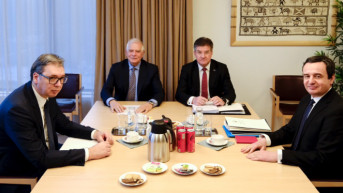
The invitation of the head of diplomacy, Josep Borrell, for Serbian President Aleksandar Vucic and Kosovo Prime Minister Albin Kurti to meet in Brussels on September 14 comes at an important moment, because negotiations have been blocked for months, and the situation in the north of Kosovo is still fragile, but the question is how far that meeting will go, given that the two parties are traveling to the headquarters of the European Union with different views on which topics should be discussed and in which direction the dialogue between Belgrade and Pristina should take place, indicate the interlocutors of Kosovo Online.
For Belgrade, the key issue is the de-escalation of the situation in the Serbian municipalities in the north, i.e. the withdrawal of members of the Kosovo police and illegitimate Albanian mayors, as well as the formation of the Community of Serbian Municipalities. The head of diplomacy, Ivica Dacic, was clear that for Serbia, progress in the dialogue primarily means the CSM, which Pristina committed to ten years ago, and that before that - nothing further can be done.
The authorities in Pristina, on the other hand, judging by the messages coming from Kurti and his closest associates, believe that with the agreement from Bratislava on four-point de-escalation, which entails withdrawing 25 percent of the police from municipal buildings and the promise of new elections, they have done their part of the work and that the implementation of the agreements reached in Brussels in February and Ohrid in March should now be on the table. In Pristina, they expect the punitive measures imposed on Kosovo to be lifted due to its refusal to de-escalate the situation in the north. Moreover, to new warnings coming from the EU, such as the one from French President Emmanuel Macron that the visa liberalization for Kosovo, which should come into force on January 1, could be called into question, Pristina retaliates with its threats, so President Vjosa Osmani said that something like that would kill the dialogue with Belgrade.
Analyst from the Center for Social Stability, historian Srdjan Graovac tells for Kosovo Online that the scheduling of a new round of dialogue is a consequence of the insistence of the political West to continue the talks at any cost, regardless of the fact that, as he points out, the preconditions for that have not been created.
"This speaks in favor of the fact that the West has decided to demand that the Scholz-Macron plan be 'revived', that is, that it be implemented in full, without any regard for the essence and dynamics of the implementation of the Franco-German proposal. I will remind you that from from the start, there was Serbia's fence around certain points related to Kosovo's membership in international organizations, as well as a clear position regarding the dynamics of fulfilling the points. "The dialogue was stopped because of the Community, because Pristina persistently refuses it. Since all other issues were exhausted, it came to the CSM and everything was blocked there, because Kurti did not show the intention to go that way," says Graovac.
He continues that after that there was an escalation of the situation in the north, with which, according to Graovac, Kurti wanted to "cover up his unwillingness to form the CSM".
"In order not to negotiate in Brussels on the CSM, Kurti started the path of causing violence in the north, and since then there is no talk of negotiations, but of de-escalation. The new meeting in Brussels is an attempt, and I think that Paris plays an important role here, that in completely disavows everything that has happened in the past few months, to return the negotiations to Brussels again. I am afraid that they will insist on not negotiating at all on what has stopped, which is the CSM, but on negotiating a comprehensive package, which, first of all, would imply that Serbia accepts, unconditionally, the Scholz-Macron plan, and that after that Kurti implements what he is obligated to do. This is pointless, because Kurti has not wanted to implement anything agreed upon", says Graovac.
He believes that pressure will be exerted on Serbia at the meeting in Brussels to make things go in this direction.
"If the West wanted to follow the path of agreement and compromise, it would have put pressure on Kurti, because he is the one who is blocking further negotiations. However, there is clearly no such pressure, which tells me that they will go in the direction of pressuring Serbia to accept Scholz- Macron's plan, that is, to abandon that agenda when it comes to the CSM, which is to fulfill it first before moving on to other issues. Kurti will also be under pressure to, perhaps, clearly state the dates when what should be done implemented, but I repeat, he has not adhered to the commitments and agreements he has made so far. It is not that he did not implement the CSM, but he led to an escalation in the north which he persistently does not de-escalate," concludes Graovac, indicating that despite everything, there is no other option for Belgrade options than to negotiate and be at the Brussels table.
Assistant professor at the Faculty of Political Sciences Marko Dasic points out for Kosovo Online that not much should be expected from the upcoming meetings scheduled in Brussels on September 14, but adds that he still wants to believe in the power of diplomacy.
"I assume that the fact that the meeting has been scheduled means that there is already some initial agreement between the negotiating parties on the agenda itself, so I would not prejudge the meeting, especially since it is taking place at the highest level. I doubt that it would have taken place at all if there is no basic consensus at least on the items on the agenda," Dasic points out.
He adds that it is good news that negotiators from both sides will meet in Brussels after a long pause in the dialogue.
"That is far better news than hearing that another Serb has been arrested in Kosovo and Metohija. I believe in the power of diplomacy, even if it has shown all its flaws in implementation dozens of times. Every new encounter always feeds me with optimism, but on the other hand sides, we shouldn't expect miracles, but perhaps a small step towards de-escalation and returning to the implementation of some agreements that were signed a long time ago," points out Dasic.
He also notes that due to its behavior and refusal to take steps in the direction of de-escalation in the north, Pristina is always subject to some kind of pressure.
"Honestly, I expected that some constructive action by Pristina would first take place on the ground in order to reach these talks, which are scheduled for September 14 in Brussels. It is not too late for some acts of goodwill to take place by then, which would lead to constructive direction. The meeting itself as a method of pressure is perhaps just something that will be more visible to the public, but again I would not question that those pressures on both sides are happening as we are having this conversation. Some official statements that will follow from that meeting will probably to confirm that the pressures really happened," he said.
Dasic believes that pressure is exerted at every step, even through inaction directed at Albin Kurti when it comes to European diplomacy.
"For example, some kind of diplomatic pressure when foreign diplomats do not want to see Kurti, which is a signal that you are not on the right path," Dasic pointed out.
Sociologist and political analyst Artan Muhaxhiri reminds Kosovo Online that the Ohrid Agreement was hailed as the greatest achievement in recent years in terms of dialogue, but that its practical implementation has stalled and - to make matters worse - the events in the northern municipalities further alienated the parties involved politically from planned progress.
"This is why the September 14 meeting is very important, because it must necessarily offer a concrete move away from the current blockade. There, the Bratislava agreement will have to be upgraded with more concrete institutional guarantees regarding new elections in the north. The current status quo is not sustainable and faster constructive steps from all sides," says Muhaxhiri.
He believes that it is understandable that the USA and the European Union will not tolerate their long-term investments in dialogue being devalued by populist politics.
"In recent weeks, there have been several important criticisms addressed to Kosovo and Serbia due to the stagnation, the most direct of which is from French President Emmanuel Macron. Obviously, now the pressures will not stop only at rhetoric, but relatively strong measures will be imposed to raise awareness of the gravity of the situation. Lack of any structural progress even after September 14 will make it meaningless to continue the dialogue. Political isolation will follow. To prevent this, the most normal way for a positive turn at this crossroads is the rationality and willingness of the leaders, Kurti and Vucic, to put aside populist approaches and accept multi-layered realism," concludes Muhaxhiri.
For Dimitrije Milic from "New Third Way", the topic of the new round of dialogue will primarily be the situation in the north of Kosovo, i.e. the final stabilization of the conditions there.
"However, the question is what can be realistically completed, implemented, and the results visible. It is necessary to find a way to elect a new leadership in the municipalities in the north. Of course, the parties have different priorities in the dialogue, and that is how they will approach the new round. What can be a surprise is to reach an agreement on the implementation of certain steps to a greater extent than the expectations, which are minimal. Some kind of definition of future relations in the north of Kosovo, primarily when it comes to the authorities in the local self-governments I think it belongs to the realm of the real and I think that it should not go below that when it comes to the results of the upcoming dialogue," says Milic.



0 comments