
What will the new U.S. Ambassador Mark Brnovich bring to Serbia?
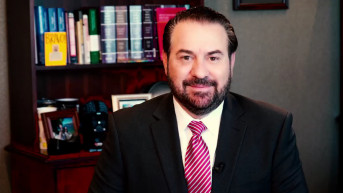
Ambassador Brnovich is not a career diplomat like Christopher Hill, Anthony Godfrey, or Kyle Scott, the U.S. ambassadors to Serbia over the past decade. However, analysts believe there is a strong possibility that the upcoming tenure in Belgrade of the experienced lawyer Mark Brnovich will be a positive chapter in U.S.-Serbia relations. Despite Brnovich’s Serbian heritage, a dramatic shift in U.S. policy towards Kosovo or the region is not expected.
Written by: Dusica Radeka Djordjevic
U.S. President Donald Trump has selected the former Arizona Attorney General as the next ambassador to Serbia. For those familiar with Trump’s policies and U.S. diplomacy, this is no surprise. Analysts note that Trump has been appointing new figures from his MAGA movement to various positions, and political appointments as ambassadors—rather than career diplomats—are common in some capitals.
Brnovich (58) will follow Donald Trump's policies during his tenure, say sources from Kosovo Online. However, they also point out that Trump has demonstrated an understanding of Serbia’s key interests.
Serbian Foreign Minister Marko Djuric described Brnovich’s appointment as a positive signal, stating that he will represent U.S. interests as an American patriot while contributing to the development of U.S.-Serbia relations.
Brnovich himself stated that he was deeply honored by President Trump’s nomination for such an important position.
Once confirmed by the Senate, Washington will send to Belgrade a man praised for his debating skills since elementary school, a conservative with a strong sense of justice, whose hero is also a lawyer—Bobby Kennedy. Brnovich’s parents are Serbian immigrants, and he served as Arizona's Attorney General from 2015 to 2023.
Political analyst Obrad Kesic believes Trump’s choice is good for Serbia. He notes that having a U.S. ambassador of Serbian heritage, who is connected to the Serbian Orthodox Church and proud of his roots, could strengthen relations between Washington and Belgrade. Moreover, Kesic believes that Brnovich, as someone who can capture Trump's attention, presents an opportunity to improve U.S.-Serbia ties.
"Srbija could be in a much better position than before. Hopefully, this is just the beginning and that more representatives from the Serbian community in the U.S. will be appointed as ambassadors in the Western Balkans. I believe there is a real chance that we could see at least one or two more Serbian-American ambassadors," Kesic told Kosovo Online.
Kesic also sees this as part of a broader trend of improved relations between the U.S. and Serbia, as well as between the U.S. and Serbs in the former Yugoslavia.
“We see that even regarding the complex situation in Bosnia and Herzegovina, the U.S. administration has taken a more balanced approach, emphasizing dialogue between both entities and all three constituent peoples. This is a constructive shift. If a member of the Serbian community is appointed ambassador in Sarajevo, it would further strengthen Serbia’s position in the region,” Kesic added.
Although Brnovich’s career has been primarily focused on U.S. domestic politics, he grew up in the Serbian Orthodox Church, like many Serbian-Americans.
"For those of us in the diaspora, Kosovo and Metohija hold deep emotional significance, perhaps even stronger than for some in Serbia who have never been there. Many Serbs in America have never visited Kosovo, yet they have grown up with stories, songs, and lectures about our history, which connect us to our homeland. I believe this cultural foundation is also a part of Brnovich’s identity," Kesic explained.
He also emphasized that Brnovich is well aware of the major challenges facing Serbia and Serbs in the Western Balkans, including the situation in Bosnia and Herzegovina and the Republic of Srpska.
Former Serbian ambassador to the UK, Aleksandra Joksimovic, notes that Brnovich will rely primarily on Trump’s policies and those of the entire U.S. government. His appointment is political rather than diplomatic, which is not uncommon in U.S. foreign service.
“There are places where political ambassadorial appointments are the norm, like Paris and London. However, this has not been the case for Serbia and the Balkans until now. This likely reflects Trump’s distrust of the traditional U.S. State Department and broader government bureaucracy. We will see whether Serbia is an exception or if Trump applies this approach across the region,” Joksimovic told Kosovo Online.
She pointed out that Trump has already shown some understanding of Serbia’s key interests, citing the Washington Agreement signed at the end of his previous term, which has not been fully implemented.
“Will Trump continue implementing it when he turns his attention to the Western Balkans? Will he expand on it? That remains to be seen. There will likely be more openness to Serbia’s concerns, but no fundamental shift in U.S. policy towards the region should be expected,” she concluded.
Petar Donic, an analyst with the New Third Way think tank, also argues that Brnovich’s appointment does not signal a major shift in U.S. policy toward Kosovo or the broader region.
However, he believes it is beneficial to have an ambassador who understands the historical context of the region.
“We can expect some incremental improvements because Brnovich has previously stated that Serbia’s image is still stuck in the 1990s and an outdated narrative. He believes Serbia has not done enough to promote its interests and relevance in the past two to three decades. If Serbia improves its standing in U.S. politics, we could see more policies aligned with Serbian interests,” Donic told Kosovo Online.
Donic also noted that Trump has introduced a new dynamic in U.S. politics by prioritizing figures from his MAGA movement over the traditional Republican establishment.
“Many of Trump’s appointees, including his special advisors like Richard Grenell, are new faces rather than career diplomats,” Donic explained.
Brnovich’s legal background could shape his approach in Serbia. As Arizona Attorney General, he often took on cases protecting citizens from corporate exploitation, returning $1.5 billion to Arizona residents.
“This shows he is a strong advocate for the rule of law. He has stated that any country wanting to become an economic powerhouse must focus on the rule of law. He supported Montenegro’s NATO accession and is deeply aware of his Serbian roots. In 2020, during his Senate campaign, he even said it was time for the U.S. Senate to have an Orthodox Serbian member,” Donic added.
Donic sees Brnovich’s nomination, along with that of Colin Hilland at the State Department—both of whom prioritize the rule of law—as an indication that Trump will continue his previous Balkans policy. That policy focused on economic integration, regional stability, and European integration.
“The White House’s strategy is clear: economic cooperation and normalization of relations. Frozen conflicts and lack of economic ties create fertile ground for negative scenarios, and the U.S. is aware of this. They will likely work in the opposite direction,” Donic explained.
As the son of Yugoslav immigrants who fled communism, Brnovich has an anti-communist stance and will likely take a cautious approach to Russian and Chinese influence in Serbia.
“Expect the U.S. to push Serbia away from Russian energy dependence and to be cautious in its economic relations with China,” Donic concluded.


comments