
Where is unexploded cluster munition from the 1999 bombing and landmines still present?
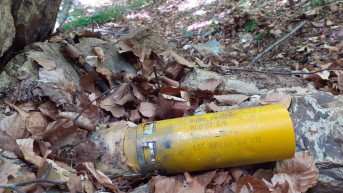
Unexploded bombs from NATO’s 1999 bombing of the FR Yugoslavia and landmines from that period’s conflicts still pose a threat to public safety. The Japanese Embassy in Pristina recently announced an investment of nearly 200,000 euros in a project to remove explosive remnants in the municipalities of Gracanica and South Mitrovica. It is estimated that cluster munitions still cover around 9 square kilometers across Kosovo.
Written by: Dusica Radeka Djordjevic
Kosovo’s 2025-2030 Mine Action Strategy, launched last summer, states that Kosovo remains contaminated with explosive devices spread across 17 municipalities.
Demining efforts in Kosovo involve the Kosovo Security Force (KSF), KFOR, and organizations such as The HALO Trust and Norwegian People's Aid. According to HALO Trust’s website, the organization, active in Kosovo since 1999, has cleared cluster bombs and landmines from an area larger than 1,500 football fields.
Norwegian People's Aid, also operating in Kosovo since 1999, has focused since 2014 on investigating and clearing locations in northern Kosovo municipalities suspected of contamination with cluster munition remnants.
Japan’s donation is allocated for clearing 22.13 hectares in the village of Bajgore in South Mitrovica and 4.35 hectares in the village of Livadje in the Gracanica municipality, with Norwegian People’s Aid as the project partner.
However, Snežana Jovanovic, Chair of the Local Safety Committee in Gracanica Municipality, stated that she was not informed about the project in Livadje. Speaking to Kosovo Online, she noted that both local authorities and citizens in Gracanica are generally not adequately consulted when it comes to clearing explosive remnants from NATO’s 1999 bombing.
“Maybe the residents of Livadje are aware, but the municipality and local security structures should also be informed,” Jovanovic said.
As a safety committee representative for the settlement of Kisnica, where she resides, Jovanovic stated that she had previously contacted KFOR and the police regarding unexploded bombs dropped in Kisnica.
“Some are close to homes where people live—one, for example, is just 100 meters from my house. No one has ever properly addressed this issue. They inspected the area but did nothing about it. The site is part of a mining tailings area, which might explain their reluctance, but I won’t speculate… What is clear is that they don’t care enough about public safety to address this issue thoroughly. A section of Zelenika Hill, where military warehouses were allegedly located, was examined a few years ago by some organization, but the results remain unknown. Local authorities in Gracanica, as well as the broader community, are not adequately consulted to ensure the issue is fully investigated,” Jovanovic concluded.
According to data from the Mine Action Centre, established in Serbia in 2002, NATO dropped cluster bombs on hundreds of locations in 16 municipalities across Serbia during the 1999 bombing: Medijana and Crveni Krst in Nis, Kraljevo, Brus, Presevo, Bujanovac, Kursumlija, Raška, Gadzin Han, Tutin, Sjenica, Cacak, Vladimirci, Knic, Stara Pazova, and Sopot.
Bojan Glamoclija, director of the centre, told Kosovo Online that Serbia has largely been cleared of cluster bombs, with remaining demining projects still needed in Bujanovac and at Ponikve Airport near Uzice, where cluster bombs are still present. Additionally, over 150 locations still contain large aerial bombs.
“So far, an area of 66 million square meters has been cleared, and nearly 50,000 pieces of explosive remnants of war—including landmines, cluster bombs, and large aerial bombs—have been destroyed. We have successfully completed more than 300 projects,” Glamoclija stated.
In line with UN Security Council Resolution 1244, he emphasized that Kosovo falls under UNMIK’s jurisdiction, meaning the Mine Action Centre does not have data on unexploded ordnance in that territory.
He noted that records exist of contaminated areas, but new locations can always emerge, and the job is never fully finished since unexploded ordnance from even the Balkan Wars is still being discovered.
“There are large aerial bombs from 1999 at more than 150 locations. We also have issues with civil protection or military warehouses that were bombed or self-ignited after being hit. Vast areas remain contaminated due to these explosions. In Paracin, an explosion occurred nearly 20 years ago, and we still haven’t fully resolved that issue,” Glamoclija said.
The centre has launched a one-year non-technical survey project in Bujanovac to determine the exact locations of remaining anti-personnel mines in the municipality.
“These mines were laid by terrorist groups and are difficult to locate because there are no records of their placement. That’s why we have brought in a specialist from the UK,” he explained.
In the past two to three years, minefields have sometimes been discovered due to forest fires, with up to 50 detonations occurring in a single area.
“We are not the only country facing these issues—many war-affected nations deal with similar problems. We follow international standards, and I hope that after a year, we will have Bujanovac mapped and ready to begin clearing anti-personnel mines,” Glamoclija concluded.


0 comments