
Which trump cards will Self-Determination use to compensate for the loss of diaspora votes?
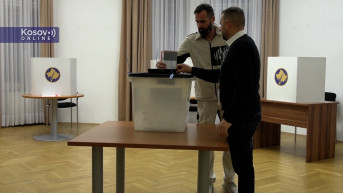
The key factor that contributed to the historic victory of the Self-Determination Movement in the December elections was the presence in Kosovo of a large number of citizens who normally live abroad. The diaspora, however, is not expected to turn out as enthusiastically for the June 7 elections, which means that Albin Kurti’s party will this time have to play a different card. Pressure on Serbs and new unilateral moves aimed at further undermining the agreements reached in the dialogue with Belgrade could become the old-new “jokers” through which the party will attempt to preserve its electorate, interlocutors of Kosovo Online suggest.
Written by: Dusica Radeka Djordjevic
Prime Minister in technical mandate Albin Kurti on Wednesday called on the diaspora to register for participation in the June 7 electoral process, stressing that their vote is important for Kosovo’s future.
Opposition leaders did the same, as did former Kosovo President Vjosa Osmani, who is expected this time to head the list of the opposition Democratic League of Kosovo.
Although there are opinions that Albin Kurti is the politician who best knows how to communicate with the diaspora — or, as Professor Dasamir Beržuli puts it, how to “awaken emotions” among that segment of the electorate — it remains highly uncertain whether supporters of the Self-Determination Movement living and working abroad will exercise their voting rights on June 7 in numbers comparable to those seen on December 28, when many of them were already in Kosovo.
Political analyst Blerim Burjani believes that a large part of the diaspora will not vote in the upcoming elections.
Nevertheless, he believes that diaspora votes will once again be one of Albin Kurti’s key assets.
As Burjani told Kosovo Online, members of the diaspora will not travel to Kosovo on June 7 solely to vote, but will instead fulfill their civic duty through diplomatic and consular missions.
“It will not be the same as on December 28; the diaspora will not be able to travel solely because of the elections. Only a small number of people will come to Kosovo just to vote. Most will vote by mail or at embassies,” our interlocutor said.
“Nationally Conscious, but Also Emotionally Charged”
According to historian Stefan Radojkovic, the Self-Determination Movement will attempt to compensate for lower diaspora turnout through new unilateral acts that would continue hollowing out the Brussels Agreements of 2013 and 2015.
“That is supposed to serve as a substitute, but also as an attempt to motivate the diaspora, because it is assumed that the diaspora largely consists of younger people who are nationally conscious, but also emotionally charged, and that this could motivate them to turn out in significant numbers for these elections as well. Of course, not to the same extent as they did during the Christmas and New Year holidays,” Radojkovic told Kosovo Online.
As he added, further pressure on the Serbian community, especially in the four northern municipalities, should be expected.
“The pressure will probably continue through the demolition of certain facilities, the establishment of offices and branches of the Pristina administration, particularly in locations where institutions such as the Serbian Post Office once operated. There could even ultimately be a frontal attack on the healthcare and education systems of the Republic of Serbia in that part of Kosovo and Metohija. That will depend on the assessment of Albin Kurti’s election headquarters. It is also possible that additional searches for suspects in the Banjska case may be conducted, regardless of whether those individuals had any involvement in Banjska or not,” Radojkovic stated.
According to him, this type of pressure would have a dual purpose — on the one hand, to galvanize the Albanian electorate, especially within the diaspora, and on the other hand, to create a very deep divide between the political representatives of Serbs in Kosovo and Albanian opposition parties, with the aim of preventing a potential coalition or securing the necessary votes for the election of the President of Kosovo.
“It is assumed that the situation could return to what it was in February 2025, when Albanian opposition parties together with the Serb List were in a position to form a government, but then the question arose as to whether they could elect the president of the Pristina administration,” our interlocutor pointed out.
The historian also views the recent amendments to the Citizenship Law as an attempt by the Self-Determination Movement to compensate for the expected decline in votes, since the amendments facilitate the acquisition of Kosovo documents for members of the diaspora, which he sees as a return favor for the votes they cast in previous elections.
Focus — Pressure on Serbs
Journalist from North Mitrovica Lazar Stevic likewise assesses that it will be a major problem for the Self-Determination Movement that the snap parliamentary elections scheduled for June 7 are not taking place during the holiday season, when a large number of Albanians would be able to travel to Kosovo. For that reason, Stevic points out, Albin Kurti has already launched a campaign urging Albanians in the diaspora to register and vote at diplomatic missions.
He does not believe that Albin Kurti can repeat the result from December, when he won 51 percent of the vote, nor that diaspora turnout in the upcoming elections will be comparable to that seen in December last year.
As he notes, Kurti has little to offer voters because the economic situation in Kosovo is unfavorable due to rising fuel and food prices.
“His hands are tied in that respect. However, what we Serbs can expect, and what Albin Kurti will focus on, is constant pressure on us, primarily in the north. He has shut down everything that could be shut down; only education and healthcare remain. We know that the international community has drawn a red line there. However, now that he has been cornered, we can expect him to once again target education and healthcare in order to compensate for the votes he needs and will lose because many people from abroad will not come to Kosovo and Metohija, and also because Vjosa Osmani has aligned herself with another party,” Stevic assessed for Kosovo Online.
The KLA as Electoral Bait?
The campaign for the upcoming elections coincides with deliberations by the Specialist Chambers in The Hague regarding the verdict against former KLA leaders accused of war crimes, meaning that this issue could also become part of the Self-Determination Movement’s electoral arsenal.
Kurti himself criticized the court yesterday over its decision to extend the deadline for delivering the verdict, stating that Kosovo needs normal courts rather than special courts, and that the Kosovo Specialist Chambers in The Hague are not transparent toward the Kosovo authorities.
Radojkovic believes that the Self-Determination Movement will use this topic in its campaign, as will other Albanian parties.
“All Albanian parties have reached a consensus regarding these proceedings against Hashim Thaçi and his associates. All of them will try to exploit this issue in one way or another. The Democratic Party of Kosovo will probably do so the most, since Thaçi was its president, but none of the parties will make a ‘misstep’ on this issue. If we recall 2020 or 2021, Albin Kurti dismissed his political adviser Shkelzen Gashi because he raised certain doubts regarding the purity and sanctity of the KLA uprising against the FRY. He was promptly dismissed,” Radojkovic said.
On the other hand, Burjani does not believe that KLA leaders currently standing trial in The Hague for war crimes will form part of Kurti’s or the Self-Determination Movement’s campaign narrative, because they derive no political benefit from it.
“The Democratic Party of Kosovo will use them, but not the Self-Determination Movement,” Burjani believes.
According to Stevic, although one of the main criticisms directed at Albin Kurti as prime minister is that he has not devoted much attention to the Specialist Chambers and the proceedings against KLA leaders, including Hashim Thaçi and others, the issue will not influence voters because the Specialist Chambers decided to extend the deadline for the verdict until July 20.
“Had the decision come before the elections scheduled for July 7, it would certainly have had a major impact on the election result. However, for some reason, the Specialist Chambers decided to extend the deadline, as they themselves stated, due to the specific nature of the case. The verdict is certainly being awaited with great anticipation. We expect them to be convicted for the crimes committed against Serbs in 1999 in the territory of Kosovo and Metohija,” Stevic stated.



comments