
Who fears elections, who welcomes them, and what does the “Osmani factor” bring?
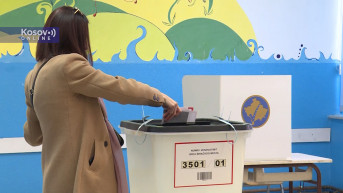
Elections that would follow if a new President of Kosovo is not elected by April 28 could somewhat reshuffle the political landscape in Pristina. Few believe that the Self-Determination Movement (Self-Determination) can repeat its result from December last year, but also that it could weaken to the extent of no longer being a key player in the presidential selection. The return of Vjosa Osmani to the political arena will almost certainly take away a portion of votes from Albin Kurti’s party, but it remains uncertain whether opposition parties, after a new electoral contest, would be willing to emerge from entrenched positions, form a government independently, and whether they would receive external support.
Written by: Dusica Radeka Djordjevic
The deadline set by the Constitutional Court for MPs to elect a president expires in less than two weeks.
Although Self-Determination currently holds 57 seats in parliament and, according to analysts, has no rational reason to favor new elections, its behavior suggests otherwise. According to interlocutors of Kosovo Online, the ruling party appears to have already entered a new campaign phase.
This is seen as paradoxical, especially considering the re-emergence of Vjosa Osmani.
Kosovo Prime Minister Albin Kurti stated today that communication exists with opposition leaders regarding the presidential election, but many perceive these behind-the-scenes negotiations as merely symbolic. The Democratic Party of Kosovo (PDK) has accused Self-Determination of staging the process to create the impression of willingness to cooperate.
The “Osmani Factor”
Political analyst Artan Muhaxhiri assesses that early elections are inevitable, as there are no indications that political leaders and parties will find a solution to the presidential issue.
In his view, Self-Determination would receive fewer votes than in December.
“This is the second time Prime Minister Kurti has done the same thing. Last year it was with the Speaker of Parliament, and now with the President. Despite having 51 percent, he is not trying to find an acceptable solution. His only aim is to blame the opposition,” Muhaxhiri stated.
He adds that Self-Determination will not have Vjosa Osmani as an ally in potential elections, despite her earlier contribution to its success.
“Kurti will no longer have Osmani. I am certain that she will form a new party and become part of the political arena. She will take votes from Self-Determination, but also attract new ones. When she joined Self-Determination, she brought her own electorate, and now it is legitimate that she can take those votes back,” Muhaxhiri said.
He also notes that the opposition currently lacks a clear strategy and remains passive, despite the fact that much depends on it.
“If the opposition is weak and unable to counter Kurti’s populism, he will win again. However, if they pursue a more constructive political approach, introduce new professional figures, and secure Osmani’s support, Self-Determination could lose votes while the opposition gains, potentially bringing change to Kosovo’s political landscape. At the very least, Kurti would lose his overwhelming majority and be forced into compromise,” Muhaxhiri added.
A New Legal Vacuum?
Political scientist Ognjen Gogic argues that new elections would not resolve the presidential issue, as consensus between the ruling party and the opposition would still be required.
“It would again lead to a situation where the governing side must reach an agreement with at least part of the opposition to elect a president. In practical terms, without Kurti’s support, a president cannot be elected—either through votes or by providing a quorum. Self-Determination would not weaken to the point of being irrelevant in that process,” Gogic explained.
He also points to a potential constitutional and legal gap.
“After elections, the question arises as to when the president should be elected—immediately after the constitution of the new Assembly, or later, given that an acting president can serve for up to six months. Albulena Haxhiu could remain acting president until October, meaning that whoever forms the government may not be compelled to address the issue immediately, allowing several months to focus solely on governance,” he said.
External Influences
Gogic believes that if opposition parties secure more mandates in potential elections, they would likely be more inclined to reach an agreement on forming a government than they were after the December elections.
“Vjosa Osmani would likely become the leader of the strongest opposition force and be in a position to form a cabinet around her. The opposition would have better mathematical prospects and would be more willing to reach an agreement. Such an outcome would likely be supported and encouraged by Western actors,” Gogic assessed.
Journalist Lazar Stevic remains skeptical that opposition parties would unite to form a government, even if they achieve better results, though he does not entirely rule out such a possibility if a “third external factor” emerges.
“If opposition parties take elections seriously and reorganize, they could achieve strong results with the ‘Osmani factor.’ However, I do not believe that would be sufficient to form a government due to deep internal differences. Only an external factor might compel cooperation and finally bring stability, ending the cycle of elections every six months,” Stevic said.
Kurti Without a “Joker”
Stevic also believes that Self-Determination cannot replicate its December results, as those elections were influenced by favorable circumstances, including strong diaspora turnout.
“He has once again failed to offer any economic improvements. Nothing has improved. Prices have increased significantly. The war in Iran pushed fuel prices from €1.15 to nearly €1.80. He currently has no economic solutions to offer voters, so I am confident he cannot repeat that result. Additionally, the ‘Osmani factor’ will likely shift votes away from Self-Determination toward the opposition,” Stevic noted.
He added that voters are fatigued by frequent elections.
“Everyone is watching the Assembly to see whether a new candidate will be proposed, but Self-Determination has already entered campaign mode. Kurti has begun tours, starting again from the north, just as in previous elections. It is clear they are preparing for new elections,” he concluded.
Muhaxhiri also emphasized that Kurti lacks a strong electoral “joker” such as economic growth, wage increases, or infrastructure development, which makes the timing of elections crucial.
“He will likely try to delay elections until the summer, probably July, when the diaspora returns, as he enjoys strong support from that segment. At the same time, the opposition must ask why it is not doing more to win diaspora votes. Currently, the diaspora overwhelmingly supports Kurti, which is a key factor. Without other strong arguments—such as economic progress—he may attempt direct financial assistance to voters, such as €100 or €200, to secure support among lower-income groups,” Muhaxhiri concluded.



0 comments