
Who would be a genuine guarantor of the legal status of the Serbian Orthodox Church in Kosovo?
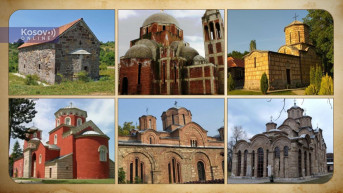
The Raska–Prizren Diocese issued a call earlier this month for the issue of the legal status of the Serbian Orthodox Church (SOC) in Kosovo to be urgently addressed. However, in the absence of strong guarantees from international actors regarding any agreement that might eventually be reached, the outcome would, as in the past, depend entirely on the discretion of Pristina, according to interlocutors of Kosovo Online.
Written by: Dusica Radeka Djordjevic
On July 3, the Raska–Prizren Diocese stated that it is now clear to everyone that resolving the issue of the legal status of the Serbian Orthodox Church in Kosovo and securing special, internationally guaranteed rights is essential for its continued existence in the region.
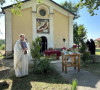
This message followed the Diocese’s third criminal complaint against Nikola Xhufka, an Albanian citizen falsely presenting himself as an Orthodox bishop, who once again broke the lock on the SOC Church of St. Archangel Michael from the 14th century in the village of Rakitnica near Podujevo.
The first question that arises is who should be the interlocutor of the Serbian Orthodox Church in resolving its legal status in Kosovo.
Article 7 of the Agreement on the Path to Normalisation of Relations between Kosovo and Serbia, reached in Brussels in February 2023, states that the “Parties shall formalise the status of the Serbian Orthodox Church in Kosovo and provide a strong level of protection to Serbian religious and cultural heritage sites, in line with existing European models.” Under the letter of this agreement, the SOC’s status should be addressed at the Brussels table, though it is questionable whether the Pristina side is interested in such a process.
Before an agreement is reached, mechanisms for protection that would yield concrete results must be found. Many analysts have drawn comparisons—and pointed out differences—between this issue and the situations in Mount Athos and the Vatican.
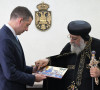
The increasingly difficult situation of the Raska–Prizren Diocese, primarily due to the actions of Kosovo institutions, was also discussed yesterday by Bishop Teodosije with Brendan Hanrahan, a senior official at the U.S. Department of State's Bureau for European and Eurasian Affairs, during his visit to Kosovo and the monastery of Gracanica.
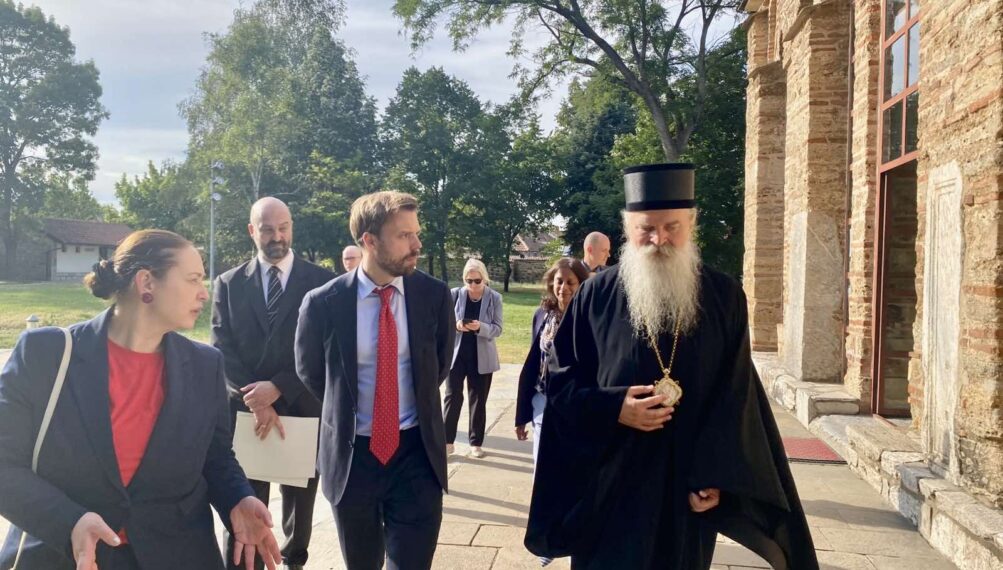
Aleksandar Radovanovic, legal adviser to the Raska–Prizren Diocese, stated that the legal status of the Serbian Orthodox Church cannot be resolved between the Pristina authorities and the SOC for numerous reasons.
“That is why we believe the best option is to resolve this issue either within the framework of the Belgrade–Pristina dialogue—given that the SOC’s legal status has been included on the dialogue agenda—or through some form of international guarantees,” Radovanovic told Kosovo Online.
According to Radovanovic, these guarantees must be firm and include protection mechanisms in either case.
“We have seen over the past two and a half decades that commitments depending on Kosovo institutions are often not implemented in practice. In addition, we need guarantees that the provisions concerning our legal status cannot be amended, as was the case with the Ahtisaari Plan. Pristina received numerous benefits under that plan but later simply removed the key guarantees for the SOC from its legal system,” he noted.
Radovanovic said it is unclear whether Pristina has the will to address the SOC's status in or outside of dialogue, but he emphasized that with sufficient international will, the issue must be brought to the table.
“This is about preserving cultural, historical, and spiritual heritage that is centuries old. We believe that civilised countries in the international community must understand the importance of protecting and enhancing this heritage. And no one can better protect and preserve our heritage than we can—those who have taken care of it for centuries. As for Pristina, although some may not see it this way, resolving the SOC’s legal status is also beneficial for Albanians, as it contributes to building a more open and tolerant society. Such a society is better for all its citizens,” the legal adviser added.
Beyond the issue of property, which is certainly important, Radovanovic stressed the need to protect the identity of the holy sites.
“We need protection for our history, protection from any kind of expropriation, full rights to manage the restoration, reconstruction, and maintenance of our sacred sites, the ability to independently manage the presentation of our cultural monuments, and a general framework allowing us to live and progress normally. It is important to note that we had such protections until 2012 under international guarantees incorporated into the Kosovo Constitution, but most of these rights were taken away during reforms at that time and have never been restored, despite assurances to the contrary,” he said.
If the SOC continues to be prevented from caring for its sanctuaries and property, Radovanovic warned, it is detrimental both for the Church and the authorities in Pristina.
“We strongly believe no one benefits from being perceived as a system that discriminates against an ancient religious community, or one that seeks to take over someone else’s cultural monuments and rewrite their history and identity. If the authorities in Pristina understand that, we believe it will be easy to find ways to coexist, as was the case for centuries in the past,” he concluded.
Former Serbian ambassador to UNESCO, the Vatican, and Turkey, Darko Tanaskovic, says the SOC’s increasing concern for its existence and future is understandable, as is its demand for a concrete discussion on its status in Kosovo to begin without delay, given the worsening position of the Serbian people and the constant pressure the Church faces.
He noted that the SOC’s status should be part of the Belgrade–Pristina dialogue, since it is included in the 2023 agreement. However, he acknowledged that the dialogue is now at a near standstill, as Pristina is clearly obstructing the process while simultaneously taking steps to change the situation on the ground and carry out creeping ethnic cleansing of Serbs, particularly in the north. He also stressed that new topics can only be introduced into the dialogue with the mutual consent of the parties, which Pristina continues to abuse.
Tanaskovic described the SOC’s position in Kosovo as extremely complex and difficult, caught at the intersection of international law, Kosovo’s legal system, and the agreements resulting from the Belgrade–Pristina dialogue, which are largely unimplemented.
He said the SOC in Kosovo is “neither here nor there.” He pointed out that while the Ahtisaari Plan—never accepted by Serbia—is, according to experts and the SOC itself, well developed in terms of the Church’s status and rights, those provisions have been only partially adopted into Kosovo's legal system and are rarely enforced in practice.
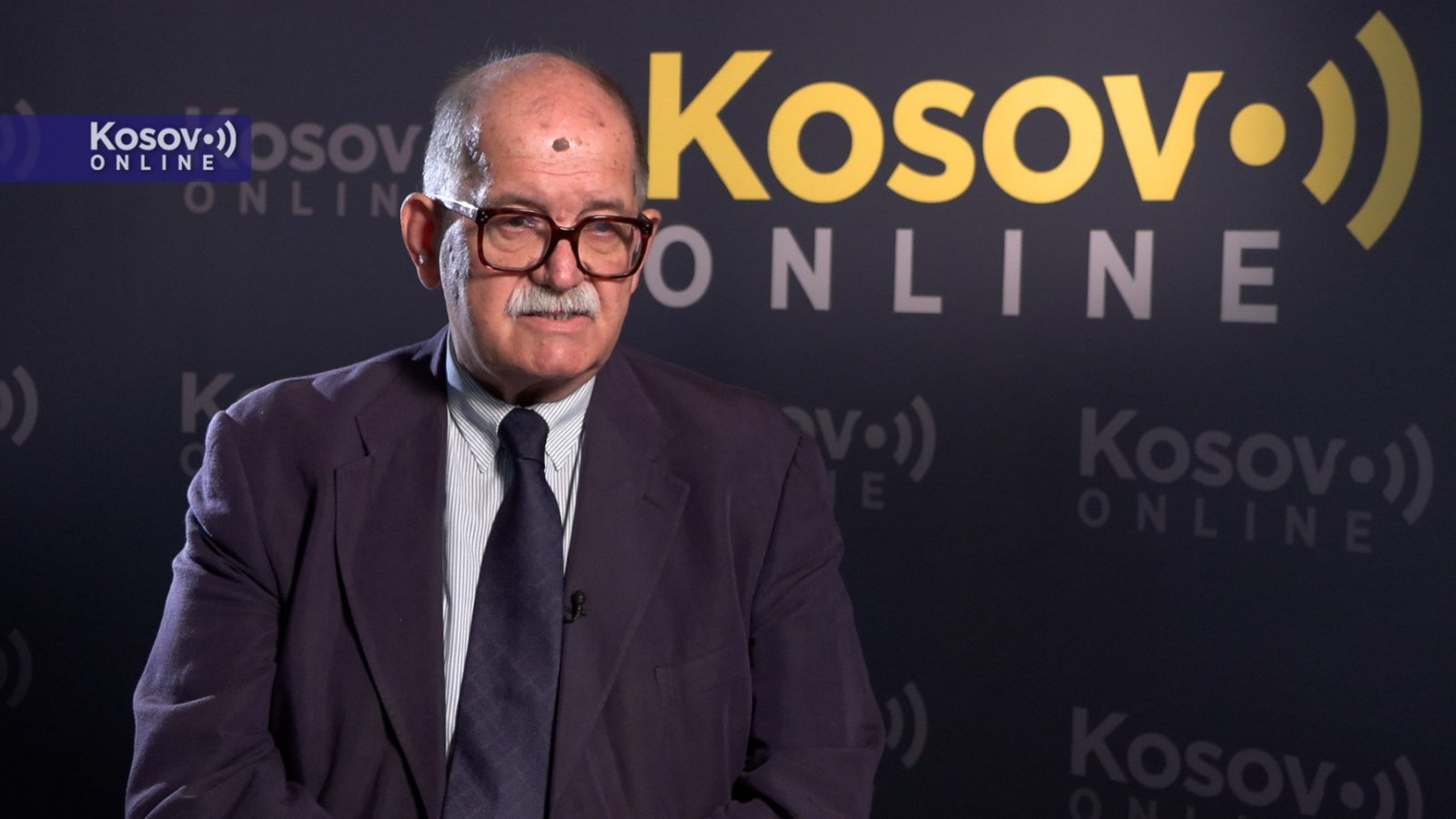
According to Tanaskovic, under the Ahtisaari Plan, the SOC was recognised as a special religious community with the right to manage its properties and facilities, maintain and restore them, freely contact its followers, organise educational and charitable activities, and communicate and cooperate with its headquarters in Belgrade. The authorities in Pristina, he said, formally incorporated some of these provisions into their legal framework, thus granting the SOC somewhat reduced rights on paper. However, in practice, the Church faces significant obstacles in exercising these legally recognised rights and is under constant pressure.
Tanaskovic further noted that the SOC must struggle even for what has been granted to it by Kosovo's own courts.
“A particularly relevant international instrument for guaranteeing the SOC’s rights is the Law on Special Protective Zones of 2008, which regulates the protection of Serbian Orthodox sacred sites listed as endangered cultural heritage by UNESCO. Even here, there are problems. While this form of protection is valuable, it is limited to just four sites, while hundreds of others remain vulnerable. The Community of Serb Municipalities, envisaged by the 2013 Brussels Agreement, which has not been established to date, would certainly be competent to handle the SOC’s status,” said the diplomat, concluding that the core of the problem is political, not legal.
Regarding who should serve as the guarantor of the SOC’s status if an agreement is reached, Tanaskovic argued that the EU, since it is the official mediator in the dialogue, should logically be the guarantor of any deal. He added that the EU would need to establish an institutional monitoring mechanism within its structure to ensure the enforcement of agreed commitments and impose effective sanctions on violators.
“However, today that seems like science fiction. The EU is not only an ineffective mediator—it is increasingly unfit to serve as one at all if we take mediation to imply even a minimally impartial stance toward both sides. It has long been clear to any reasonable observer that the approach of those in the EU responsible for the Belgrade–Pristina talks is not status-neutral. Regardless of appearances and worn-out phrases, the desired and expected outcome is clearly Serbia’s recognition of Kosovo’s self-declared independence,” Tanaskovic said.
He emphasized that the situation worsened after the start of the war in Ukraine. The EU and the so-called “collective West” increasingly view the SOC as an instrument or channel of “malign Russian influence.” He reminded that in a March 9, 2022 resolution of the European Parliament on foreign interference in democratic processes in the EU, the SOC was scandalously mentioned as an alleged Russian tool for promoting traditional family values and strengthening state-church ties in Serbia, Montenegro, and the Republic of Srpska. Similar views appeared in the European Parliament’s 2023 report on Serbia, along with corresponding statements by European officials.
Around a decade ago, Tanaskovic noted, Kosovo’s Western sponsors firmly reminded Pristina that it needed to acknowledge the SOC’s specific position to improve its international image. They even halted the adoption of the Law on Cultural Heritage in the “Kosovo Assembly” because its draft claimed that all cultural monuments in Kosovo belonged to the “state of Kosovo.”
“Today, EU foreign policy decisions that are particularly relevant to us—those concerning the Slavic and Orthodox identity and tradition of the Serbian people—are largely in the hands of fervent anti-Russian and anti-Slavic officials (mostly fanatical women), who often promote militant historical revisionism. It’s unrealistic to expect them to support the realisation of the SOC’s rights in Kosovo. The EU of 2025 is not the EU of 2013—and even then, Brussels was rooting for Pristina,” he concluded, adding that the SOC is the pillar of Serbian spiritual, national, and cultural identity, not only in Kosovo and Metohija but throughout the region, which is why its enemies seek to eliminate it.
Analyst Predrag Rajic also pointed out that Pristina persistently denies the Serbian Orthodox Church the right to exist in Kosovo and engages in narrative manipulation and historical falsification. He explained that the key narrative being pushed is that the churches and monasteries in Kosovo are not Serbian heritage but Byzantine—and therefore Greek—since Greek was the official language of the Byzantine Empire.
“They want to claim that what we see in Kosovo and Metohija is the work of Greek builders, the result of Greek culture, and that it belongs to Greek Orthodoxy. This is a deliberate effort to drive a wedge between Belgrade and Athens. While they have not succeeded in that yet, it remains their goal. It's absurd to suggest that Albanians built Gracanica or the Patriarchate of Pec. But they try to present a narrative saying: ‘Look at the architecture, look at the word metoh—that’s a Greek term.’ They claim that the Serbs merely appropriated something the Greeks created, adjusted it slightly, and passed it off as their own—right down to the symbols and faith they supposedly inherited from the Greeks. This is Kurti’s narrative, and we must be acutely aware of it,” Rajic told Kosovo Online.
Given this approach, Rajic said, Albin Kurti likely won’t demolish Serbian churches and monasteries, which is “a small good in a sea of bad.”
“His strategy is not to destroy them physically, but to politically wrest them from the Serbs and reassign them to someone else—such as a long-extinct Byzantine Empire. That is his plan, and he will pursue it going forward. He will never accept the SOC as a legitimate partner in dialogue,” Rajic stressed.
However, he said that both the EU and the U.S. appear willing to engage in discussions about the SOC’s status in Kosovo—though he places more hope in the United States, especially the current American administration.
“What Pristina is doing is a direct attack on Christian heritage. We’ve seen that President Trump positions himself as a global protector of Christians. We might find an appropriate partner in this matter among American Christians involved in U.S. politics. The fact that the current Pope is American also shifts influence within the Roman Catholic Church toward the U.S. We’ve seen Trump trying to maintain good relations with him and keep lines of communication open,” Rajic said.
He added that Serbia must also engage other Orthodox churches, including the Archdiocese of Athens and the Ecumenical Patriarchate in Constantinople, to prevent Kurti’s historical revisionism from gaining traction.
“This is a long-term, dangerous game—not as barbaric as the destruction of churches and monasteries in 2004, but more insidious. The Albanians now know they cannot physically destroy these sites without international backlash from Europe and the U.S. So, if they can’t tear them down, they want to claim them as their own,” Rajic explained.
He warned of another troubling scenario: the creation of a so-called “Kosovo Orthodox Church” through an NGO, as attempted in Montenegro.
“Someone like that would be legitimised by Albin Kurti. He would accept the existence of Orthodoxy in Kosovo, but only if it has no Serbian prefix or connection. We must be fully aware of this strategy to act in time and engage those most likely to be targeted by Albanian lobbying. I believe the Church is aware of this and already taking action. The Church’s diplomatic outreach—especially under Patriarch Porfirije—is strong. He understands these issues deeply and is not waiting for problems to arrive but is proactively addressing them. That is the only correct approach,” Rajic concluded.
According to Srđan Sentic, Deputy Ombudsman of Kosovo, the legal status of the SOC in Kosovo should not be politicised, but resolved through legal and institutional means, in line with applicable laws, international obligations, and fundamental human rights.
“Kosovo’s institutions are obliged to ensure the unhindered functioning of all religious communities, including the SOC, and to guarantee their physical safety, access to religious sites, and freedom to practice their faith. The Law on Religious Freedom clearly defines the rights of the SOC, and the Ombudsman’s Office plays a key role in monitoring respect for the rights of non-majority communities and responding to violations of religious freedom. Frequent incidents and unauthorised intrusions into SOC property are deeply concerning and demand swift, effective, and impartial institutional response to protect religious heritage and maintain trust in the legal system. Failure or selective enforcement of the law undermines the rule of law and damages interethnic relations,” Sentic told Kosovo Online.
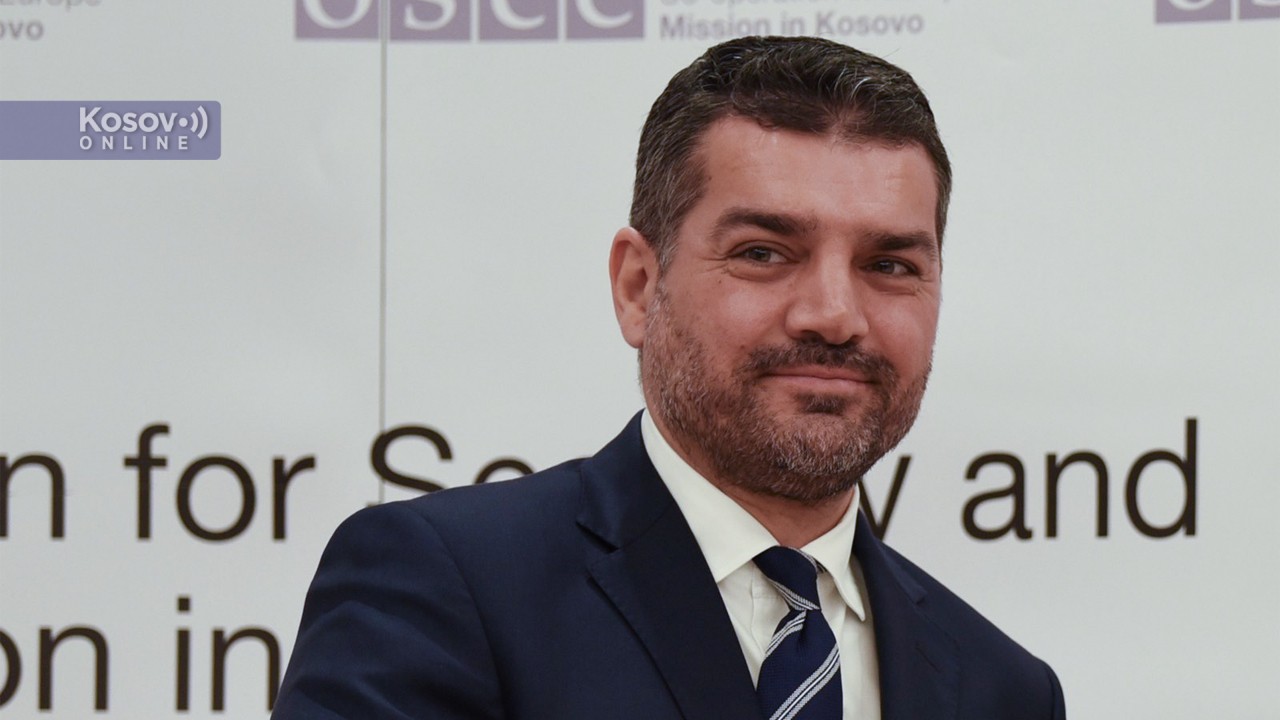
He added that resolving the SOC’s status must be part of broader efforts to ensure lasting protection of religious rights, preserve cultural diversity, and build mutual trust between communities.
“The legal status of the Serbian Orthodox Church in Kosovo must be grounded in the rule of law, in full respect of the Kosovo Constitution, the Law on Religious Freedoms, and the European Convention on Human Rights—especially regarding freedom of religion, property rights, and protection of religious and cultural heritage. A dialogue involving all relevant stakeholders represents the most effective platform for a deeper understanding of all issues and constructive resolution of disputes. However, it is up to the SOC and other actors to decide whether and how they will participate in this process,” the Deputy Ombudsman concluded.
comments