
Why is Albania trying to overturn the Council of Europe's resolution on organ trafficking after 12 years?
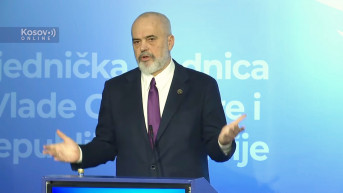
Albania's attempt to overturn the Council of Europe resolution and Dick Marty's report on the trafficking of human organs in Kosovo, 12 years after this document was voted in the Parliamentary Assembly of the Council of Europe, according to the interviewees of Kosovo Online, is connected with the upcoming local elections in Albania, which may decide on the political fate of Edi Rama, but also with the fear that what Tirana denies, will find a way to "come out of the bottle".
On the day the trial of former KLA leaders began before the Special Court in The Hague, on April 3, Albanian Prime Minister, Edi Rama, announced that Albania had collected signatures in the Parliamentary Assembly of the Council of Europe (PACE) for a new resolution that would challenge Dick Marty's resolution from 2011. Rama claims that in Marty’s resolution, "without any facts, terrible accusations were made against the KLA for organ trafficking".
Although experts in PACE practice say that it has never happened before that this CoE body reconsiders its resolution and that it would be a precedent if it happened, the question certainly arises as to why Tirana launched the initiative at this very moment, after more than a decade.
Director of the International Institute for Middle Eastern and Balkan Studies IFIMES Zijad Becirovic believes that the fact that Edi Rama has now begun to challenge Dick Marty's report primarily has to do with the local elections that will be held in Albania on May 14.
As Becirovic tells Kosovo Online, Rama is in a rather difficult situation with "numerous mortgages", and his rivals are Albanian political veterans Sali Berisha and Ilir Meta.
"The result of the local elections will determine Rama's future. The victory of the opposition in the local elections would lead to early parliamentary elections and, by all accounts, Rama's departure from power," Becirovic says.
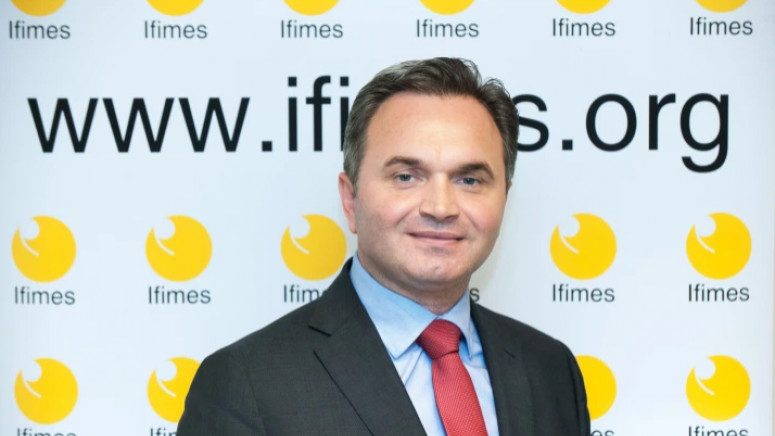
He emphasizes that Edi Rama would like to be the all-Albanian leader and that Kosovo is part of that project. Recalling Rama's recent visit to Prizren and the statements made at that time, Becirovic says that Kosovo is becoming a platform for Rama for his patriotism, especially since Sali Berisha is far more popular in Kosovo and among Albanians outside Albania than Rama himself.
When asked whether Albania's attempts to challenge Marti's report could affect the trial in The Hague, Becirovic says that the Special Chamber, that is, the court and the prosecution are doing their job.
"The position of the prosecuted leaders of the KLA is more difficult than the previous trials in The Hague because the court has thirty years of rich legal practice of the International Criminal Tribunal for the former Yugoslavia and documentation with numerous evidence and legally binding verdicts. That is why there is so much concern about the outcome of those trials of the leaders of the KLA," Becirovic concludes.
Vladislav Jovanovic, a former diplomat, and minister of foreign affairs of FR Yugoslavia is not surprised that Rama's action coincided with the trial of former KLA leaders because, as he says, all Albanians are like one family. He states that Albanians help each other, especially in relations with foreign factors, because they all have the same dream, which is to create one, united Albania.
"In this sense, Rama is in the best position to act abroad because Albania has integrated into leading organizations, has great strategic importance in the Mediterranean, and can, through denials about the existence of the 'Yellow House', reinforce the impression that others create that Marty went a little too far and that things are not exactly like that. These are the arguments that the lawyers of the KLA leaders use a lot at the Court, and it is also used in Kosovo when it is denied," Jovanovic says.
He states that the problem is that important evidence about the formation of the "Yellow House", even against Albania, and not only Kosovo and the KLA, has largely disappeared. Jovanovic believes that the Court in The Hague bears its share of responsibility for the disappearance of that evidence because it did not ensure its preservation.
"Rama's disputing of the report reveals that they are afraid that the truth they deny and hide still has some 'wings' and that it can take flight and fly out of those closed political positions that they strive to maintain," Jovanovic says, who, however, believes that it is not certain that Rama's intervention in favor of the Albanians and Albania will be successful to the end.
Jovanovic believes that, if it were to "come out of the bottle", then Albania could also be among the defendants and bear the consequences, and that is why the effort made by Rama is, as he says, almost forced, almost desperate.

"Rama will probably continue to act in that direction like the other champions on the Albanian side," Jovanovic says and adds that he will do so because it is a crime that they must not at any cost accept as a fact and must fight against, even if the whole world is convinced that it happened.
"They have no other way out," he adds.
Regarding the possible influence of the action from Tirana on the trial in The Hague, Jovanovic says that in principle judges must be completely independent in their decisions, however, "they are also human beings and it is always possible to be influenced in a visible or invisible way."
"In the end, all the judges are from the Western world, the Western world has its own short-term and long-term interests in connection with the Albanians, for them it is a new perspective support in the Balkans and they will probably try not to lose that support, to preserve it - whether at the expense of truth or justice or some other, I don't know. No one can predict in advance what will happen because, in addition to public signs of the existence of that crime, there are other visible and invisible efforts to either hide it or deny it and put it in second plan", Jovanovic believes.
Organ trafficking, our interlocutor points out, is a crime that has not been treated in international criminal proceedings yet, and a people or group that is suspected and proven to have done it will forever be marked in the history of crime.
In order for an initiative to be considered in PACE, it is necessary to collect 20 signatures for submitting a request, and for the proposal to be supported by members of at least several delegations, two political groups, and five countries. Such a request is sent to the PACE Bureau, and the next session of the Bureau is scheduled for April 24.
Based on Dick Marty's report, let's recall that in January 2011, PACE adopted a resolution on the inhumane treatment of people and illegal trade in human organs in Kosovo, for which 169 deputies from 47 countries voted in favor, eight deputies were against, while 14 were restrained. The resolution calls on the international community and the authorities in Belgrade, Pristina, and Tirana to take measures to shed light on the trafficking of human organs and other crimes during and after the conflict in Kosovo.
Marty then said that during the investigation he had found reliable witnesses, whose statements formed the basis of the claims he made in the report, but he added that they were afraid and do not believe in Kosovo's judiciary. He also pointed out that former Hague prosecutor Carla Del Ponte had collected a lot of evidence, although her investigators had been faced with numerous difficulties.
Yet Clint Williamson, the head of a special team investigating allegations of human organ trafficking in Kosovo and Albania in 1999, announced in 2014 that his team had failed to prove that organ trafficking had taken place, but that it had evidence of other crimes against non-Albanians. In 2015, this led to the formation of the Specialized Chambers in The Hague, before which the trial of former KLA leaders Hashim Thaci, Kadri Veseli, Jakup Krasniqi, and Rexhep Selimi began on April 3 of this year. The indictment charges them with war crimes and crimes against humanity, including illegal detention, torture, murders, and disappearances from March 1998 to September 1999, but not with organ trafficking.



0 comments