
Why are former KLA members essential to political parties in Kosovo, and do they bring electoral victory?
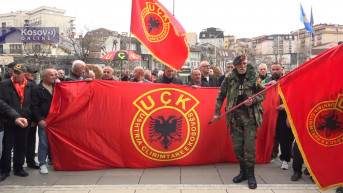
The extent to which former members of the KLA are important to political parties in Kosovo — and how many votes they can deliver — is best illustrated during the current election campaign, in which the fiercest disputes among Albanian politicians revolve precisely around the “values of the KLA,” as well as its former leaders currently standing trial before the Specialist Chambers in The Hague.
Written by: Veljko Nestorovic
The greatest claim to the KLA legacy is made by the Democratic Party of Kosovo (PDK), the party of Hashim Thaçi and Kadri Veseli, who are currently on trial for war crimes and crimes against humanity before the Specialist Chambers in The Hague. The party is now led by Bedri Hamza, who has also received the official support of Fatmir Limaj.
There is also the former Alliance for the Future of Kosovo (AAK), now simply the Alliance, which recently received a new leader in place of Ramush Haradinaj, after Ardian Gjini took over the position. That party largely relies on votes from an electorate sympathetic to former KLA members and its former leaders.
On the other hand, Albin Kurti’s Self-Determination movement and the Democratic League of Kosovo (LDK) do not include a large number of former KLA members within their ranks, but they are likewise competing for voter support by emphasizing the “values of the struggle.”
Rade Maroevic, editor of the RTS internet portal, told Kosovo Online that a significant portion of Albanian voters in Kosovo still support political options relying on former KLA members.
Maroevic says the key question of the Kosovo elections, scheduled for June 7, is whether Albin Kurti will manage to form the future government under any scenario.
Speaking about electoral lists, he notes that political parties are trying to attract as many voters as possible by engaging well-known public figures and former KLA members, including those who have stood trial for war crimes or were convicted.
“This is a process not specific only to Kosovo. We have seen similar examples in Croatia and in other states created after the breakup of Yugoslavia,” Maroevic states.
Political analyst Shkelzen Maliqi told Kosovo Online that Kosovo’s electorate is becoming younger and that the votes secured by former KLA members are largely already distributed among parties.
Certain political shifts among younger voters could produce surprises in the upcoming elections, Maliqi assesses, noting that he has not conducted any serious research into the political orientation of young people for nearly six years, which prevents him from speaking with certainty about their views.
“I believe it is obvious that Kosovo’s electorate is becoming younger and changing, which could affect future election results. If not in these elections, then in the next ones, because there will no longer be illusions about who is blocking certain political processes and for what reasons,” he says.
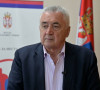
The President of the Serbian Government’s Commission for Missing Persons, Veljko Odalovic, says the political scene in Kosovo is deeply divided, but that almost no Albanian political party in the campaign is addressing issues such as relations toward Serbs, institutional violence, and unresolved crimes committed against Serbian and other non-Albanian populations. He adds that the current campaign is also unfolding in the shadow of the anticipated verdict against former KLA leaders.
In a statement to Kosovo Online, he particularly pointed to the resolution adopted in the Kosovo parliament, as well as statements by Albin Kurti and other senior officials regarding the role of the KLA.
“Any different opinion is practically declared unacceptable, which demonstrates a high degree of political exclusivity,” he assesses.
He further adds that it is especially concerning that no one has been held accountable for the killings and disappearances of several thousand Serbs and other non-Albanians in Kosovo.
“The international community witnessed those events, yet a clear reaction is still lacking,” Odalovic says.


0 comments