
Why are indictments over Racak being brought now – A diversion from the Hague or a prelude to something else?
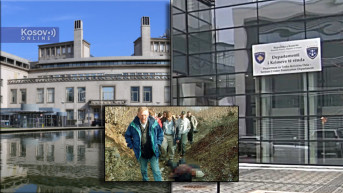
By announcing a trial in absentia over the Racak case and arresting five Serbs, the Kosovo authorities have once again brought the events of January 1999 to the forefront. Interviewees speaking to Kosovo Online believe that the timing was not chosen by chance, given that verdicts are expected by July 20 before the Kosovo Specialist Chambers in The Hague in the case against former KLA leaders. They also argue that this sends a particular message both to the international community and to Serbs in Kosovo.
Written by: Veljko Nestorovic
The Basic Court in Pristina previously announced that the first hearing in the Racak case, in which 21 individuals have been indicted in absentia, has been scheduled for July 20 – precisely when the Kosovo Specialist Chambers in The Hague are expected to deliver a verdict in the case against Hashim Thaçi and others charged with war crimes and crimes against humanity.
Shortly after the Basic Court in Pristina made its announcement, the Kosovo Police arrested five Serbs, who were subsequently remanded in custody for up to 30 days.
In the meantime, caretaker Prime Minister Albin Kurti stated that investigations and trials concerning war crimes committed during the Kosovo conflict must gain momentum and intensity. He noted that the arrests related to Racak followed a six-month investigation, while stressing that it remains troubling that insufficient efforts had been made for years to resolve the case.
Journalist Milos Garic says that the narrative of the alleged genocide against Albanians in Kosovo has been actively promoted ever since Hashim Thaçi and other KLA commanders were transferred to The Hague at the end of 2020, and that the issue has once again been intensified in recent days, likely because verdicts against Thaçi and the other KLA commanders are expected in July.
“Racak occupies a significant place in that narrative. The issue must be viewed within a broader context. The story of Racak and the narrative built around it have lasted for 27 years. The bombing of Serbia and the subsequent process of separating Kosovo from Serbia’s constitutional and legal order were based on that narrative. There are two completely different interpretations of those events. On one side is the Albanian narrative, and on the other the Serbian one. Supported by the most influential Western countries, the Albanian side presents the events of January 1999 as proof of its suffering, while the Serbian side is portrayed as solely responsible. On the basis of that narrative came the bombing of the Federal Republic of Yugoslavia, the NATO intervention, and all subsequent developments. It is a narrative that still persists today and is founded on the claim that Albanians were exclusively victims and Serbs exclusively perpetrators,” Garic told Kosovo Online.
He emphasizes that this is precisely why there is still insistence on maintaining such a narrative despite numerous questions that continue to be raised about the events of that period. He also notes that a particular concern is the existence, according to unofficial information, of a large number of sealed indictments against Serbs for alleged war crimes.
“Such indictments leave room for various abuses and create a sense of legal insecurity among Serbs. This affects not only Serbs living in Kosovo and Metohija, but also those living in central Serbia and elsewhere in the region. There is concern that individuals could become the subject of investigations or arrests based on charges whose existence they are unaware of. At the same time, critics of the authorities in Pristina believe that judicial and police institutions are being used for political purposes, which further deepens distrust among Serbs. In that sense, the message being sent is one of uncertainty and apprehension regarding travel to Kosovo and Metohija. Consequently, such moves are viewed by part of the Serbian public as pressure on the Serbian community and as an attempt to further complicate its position. If this practice continues, it will become increasingly difficult to build trust and create conditions for normalization, dialogue, and lasting agreements between Belgrade and Pristina,” Garic concluded.
Attorney and former military prosecutor Dragan Pasic believes it is evident that Kosovo’s judicial institutions seek to revise history and that this is one of the reasons why the Racak issue has been reopened.
“This revision of history is being carried out primarily for domestic use within Kosovo and its institutions. The protests in The Hague, so to speak, raise questions about why former KLA leaders are being tried, as well as about the alleged crimes in Racak. The so-called ‘Racak 1’ concerned the operational level – police and military commanders – whereas the so-called ‘Racak 2’ now concerns the alleged direct perpetrators of those criminal acts. This distinction has been made, and there is now an intention to prosecute all individuals who participated in what was, in their view, a legitimate armed operation against the so-called KLA,” Pasic told Kosovo Online.
Pasic stresses that the Racak case never received a legal resolution in The Hague.
“The key point of the indictment against the late Slobodan Milosevic was Racak. That event never received its legal epilogue, nor was it conclusively resolved in criminal-law terms in other proceedings against police and military generals. It is obvious that Kosovo’s judicial institutions wish to reinterpret that event, but in a manner that is not legally justified. The evidence from The Hague does not support the indictments that have been brought, nor does it support them at this stage of the investigation. The evidence is not only problematic but legally unusable, including in the latest case.”
He points out that the investigation relies, among other things, on media reports and press coverage and that there is a lack of solid material evidence.
“The testimonies of individuals who, after 27 years, are expected to appear before the Kosovo Special Prosecutor’s Office and the Special Department of the Basic Court in Pristina are also questionable. Such testimonies can hardly be entirely reliable, and there is a lack of solid material evidence. Of particular relevance are the forensic reports of Dr. Helena Ranta, who headed the Finnish team, as well as the report of the Yugoslav-Belarusian team. These two forensic reports were contradictory and formed part of the evidentiary record before The Hague tribunal,” Pasic said.
He added that those currently under investigation are likely to remain in detention until the proceedings are concluded with a final judgment.
“Unfortunately, it is expected that all those standing trial, or at least most of them, will be convicted. As for those currently under investigation, indictments are expected to be filed once the investigations are completed,” Pasic stated.
Historian Aleksandar Gudzic points out that Kosovo’s political elites have spent three decades building their position on the narrative of the KLA’s heroic struggle and the exclusive victimhood of Albanians, with the Racak case standing at the very top of that narrative.
“They claim a certain exclusivity regarding Albanian victimhood, and Racak stands at the summit of that pyramid. That is why it is entirely understandable that Racak is being emphasized precisely now, when we know that the trial of the KLA’s political leadership is approaching its conclusion. In that context, there is a possibility that Kosovo’s political elites, judging by the course of the proceedings so far, are attempting to pre-empt a particular outcome. That is why they are now initiating proceedings concerning Racak, even though, I repeat, the Hague Tribunal abandoned that case in proceedings against both the military and political leadership,” Gudzic told Kosovo Online, adding that the Hague Tribunal ultimately dropped the Racak case in the proceedings against Milosevic.
He further argues that the political elites of Western European countries, as well as Kosovo’s political elites, built their positions on the wars of the 1990s, which culminated in the bombing of Serbia.
“That is why the narrative of Racak, the exclusivity of Albanian victimhood, and the heroic struggle of the KLA are important for the domestic Kosovo audience. At the same time, the bombing of Serbia and the international intervention are also important for the political elites of Western European countries, which built part of their political legitimacy on the events of the wars of the 1990s,” Gudzic concluded.



0 comments