
Turkey's role in calming the crisis in the North: Can Erdogan influence Kurti and is he willing to do so?

Turkey has a strategic goal to be the most influential factor in the Balkans, but it is not realistic to expect that the President of Turkey, Recep Tayyip Erdogan, can influence Albin Kurti more than Joseph Biden or the EU, i.e. Olaf Soltz, Professor Darko Tanaskovic points out, and a diplomat Vladislav Jovanovic is of the same opinion, who does not expect Turkey to show a special or greater interest in Kosovo.
Since the worsening of the situation in the north of Kosovo, last Friday, when special police raided the buildings of the municipalities in the north, apart from the officials of the western part of the international community, the President of Serbia, Aleksandar Vucic, and the Prime Minister of Kosovo, Albin Kurti, also spoke by phone with the President of Turkey, Recep Tayyip Erdogan, who won the second presidential mandate just a few days earlier.
Vucic asked his Turkish counterpart to use the reputation and influence of his country so that peace and stability prevail in the region.
Turkey does not hide its interests in the Western Balkans, and Erdogan also said in those talks that Ankara was ready to provide the necessary contribution to the dialogue process.
At the same time, another contingent of Turkish Special Forces arrived in Kosovo, at the request of NATO.
The former ambassador to Turkey, Professor Darko Tanaskovic, told Kosovo Online that the role of the presence of Turkish forces in the KFOR contingent in the north of Kosovo, considering all aspects of the current situation, can be positive, in terms of reducing tension and instilling some confidence in Serbian life, although, as he assesses, he cannot significantly contribute to finding a political solution for the "calculatedly caused destabilization by Pristina".
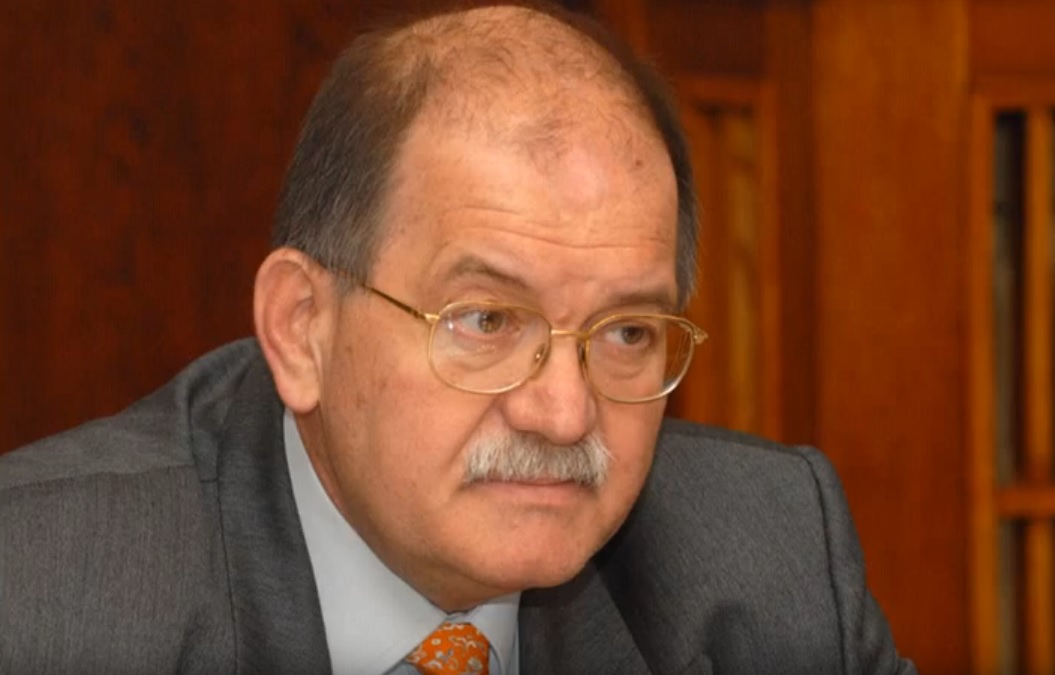
"Turkey realizes its strategic goal to be the most influential factor in the Balkans in this way as well. It always acts in a way determined by the given international and regional conjuncture, giving priority to diplomatic, economic, cultural or military means," Tanaskovic points out.
He indicates that in recent years, President Erdogan, although he unreservedly supports the international affirmation of Kosovo's independence, has opted for a more far-reaching, constructive, and balanced (tactical) approach, which implies respect for Serbian interests and improving relations with Serbia.
With this, Erdoğan, he explains, gains comparative advantages in relation to the one-sidedness of Western European or, more precisely, "Brussels" actors and positions himself as a potentially more effective factor with greater trust among the Serbs as well.
He notes that even the US to some extent has assessed that pressure exclusively on the Serbian side does not produce the desired results.
"Therefore, it is logical to assume that the command of the Turkish contingent in 'Kosovo' received instructions in accordance with the current foreign policy of Ankara towards the former Yugoslav territory and the Balkans in a wider sense and that they will behave accordingly. We should not forget that, thanks to the efforts of one of its most capable diplomats, Onur Oymen, Turkey achieved what it wished for in 1999, that its forces, within the German zone of responsibility, kept the peace in the part of Kosovo and Metohija predominantly inhabited by the Turkish minority (Mamusha, Prizren), although at the time, this seemed unlikely for various reasons. The front pages of the leading Turkish newspapers at the time featured big headlines like 'Soldier in Kosovo again!'" Tanaskovic recalls.
When asked if Erdogan could and would influence Kurti to reduce tensions in the north, Tanaskovic points out that it is not realistic to expect the Turkish president to have more influence on the Pristina authorities than the international community, which has "to some extent become hostages to their insolence."
"It is not realistic to expect that the president of Turkey can influence Albin Kurti more than Biden or the EU, that is, Scholz and their envoys do not seem to be able to do it either. The so-called 'international community', in favor of 'Kosovo', is not ready to oppose the temporary authorities in Pristina applying really effective measures and painful sanctions, so that, although it sounds paradoxical, to some extent it became a hostage of their insolence," he said.
He believes that currently, it is not a priority for the President of Turkey to influence Pristina's decisions, but that it is possible that this may change later.
"Erdogan is certainly very influential and has quite strong arguments and instruments for 'convincing' Kurti and his gang if he wants to use them, but I don't believe that this is his priority at the moment. Let his nominal allies, and actual rivals, suffer for now. This does not mean that this experienced politician will not, at a certain moment, judge that the moment has come for him to appear more visibly on the scene," Tanaskovic concluded.
The former ambassador to Turkey and head of the Yugoslav diplomacy, Vladislav Jovanovic, points out that the question is whether Turkey has a role in calming the situation in the north or whether it is just a supplement to the role that NATO has in Kosovo because Turkey is, for now, a formal member of NATO and as such does not give up of their obligations.
On the other hand, adds Jovanovic, Turkey has historical ties with Kosovo, especially with the Albanians who were its most numerous viziers for a very long time during the Ottoman Empire.
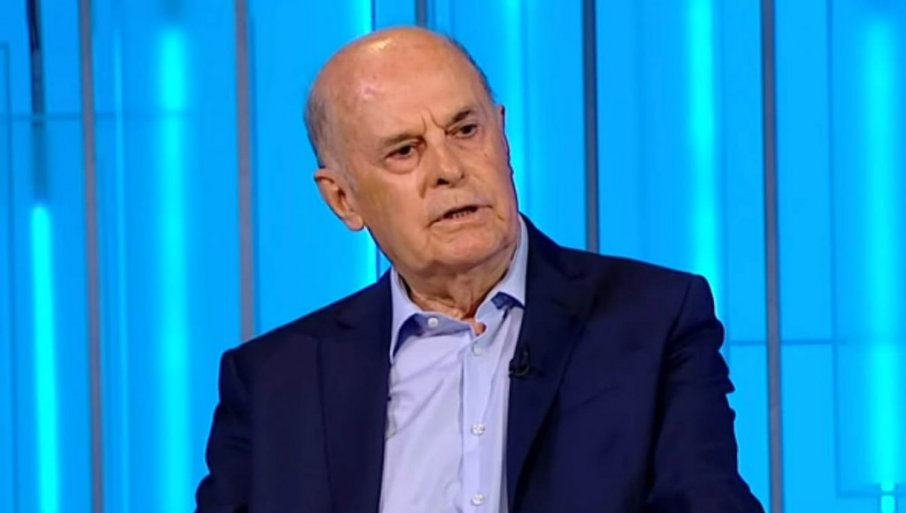
According to him, the Turks had periods of great agreement and cooperation with the Albanian people, but also awkward moments due to various rebellions and discipline.
"At this moment, Turkey is the second country that has recognized the independence of so-called Kosovo and as such ran ahead without taking into account our sensitivity and possible reaction, and then America appeared with its full commitment to solving the Kosovo issue, while Turkey occasionally appeared. However, it has not been interested in recent years, because it had other priorities in the Middle East and relations with Russia, Greece..." Jovanovic said.
He recalls that the Kosovo-Albanian government hurt Turkish interests by refusing to extradite some Turks who were suspected of a coup attempt against President Erdogan.
Despite this, he emphasizes, Turkey is not giving up on its historical ties and interests in Kosovo.
"In recent years, it has emphasized its other interests towards Russia, Serbia, the Middle East, and Israel and has not particularly stood out. This is parallel to the revision of its approach towards the Balkans, which is no longer in the direction of neo-Islamism, which was advised by the former Minister of Foreign Affairs and which Erdogan seems to have accepted at the time," the diplomat said.
He points out that Erdogan later "corrected" and objectified his policy towards the Balkans, directing it to build his economic and political presence in the region.
Therefore, he estimates that Turkey will not show a special or greater interest in Kosovo.
"This unit, which came at the invitation of NATO, is part of Turkey's cooperation with the Alliance and does not mean any special, additional interest of Turkey in Kosovo and Metohija. It has several million Turks of Albanian origin, which means a strong interest and economic group, but also electoral part, so Turkey also has to take care of that," Jovanovic explains.
The Turkish approach to Kosovo, he emphasizes, has become quite balanced and it is one of the territories they are interested in, but it is no longer as religiously privileged as it was before.
"At this moment, I don't see that Turkish interest and influence in Kosovo has increased, but only that Turkey's relationship with the NATO Alliance has been improved, which otherwise has worsened due to new tones in Turkish foreign policy. It is a small Turkish investment to improve relations with America, however, that is not enough, because those relations are greatly threatened by Turkey's mistrust of American policy in general," Jovanovic concluded.
When asked whether Erdogan could and would influence the Prime Minister of Kosovo, Albin Kurti when it came to calming the situation in the north of Kosovo, Jovanovic believes that the Turkish president could try to do so, but that the key question is whether the Prime Minister of Kosovo is at all independent in his doing.
He adds that it is very likely that Kurti is a player in the combinations that America has in Kosovo and that as such he has his role to constantly challenge Serbia and "draw" it into uncalculated steps that America could later use to achieve some of its other, and personal, goals in Serbia.
"Kurti is therefore not independent. I think that it is an image that is artificially created in order to somehow divert us from the right direction of reasoning, which is that there is a compact interest between the West and the Kosovo Albanians that has not started at this moment, which does not mean that it will not in the time to come, because America has more and more interests in diverting its global attention from Kosovo to other directions - Russia, the Far East, China. If Kosovo continues to be on the front line of American interests, it could lead to a gradual separation of interests between America and Kosovo. So things are not resolved, so to speak, rather they are in a further evolution that contains both favorable and unfavorable opportunities for Kosovo in the eyes of American politics," Jovanovic pointed out.



comments