
Why doesn't Kurti change his policy and is there a chance to return to dialogue?
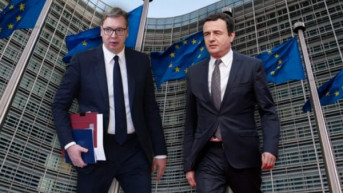
After another round of technical dialogue in Brussels, in which no progress was made, the negotiations between Belgrade and Pristina are "on hold", because it is certain that they will not sit down at the negotiating table again until September, since there is a collective break in Brussels during August due to the vacation of the EU administration. The interlocutors of Kosovo Online indicate that, considering the still tense situation in the north of Kosovo, postponing the talks is bad for both sides and that neither Belgrade nor Pristina has any other alternative but dialogue. But the question is how to get to it.
Ivan Nikolic from the non-governmental organization "Communication for Social Development" tells Kosovo Online that Kosovo Prime Minister Kurti does not have the support of the European Union and the USA for the actions he undertakes, but that their leniency towards him is obvious.
On the other hand, the Professor of International Law at the University of Pristina, Afrim Hoti, believes that Albin Kurti is trying to take the position of the President of Serbia in the international community.
The EU Envoy for dialogue between Belgrade and Pristina, Miroslav Lajcak, pointed out, after the meeting with the President of Serbia, Aleksandar Vucic, that they had agreed that de-escalation of the situation in the north of Kosovo was necessary. This is also the opinion of our interlocutors; however, they have different views on who should make the next move.
They agree that new elections in the north, with the participation of the Serbs, could be a way out of the crisis.
Nikolic points out that it is clear to those who know the political situation that dialogue, in which two sides are not treated equally, does not bring results. However, he claims that ordinary citizens expect a lot.
"We need to individually put pressure on one side or the other, but the fact is that for the umpteenth time, this was a completely missed chance. As for the dialogue in Brussels, we ordinary citizens expect a lot when it is said that it is on a technical level, hoping that some technical matters will be resolved and that the quality of people's daily lives will be improved, but again nothing significant has happened," Nikolic says.
He indicates that the representatives of Kosovo are extremely firm in their positions, without any sign of giving up. Nikolic considers the move taken by Pristina in the direction of de-escalation, i.e. the decision to reduce the presence of members of the Kosovo Police in the vicinity of municipal buildings in Zvecan, Leposavic, and Zubin Potok by 25 percent, insufficient.
"The fact that 25 percent of the police officers left the north is something very ridiculous. It is not even a small step forward towards the de-escalation of the conflict, and I think that even this de-escalation is being done very frivolously by the international community, especially by the Kosovo government," Nikolic said.
Nikolic believes that the European Union and the United States of America have a lenient approach towards Kosovo's Prime Minister Albin Kurti, but that there is no support for the actions he is implementing.
"I am absolutely sure that there is no support and I can freely say, I admire his courage to continue to behave like that. How long he will be able to do so, is the question, I think they are all very lenient towards him, I don't know why, and we will see how long it will last, but the fact is that even his voters do not like it, and even less others in Kosovo," Nikolic said.
The mood of citizens when it comes to the situation in the north, according to Nikolic, goes from one extreme to the other.
"That is what is the most dangerous in a way. From one extreme that they don't care and don't expect anything terrible to happen, to the other extreme, when, for example, the situation in the north is completely reflected in the south and mutual conflicts take place. So, neither one nor the other case is good and I hope that they will finally come to their senses and return to a more constructive dialogue so that there will be de-escalation as soon as possible," Nikolic said.
Speaking about possible new elections in the north of Kosovo, Nikolic believes that this is the best possible solution for the current crisis.
And Afrim Hoti points out that if Belgrade and Pristina want to join the European Union, there is no other alternative than dialogue.
"I think that the dialogue is difficult and that it is a difficult situation, but again I think that this plan of the European Union is the best and that there is no other option, neither for Pristina, nor for Belgrade. Since both Serbia and Kosovo should move towards the European Union," Hoti said.
When it comes to the current situation, Hoti believes that steps towards de-escalation should be made by both sides.
"I think de-escalation should come from both sides. Pristina took the first step, now Serbia is on the move," Hoti says.
Speaking about the elections in the north of Kosovo, he pointed out that they had not gone as expected for Pristina.
"When it comes to elections, a voter turnout of three or four percent is not enough. It is very important that we have the participation of the Serbs and that we reorganize new elections in Serbian municipalities, as well as have new bodies. That is the best and only option for the north," Hoti said.
The Professor of International Law believes that Kurti is trying to take the position of the President of Serbia in the international community.
"Prime Minister Kurti has a good position in Kosovo because he has more than 50 percent of citizens' trust, he talks to the international community as he does to the citizens of Kosovo. Secondly, he wants to take the position that the President of Serbia has in the international community since Kurti thinks that the international community now helps Serbia, the President of Serbia, more," Hoti said.
When asked if there was a possibility of a larger-scale conflict in Kosovo, Hoti pointed out that no one was interested in war.
"I don't think that option exists. We have disagreements with Serbia, but not at such a level that we have a war. That's the first thing. Second, NATO is present in Kosovo, which is an organization that guarantees peace and stability, and I don't think the regime in Serbia is interested in war either," Hoti concluded.

0 comments