
Why is the urgent session of the UN Security Council on Kosovo important and will it be scheduled?
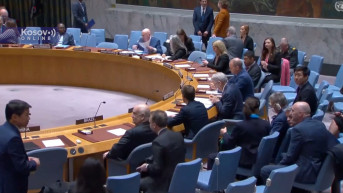
The President of Serbia, Aleksandar Vucic, announced that for the first time, Serbia will request an urgent meeting of the UN Security Council regarding the situation in Kosovo, and the path to such a meeting on the East River, in the event that the initiative comes from a country that is not a member of this body of the world organization, implies that one of the members of the Council submits a request on its behalf.
An exception is when an armed aggression has been committed against a country. In that case, each member of the UN can directly request a session of the SC.
Yesterday, the President of Serbia said that at the emergency session of the Security Council, Belgrade ould demand that the SC take measures to protect the lives of Serbs in Kosovo, as well as that he would demand that the SC ask KFOR to immediately disable the operation of structures in Pristina that threaten the security of Serbs and to carry out demilitarization of all Albanian structures in accordance with UNSC Resolution 1244.
As for the procedure that is applied in such situations, the former Ambassador of Serbia to the UN, Branko Brankovic, tells Kosovo Online that the members of the Security Council and the Secretary General of the United Nations are authorized to submit requests for an emergency session, and that according to the UN Charter, the Security Council has sessions 24 hours a day, 365 days in the year.
"The request is sent to the president of the SC for that month and he is obliged to schedule the session," says Brankovic.
The country that is the president of the Security Council this month is Great Britain, and in August it will be succeeded by the USA.
"The President of the SC must not delay the convening of the session, but is obliged to schedule it immediately after consultation with the members", Brankovic points out.
Our interlocutor explains that a country that is not a member of the SC must ask any member of this body to "request a SC session on its behalf." The person who requests a session, he adds, also proposes an item on the agenda, and whether it will be adopted is discussed at the session itself and voted on.
"Since it is a procedural issue, nine positive votes out of 15 SC members are enough, and the right of veto does not exist here," says Brankovic.
In what period of time the session will be convened, as reported by our sources in the UN, depends on the agreement of the members of the SC, but it is usual for it to be as soon as possible. There is no rule about that, so after sending the request, the meeting can be held on the same day, in two hours, at midnight, on Saturday or Sunday if the topic requires it, or in a few days.
Former Serbian ambassador to the United Nations, Pavle Jevremovic, tells for Kosovo Online that it also depends on the reason for convening the session.
"Everything depends on the basis of which the session is requested. If it is based on endangering peace and security, that is, if it is an open war and conflict, then it goes according to the urgent procedure, and when that is not the case, then the request goes to the work agenda of the SC," says Jevremovic.
Jevremovic assesses that the request for an emergency session is in any case a politically significant move, even if it does not result in concrete international action, because, as he points out, Serbia can later refer to the fact that it raised certain issues before the UN Security Council.
If there is a session at Serbia's request, it is logical that a representative of Serbia, as a country that is interested in the topic to be discussed by the SC, will participate in it, and President Vucic announced yesterday that he would personally attend the session if it happened.
Namely, one of the rules of the UN is that a country that is a member of the United Nations, but is not in the Security Council, can participate in the discussions of the SC, but without voting, when the Council considers that the interests of that country are affected.
Also, non-members of the United Nations, if they are parties to a dispute that the Council is considering, can be invited to participate, even without voting, in the discussions of the Council, whereby the participation of non-members of the SC sets certain conditions.
The SC has 15 members, five of which are permanent – USA, Great Britain, France, China and Russia. The ten non-permanent members currently include Albania, Brazil, Ecuador, Gabon, Ghana, Japan, Malta, Mozambique, Switzerland and the United Arab Emirates.
Of these, ten have recognized Kosovo (USA, Great Britain, France, Albania, Gabon, Japan, Malta, Switzerland, the UAE and Ghana, from which there have been statements that they have withdrawn their recognition), while Kosovo is not recognized by five member states of the SC (Russia , China, Brazil, Ecuador and Mozambique).
0 comments