
Will the new mayors sit in armchairs in the north, what did Lajcak say during his visit to Kosovo?
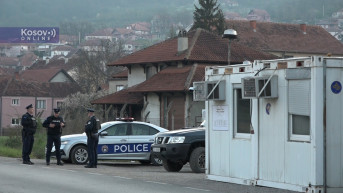
It is still not known whether the Albanian candidates for mayors in the north, recently elected in illegitimate elections with only 13 Serbs voting, will actually sit down in their seats at the end of May when the deadline expires. EU envoy Miroslav Lajcak was not precise yesterday during his visit to Pristina and North Mitrovica on the subject, but he pointed out that he hopes "for an outcome that will not lead to an escalation of the situation and that the EU considers that the electoral process does not represent a long-term political solution", which can be interpreted as a position against Albanians taking over positions in North Mitrovica, Zvecan, Zubin Potok and Leposavic.
Such messages, even in "diplomatic gloves", as assessed by Kosovo Online interlocutors, are justified, because the fact that Albanians will lead the Serbian municipalities after voting in the elections on April 23, in which only slightly more than three percent of voters and only 13 Serbs, could lead not only to a deepening of the political and legal vacuum, but also to serious tensions and conflicts.
They state that Lajcak is obviously aware of this, because the newly elected mayors were not on his agenda for his visit to Kosovo, even though he spent almost half of yesterday in the north of Kosovo. Our interlocutors are aware of this in Brussels as well, hence the "twisted offer" to the Kosovo authorities to "elegantly" get out of the stalemate, but they also add that they are not too optimistic that the government in Pristina will "hear" the EU's suggestions and abandon attempts to impose a government in the north that has neither legitimacy nor legality.
The President of Serbia, Aleksandar Vucic, said that at the last meeting in Brussels, on May 2, the European Union presented a fair proposal for overcoming the situation in the north, but that Albin Kurti rejected it because he "only wants a crisis". He stated that the proposal of the head of European diplomacy, Josep Borrell, was to establish some transitional solution, in order to hold new elections in a few months, to establish the CSM, to return the Serbs to the institutions and to obtain legitimate authorities.
The Kosovo Law on Local Self-Government states that the mayor must take an oath before the Municipal Assembly within one month after the election. Those deadlines are "leaking", and it is extremely uncertain whether and how the newly elected Albanian officials will start work without the consent of the majority Serbs.
According to the election results certified by the Central Election Commission of Kosovo, the candidates of Self-Determination, Erden Atic and Lulzim Hetimi, won in North Mitrovica and Leposavic, Izmir Zecira in Zubin Potok, and Ilir Peci, both from the Democratic Party of Kosovo, in Zvecan.
Senior researcher of the NGO Aktiv Igor Markovic says that, reading between the lines of Lajcak's messages, the EU is trying to find a solution for the north that will not cause new tensions. He states that it could be an invitation to the Serb List to participate in the elections in the new cycle, or perhaps they will find some other kind of solution for the return of Serbs to the institutions.
"We will see how it will be realized in practice, whether the mayors will not even take the oath or will resort to some other political maneuver, remains to be seen. Pristina is obviously under enormous pressure from the international community. Talking about the legality of the elections is fine, but there are really no arguments in favor of their legitimacy," says Markovic.
He states that the elected mayors are people whom few people know in the municipalities where they won, that almost nothing is known about them and that it is difficult to get in touch with them, and therefore to assess what their next steps will be. Markovic emphasizes that the key to their decision whether to "split the mandates" will be what kind of directive they will receive from the party headquarters in Pristina.
"Out of the four elected mayors, two are from Kurti's Self-Determination, in North Mitrovica and Leposavic.Knowing Kurti's previous behavior and ignoring the suggestions from Washington and Brussels, I would not be surprised if he turns a deaf ear to this EU call for the mayors not to take the oath," says Markovic.
He fears that this time Albin Kurti will insist on the establishment of bodies in the municipalities in the north headed by Albanians, even though this may cause serious consequences.
"Since the beginning of his second term, Kurti has been using any topic related to the Kosovo Serbs to cover up major failures in the field of economic and financial recovery, primarily from the corona virus to the big problem of increased imports to Kosovo. He promised to solve the problems of the health system and corruption, he did not do it, and these were his key messages during the election campaign. That's why it was easiest to blame the Kosovo Serbs, Belgrade, even Brussels and Washington, and blame them for everything that is bad in Kosovo," Markovic points out.
He reminds that Kurti has behaved rather arrogantly when it comes to advice and suggestions from Western countries.
"I wouldn't be surprised if it goes all the way this time as well, because it is under great pressure at home, from the opposition parties. Especially if we take into account the fact that he went all the way when it comes to the elections, even though on several occasions there were messages from the EU that they should consider postponing them until an agreement is made with Srpska Lista. We will see what order he will give to his mayors, and I would not be surprised if those two mayors who are not on the side of Self-Determination follow the policy and decisions of the government in Pristina," says our interlocutor.
He continues that Kurti will not be hindered by the fact that the imposition of Albanians at the head of Serbian municipalities would carry the risk of worsening the security situation:
"If they take the oath, the agony of the legal and political vacuum will continue, because we have no representatives of the Kosovo Serb community in the institutions in the north, neither in the police nor in the judiciary. Even in such a situation and regardless of what the Albanian mayors do, the security situation will worsen. To that should be added the presence of special units of the Kosovo police in the north, which has already been proven to have a bad strategy for treating the local population."
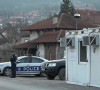
Markovic does not rule out the possibility of another absurd situation, that after the election, Albanian mayors will also take the oath "under guns and in containers", because the big question is how they will physically enter the municipal buildings.
"The newly elected mayor of the municipality Zubin Potok has already said that he will take the oath in the village of Chabra, which is majority Albanian, in the local office of the local community, if the Kosovo police does not ensure that he takes the oath in the municipal building. Kurti not only puts the north at risk, in terms of raising tensions, but the question arises whether he wants these new mayors to be the sacrificial lambs of his policy of not giving up before the international community. Because those mayors will also be under enormous pressure, especially if they take the oath under police escort. It will not be a good picture neither for them, nor for the local population, nor for the international community," says Markovic.
As Dr. Neven Cveticanin, president of the Forum for Strategic Studies, says for Kosovo Online, the request that came to the Albanian mayors from Brussels shows that the EU is aware that the problem of legitimacy in the north of Kosovo has not been resolved.
"This is also a warning to Pristina not to go further and not to take steps in the direction of deepening the crisis of legitimacy or possible escalation of the situation. To this should be added the warning of the EU to Pristina after the dissolution of the Management Team for drafting the Statute of the Community of Serbian Municipalities, which happened the day after dialogue at a high level in Brussels. I see calls from Brussels that the mayors do not take the oath as offering good services to the EU to overcome this crisis," says Cveticanin.
He explains that if the mayors do not take the oath within 30 days of the end of the election, they are repeated.
"The EU made it clear that the elections that were held recently had limited legitimacy, that the Union considers them as such and that it is clear that they did not solve the problem. The message to cancel the mandates in the north is a signal that the EU considers that new elections are the way forward towards the resolution of this situation. It is a diplomatic step in the right direction where the EU is trying to do everything so that we don't fall under the duress of some crisis management again. We currently have a crisis of legitimacy and it is important that it does not turn into a security crisis," our interlocutor points out.
When asked how aware they are in Brussels that it will be physically difficult for mayors to take oaths and take office in municipal buildings in Serbian areas, Cveticanin says that he thinks they are aware of all this in Brussels.
"That's why we have a message to give up taking the oath, so that we don't end up in a situation of escalation of the security situation and once again have crisis management, as was the case with attempts to re-register license plates. The EU wants to eliminate that, that's why it sends such a message. It is for now, it is diplomatic, not direct, but it could be translated that maybe new elections are the way to resolve this situation and that the crisis of legitimacy should not turn into a security crisis," he says.
Now everything is in the hands of Pristina, but Cveticanin says that it is currently ungrateful to speculate what moves the local authorities will take.
"Certainly, the situation in the north will be the product of different vectors. On the one hand, there is Pristina's interest in showing that it has not deviated from its policy, since Albin Kurti came to power on the promise that he would not allow a Serbian entity in Kosovo. The next vector is the interest of Serbia to implement everything that was signed in the Brussels Agreement. And the third vector is the interest of the EU countries, more precisely the Quint, that the situation does not escalate, which at this moment does not exactly suit the Union and it will continue to offer its good services in order to this situation has been overcome", says Cveticanin.
Professor of political science from Pristina, Nexhmedin Spahiu, tells for Kosovo Online that he believes that the Albanian mayors elected in special elections in four municipalities will take the oath and take office, regardless of the fact that there have been messages from the EU not to do so. He adds that their mandate will still be limited until agreements on the CSM are reached.
"The elected mayors received the support of the Americans. In my opinion, Brussels' request that they leave their positions will be fulfilled a little later, after a few months, after the Union of Municipalities with a Serbian majority has already been agreed upon, when it is known where the Union will be created, within which will function, what will be the relationship of that entity with the central authorities", says Spahiu.
He also says that the purpose of the elections held in the north was to do some things in preparation for the functioning of the CSM.
"The purpose of these elections is short-term, to do some things that none of the Serb mayors have done and will not do in order not to be declared 'traitors'. The idea is for Albanian mayors to raise Kosovo flags in municipal buildings in the north. in the north took the oath in front of the Serbian flag. After the Union of Municipalities with a Serbian majority is created, new elections are held and Serb mayors come, they will only add the Union flag, but they will not remove the Kosovo flag. There are a few more things that the Serbs have not done, and that is building the mosque near the Ibar bridge and the opening of an Albanian school in North Mitrovica, since students from that part of the city go to school in South Mitrovica, because they don't have a school in Albanian," says Spahiu.
When that work is finished, our interlocutor continues, the Albanian mayors will probably be forced to resign.
"After the agreement on the Union, new elections will be called because of the little legitimacy that the elected Albanian mayors have. But before that, they have to finish these things that I talked about. In every institution of Kosovo, there should be symbols of Kosovo, if they are not there, then it is the division of Kosovo or something else", believes Spahiu.
0 comments