
Will voters in the local elections also judge the Parliamentary spectacle?
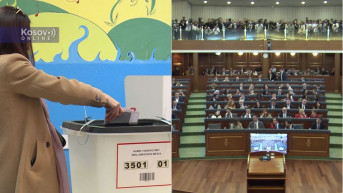
Political parties will once again test their strength at the polls on October 12, competing for victory in 38 municipalities, while the theatrical spectacle in parliament, which began on April 15, still shows no signs of ending. According to observers, the Self-Determination Movement would benefit from having potential new parliamentary elections held simultaneously with the local ones. Even if that scenario does not occur, and voters choose only municipal councilors and mayors, their decisions may still be influenced by the behavior parties have displayed in the “assembly series” — often described by analysts as chaos, absurdity, and even a circus.
Written by: Dusica Radeka Djordjevic
Criticizing the political gridlock created by parties in the Kosovo Assembly, political analyst Xhavit Drenori said that political irresponsibility has caused citizens to lose interest in parliamentary processes.
“This situation has made MPs look ridiculous. Now when a session of the Assembly is scheduled, people change the channel because they already know what will happen,” Drenori stated.
Will voters also turn the page on October 12?
Milos Pavkovic, associate at the Center for European Policy from Belgrade, told Kosovo Online that it’s still early to predict how voters will act in the local elections since the campaign is just beginning, but that the ongoing political crisis will undoubtedly influence them.
“This will definitely affect voters because, although they are used to such rhetoric and political bargaining — which is part of political life — Kosovo is currently facing a political crisis and an inability not only to form a government but even to constitute the Assembly. This is both a political and constitutional crisis, and it will influence voters — either by motivating them to punish the ruling party at the local level and opt for the opposition, or by punishing the opposition, causing it to lose some of the support it gained in the parliamentary elections. Both scenarios are possible,” Pavkovic explained.
If elections end up being held at both levels on the same day, he says such merging — especially for the ruling party — creates a sort of referendum atmosphere in which strategic voting occurs. This could improve Self-Determination’s chances of winning in more municipalities.
“We’ve seen similar examples elsewhere. It’s a clear strategy by the ruling party, but whether it results in a positive outcome depends on the dynamics of the campaign and on whether snap parliamentary elections are actually held,” Pavkovic noted.
The deadline for submitting applications for political entities — parties, coalitions, civic initiatives, and independent candidates — for certification to participate in the local elections begins on June 26. Along with the applications, political entities must submit a list of mayoral or municipal assembly candidates by August 13, while the official election campaign begins on September 13.
Although the Assembly has not been constituted and no new government has been formed, Aleksandar Rapajic, Program Director of the NGO Center for Advocacy of Democratic Culture from North Mitrovica, believes the local election campaign will proceed without major issues.
“People here have grown somewhat used to non-functional institutions and have started accepting that they cannot rely on Kosovo's institutions, which mostly create problems rather than help. The failure to constitute the Kosovo Assembly has increased pressure on the Serbian community and worsened their living conditions. Things are happening that were previously unimaginable — people being expelled or threatened with home demolitions. I hope this will motivate the Serbian community to participate more in the local elections, which could be a step toward normalizing life here,” he told Kosovo Online.
He added that Self-Determination would prefer to have the local and potentially repeated parliamentary elections held at the same time, as the party performs poorly in local races.
“In the last local elections, Self-Determination did very poorly. Aside from a few figures in the government, they have no recognizable people at the municipal level, so they perform much worse locally. In 2021, they won in only four municipalities, two of which were quite small. That’s why it suits them to combine the local with the parliamentary elections — they hope that the support they enjoy at the national level will carry over to the local level,” Rapajic said.
In the 2021 local elections, Self-Determination candidates won mayoral races in only four of 38 municipalities. Among the other Albanian parties, the Democratic Party of Kosovo won nine, the Democratic League of Kosovo seven, the Alliance for the Future of Kosovo five, and the Social Democratic Initiative one municipality.
Political analyst Shkëlzen Maliqi believes the complicated situation in Kosovo’s parliament might prompt the announcement of new parliamentary elections, which could be held on the same day as the local ones to cut costs.
“That seems to have been Kurti’s plan, as he knows he won’t get the 70 percent of the vote he wanted in new general elections, so instead, he will try to win a few more municipalities, even if he can’t secure central power,” Maliqi told Kosovo Online.
He added that the campaign has already unofficially begun and that the presidency is also entering the picture, as presidential elections are due in the spring of next year.
“If both general and local elections are held — and since forming local and central governments always drags out — the presidency may come into play as well, triggering coalition negotiations. However, given how bitter the rivalries have become, this could all drag on for another two years,” Maliqi concluded.



0 comments