
Cadez: Trade exchange in the Western Balkans tripled over the past ten years
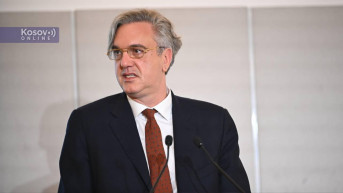
The President of the Serbian Chamber of Commerce, Marko Cadez, stated today at the 33rd Kopaonik Business Forum that trade exchange in the Western Balkans has tripled over the past ten years, and that waiting times for goods at borders have been reduced from two hours to just over 20 minutes, RTV reports.
“This is a topic that perhaps feels political shocks the most, or what we call the impact of certain political relations between governments in the region on the economy itself,” Cadez said during the panel titled “Moving Forward Together: Regional Integration of the Western Balkans.”
Nevertheless, he emphasized that trade among Western Balkan countries has tripled over the past decade, primarily in goods.
“Certain initiatives, such as the former Open Balkan initiative, primarily brought a certain acceleration of the flow of goods between us, particularly in terms of mutual recognition of certificates. There are still quite a few problems, but some systemic issues have been resolved. According to what we see and measure at the borders, we have reduced waiting times from around two hours to just over 20 minutes when it comes to trade between Western Balkan countries and economies—not between the region and the EU. That is a different topic,” Cadez said.
He highlighted the example of Serbia and Albania, which over the past ten years have managed to increase exports from Serbia to Albania by as much as 90 percent, and from Albania to Serbia by slightly more than 90 percent.
“We have signed more than 60 bilateral agreements, and what is most interesting is that Serbian tourists are traveling to Albania. The Albanian coast is now the second destination for Serbian tourists after Greece. We have examples of Serbian companies that have recently invested, such as Alta Bank in North Macedonia in the financial sector. We also have examples from the pharmaceutical sector, such as Vega, which has invested in companies in Bosnia and Herzegovina, among others,” Cadez said.
He noted that things have indeed improved in this regard, but that countries in the region still suffer from what he described as the political factor.
“In some of these countries, elections take place, and then it becomes easiest to gain political points—regardless of which party you belong to—by once again invoking external or internal enemies and returning to themes from the past. Naturally, that then affects business as well,” Cadez said.
He recalled that a few days ago Serbian President Aleksandar Vucic and Albanian Prime Minister Edi Rama co-authored an article for Frankfurter Allgemeine Zeitung, in which, as he said, they discuss a realistic approach to Western Balkan relations with the EU.
“In that context, we can expect an acceleration process in a somewhat different way than what is currently formal. It seems to me that the entire geopolitical dynamic in Europe is shifting from Brussels toward member states, primarily the largest ones, which have stated that they want to consolidate the space. That is precisely the opportunity for the Western Balkans. If you look back, every enlargement of the European Union was primarily political rather than bureaucratic, and it seems to me that this time as well—whatever it ends up being called—entry into the single market and Schengen, or TIR 2, or associated membership without voting rights as an interim step, could come very, very quickly,” Cadez concluded.

comments