
Trapped goods, trapped relations: Trade barriers and the path toward a solution
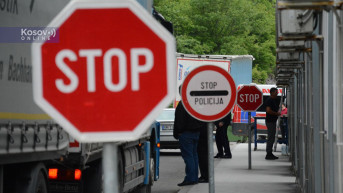
In post-conflict societies, trade is often among the first areas in which functional cooperation develops between formerly warring sides—whether between sovereign states or ethnically divided communities within the same territory.
The renewal and development of trade relations play a key role in the normalization of contacts, as they not only enable the flow of goods and services but also contribute to building trust, reducing tensions, and strengthening interdependence—factors that can, in the long term, lead to stabilization and reconciliation.
This potential of trade as an instrument of political rapprochement is also confirmed by key theories of international relations.
Liberal institutionalism rests on the assumption that cooperation is possible even among actors with conflicting interests, provided that these interests can be directed toward mutual benefit.
Similarly, the theory of complex interdependence suggests that strong and multilayered economic ties between actors make unilateral or confrontational political action more difficult, as they create a network of mutual benefits and costs that promotes pragmatic cooperation and opens space for continuous dialogue.
Finally, the theory of commercial peace emphasizes that the more economically interconnected the parties are, the higher the potential costs of conflict become—rationally discouraging escalation and exerting a stabilizing effect on their relations.
Thus, trade functions not merely as a technical aspect of exchange but as a powerful tool of normalization—precisely because it encourages institutionalized cooperation, generates shared interests, and increases the value of stability as a rational choice in post-conflict settings.
However, in the case of relations between Belgrade and Pristina, although trade is undoubtedly the area in which the most visible progress has been achieved—and one which, according to theoretical assumptions, should reduce the room for escalatory moves—it has in practice often been subject to political instrumentalization and used as a means of pressure rather than stabilization.
Some of the most serious crises in Belgrade-Pristina relations have in fact resulted from measures obstructing trade exchange—including customs restrictions, unilateral legal-political actions, and administrative barriers.
In such an atmosphere, where the very sphere that should pioneer normalization is obstructed, trapped goods become both the symbol and the cause of trapped relations.
This paper aims to analyze trade obstacles, political decisions, and institutional responses within the context of Belgrade-Pristina relations.
Particular focus is placed on politically motivated trade measures and on possible solutions that could return trade to its proper function—as a driver of stabilization rather than further fragmentation of relations.
Trade as a Catalyst for Normalization
Institutional Framework
Regional Cooperation
Among the instruments designed to enhance regional trade cooperation, the most significant is the Central European Free Trade Agreement (CEFTA), which was reformed in 2006 to include the countries of Southeast Europe and create a common regional market in line with European Union principles.
Serbia acceded to CEFTA in the same year, while Kosovo, pursuant to UN Security Council Resolution 1244, joined through the United Nations Mission in Kosovo (UNMIK).
CEFTA’s objectives include eliminating customs and non-tariff barriers, harmonizing technical standards, facilitating cross-border movement of goods, and aligning with EU single-market rules.
In that sense, CEFTA was expected to serve as one of the key instruments for normalizing economic relations between Belgrade and Pristina.
In addition to CEFTA, regional initiatives further underscore the importance of economic connectivity as a means of stabilizing political relations.
The Berlin Process, launched in 2014 at the initiative of German Chancellor Angela Merkel, was conceived as a political framework to accelerate the European integration of the Western Balkans, particularly at a time when EU membership was clearly not imminent.
Although initially focused on infrastructure connectivity, the Berlin Process gradually expanded to include issues of economic and trade integration.
At the Trieste Summit in 2017, the Chamber Investment Forum (WB6 CIF), the Transport Community, and the Regional Economic Area (REA) were established, together forming the strategic pillars of deeper economic cooperation.
The creation of the Regional Economic Area was envisaged through a multi-year Multi-Annual Action Plan (MAP REA) aimed at achieving the four freedoms—the movement of goods, services, capital, and labor—modeled on the European Union.
A key role in monitoring implementation lies with the Regional Cooperation Council (RCC), established in 2008, which gathers Western Balkan and neighboring countries and acts as a platform for advancing regional policies designed to enhance competitiveness, mobility, and connectivity across the region.
The cooperation framework was further strengthened through the “Mini-Schengen” initiative (2019), later known as “Open Balkan,” launched by the leaders of Serbia, Albania, and North Macedonia.
Its goal was to create a joint economic space through the application of the EU’s four freedoms—free movement of people, goods, services, and capital.
Unlike the Berlin Process, which was initiated and supported by the European Union, Open Balkan emerged as a locally driven initiative, without formal participation of international actors, which from the start triggered political controversy.
While Montenegro and Bosnia and Herzegovina remained reserved, Kosovo refused to participate, viewing the initiative as politically motivated and potentially detrimental to its international status.
Despite Albania’s support for Kosovo’s inclusion, the authorities in Pristina insisted that regional cooperation should develop exclusively through “European mechanisms” such as the Berlin Process.
This dynamic highlights the crucial role of (international) institutions and trust in regional cooperation processes, particularly from the standpoint of liberal institutionalism.
When cooperation is not embedded in a broader institutional framework and when guarantees by international intermediaries are lacking, initiatives easily become hostages of political mistrust and mutual accusations.
The Belgrade–Pristina Dialogue Under EU Facilitation
For the normalization of trade relations between the two sides, a decisive role was played by bilateral agreements reached within the dialogue facilitated by the European Union since 2011.
Although they may appear technical at first glance, these agreements have had strong political implications, as they enabled the functioning of regional trade despite the unresolved status issue.
The first significant step toward establishing a trade channel between Belgrade and Pristina was the Freedom of Movement Agreement of 2011, under which the parties agreed on mutual recognition of personal documents and license plates.
This arrangement allowed for freer movement of people and goods across the administrative line and laid the groundwork for further technical cooperation.
Shortly thereafter came the Customs Stamp Agreement, by which Serbia agreed to accept a customs stamp bearing the designation “Kosovo*,” without state symbols, thus finding a status-neutral solution that allowed goods from Kosovo to circulate again within the CEFTA framework.
Two months later followed the Integrated Border Management (IBM) Agreement, closely related to the customs stamp arrangement.
This mechanism established joint border control, further institutionalizing exchange and creating procedures for border management in line with EU standards.
To further regulate trade—especially in northern Kosovo—Belgrade and Pristina reached the Customs Revenue Collection Agreement in 2013.
It provided that all customs and tax revenues collected on goods entering via the Jarinje and Brnjak crossing points, destined for consumption in the four Serb-majority northern municipalities, would be deposited into a specially established Development Fund.
Funds from this account were then used to promote the socio-economic development of Leposavić, North Mitrovica, Zubin Potok, and Zvečan.
A significant step forward was also the Agreement on Regional Representation and Cooperation (2012).
It enabled Kosovo to participate in regional meetings and to initiate and sign new agreements using the formula “Kosovo*,” accompanied by a footnote referring to UNSC Resolution 1244 and the ICJ Advisory Opinion.
This arrangement, reached within the EU-facilitated dialogue, created institutional preconditions for Kosovo’s participation in regional initiatives.
Thanks to it, the EU was able to launch regional projects for the first time that also included Kosovo—the most notable example being the Berlin Process itself.
A special challenge in trade normalization was mutual recognition of technical documentation, which was essential for the unimpeded flow of goods.
In subsequent years, the sides, with the mediation of the European Commission and, in some cases, the involvement of business chambers, reached several technical agreements, including mutual recognition of phytosanitary and veterinary certificates.
These arrangements enabled trade in goods subject to special sanitary and safety standards, such as food products and live animals.
Another important milestone was the 2015 Vehicle Insurance Agreement, which allowed the free movement of automobiles across the administrative line and further facilitated trade and logistics flows.
Finally, in 2016, the parties reached an agreement on mutual recognition of ADR certificates, allowing vehicles carrying dangerous goods to move freely between Serbia and Kosovo, in compliance with European transport safety standards.
During a period of dialogue stagnation, the Trump Administration sought to stimulate normalization by focusing on economic issues.
Under the leadership of Special Envoy Richard Grenell, agreements were signed to establish air, rail, and road connections, along with the Washington Agreement of September 2020, which included plans to open a U.S. International Development Finance Corporation (DFC) office in Belgrade, mutual diploma recognition, and a joint feasibility study on the Gazivode reservoir.
Although these initiatives were presented as a new framework for economic normalization, almost none of them were implemented in practice.
Ultimately, trade cooperation between Belgrade and Pristina has been facilitated by the fact that their economic systems developed as parts of a single economic structure within the former Yugoslavia.
This historical interconnectedness has resulted in numerous structural similarities and interdependencies that still make it easier to establish and maintain business links and economic cooperation between the two sides.
Chambers of Commerce
Cooperation between the Chamber of Commerce and Industry of Serbia (CCIS) and the Kosovo Chamber of Commerce (KCC) over the past decade represents one of the rare examples of concrete and sustainable synergy between bilateral relations and broader regional economic integration.
The CCIS–KCC Cooperation Agreement was signed in 2013, and two years later—with Serbia’s consent—the KCC became a member of Eurochambres, marking an important step toward the institutional inclusion of Kosovo’s business community in European economic flows.

Since then, both chambers have continuously worked to identify and remove obstacles to free trade, facilitate the movement of goods and services, and connect entrepreneurs from both sides in order to expand markets and find new partners.
Their cooperation has also extended to regional initiatives, particularly through active participation in establishing the Joint Western Balkans Chamber of Commerce within the Berlin Process, thereby contributing further to building a functional regional economic space despite ongoing political tensions.
From Controlled Trade to Political Barriers: The Evolution of Economic Relations Between Belgrade and Pristina
After the armed conflict of 1999 and the establishment of international administration over Kosovo under the UNMIK mandate, Serbia, although having lost de facto control over the territory, continued to treat Kosovo as part of its domestic market.
In that respect, numerous administrative acts were adopted to regulate trade relations with Kosovo under domestic legislation, without acknowledging the new reality on the ground.
During this period, however, trade between Kosovo and Serbia operated under specific circumstances.
Most of the turnover was not officially recorded—partly because customs authorities did not fully control trade, and partly because a significant volume of exchange occurred within the so-called “grey economy.”
Although UNMIK customs authorities were stationed at the administrative crossings with Serbia as early as 2001, they did not collect customs duties on goods coming from Serbia but imposed only a value-added tax (VAT) at a rate of 15%.
Trade exchange between Belgrade and Pristina recorded significant growth with the onset of the normalization process and the implementation of several agreements that facilitated economic cooperation.
By 2014, the volume of trade had reached €395 million, and by 2017 a record €497 million, clearly confirming the positive impact of political agreements on the dynamics and intensity of trade flows between the two sides.
A minor crisis was recorded during this period, when Serbia refused to recognize ADR certificates issued by Kosovo institutions, thus preventing Kosovar companies importing or transporting hazardous materials—such as oil, gas, and chemicals—from accessing the Serbian market or transiting through Serbia.
This practice represented a serious technical trade barrier and another form of institutional non-recognition of Kosovo’s sovereignty.
In response, the Government of Kosovo in 2015 introduced reciprocal measures, including the non-recognition of Serbian ADR certificates and a ban on importing hazardous goods from Serbia.
These measures remained in force until the aforementioned agreement on mutual recognition was reached within the Brussels technical dialogue.
Contrary to the expectations of some theoretical approaches, intensive economic cooperation did not prove sufficient to prevent political confrontations or to restrain escalatory actions, including those directly aimed at obstructing trade and seriously undermining it.
At the end of 2018, the Government in Pristina, citing the need to protect the domestic economy and what it described as Belgrade’s “destructive behavior,” initially introduced a 10% tariff on goods from Serbia, soon increasing it to 100%.
The official justification also included accusations that Serbia was deliberately obstructing the implementation of previous agreements and actively lobbying against Kosovo’s membership in international organizations, such as INTERPOL.
This decision—which also applied to goods from Bosnia and Herzegovina—had multiple consequences: it openly violated the CEFTA Agreement, effectively blocked trade exchange with Serbia, and led to a complete suspension of the EU-facilitated dialogue.
Talks remained frozen for 18 months, until mid-2020, when they were renewed thanks to strong diplomatic engagement by France and Germany.
Thus, the very segment of relations that had previously shown the most visible progress—economic cooperation—became hostage to political tensions.

These measures effectively suspended the dialogue between Belgrade and Pristina, which could not resume as long as they remained in force.
Besides directly halting trade flows, they also severely undermined the broader process of normalization.
The dialogue resumed only after the tariffs were lifted, following agreements reached under the mediation of the United States—it was precisely through Washington’s initiative that these unilateral measures were abolished.
However, the renewal of dialogue did not proceed smoothly.
In early 2020, the leader of the Self-Determination Movement, Albin Kurti, assumed the office of Prime Minister for the first time.
Known for his previous calls to boycott Serbian goods, Kurti adopted a harder stance on the continuation of dialogue with Belgrade.
Despite strong pressure from the U.S. administration to remove the tariffs as a precondition for dialogue, Kurti decided to replace them with a new barrier — reciprocity measures.
Although these measures formally abolished the tariffs, in practice they complicated the import of goods from Serbia, since Serbian companies were required to use documentation containing designations implying recognition of Kosovo’s statehood, such as “Republic of Kosovo.”
As a result, trade exchange remained blocked, and the political dialogue was still at an impasse.
In addition to disagreements with the United States over trade policy, further tensions within the Kosovo government arose due to divergent positions on COVID-19 pandemic management, culminating in Kurti’s dismissal of the Minister and Deputy Prime Minister from the coalition Democratic League of Kosovo (LDK), which ultimately led to the collapse of his government.
The new governing coalition, formed in June 2020, immediately revoked the reciprocity measures, thereby re-enabling trade exchange with Serbia and reopening the path toward resuming both the EU-facilitated and the U.S.-mediated dialogue processes.
The introduction of tariffs had immediate and drastic consequences.
By 2018, the value of trade exchange had fallen to €421 million, and by the following year, to only €32 million.
Although 2020 was marked by the COVID-19 pandemic, the abolition of tariffs triggered a sharp recovery—by the end of that year, trade had risen to €204 million.
By 2021, trade levels nearly matched those before the restrictive measures, while 2022 saw the second-highest volume in the observed period.
However, 2023 brought renewed destabilization.
Amid continuous crisis in Kosovo and a series of unilateral actions by the Pristina government, a ban on the import of goods from Serbia was introduced.
Initially, the measure applied to all trucks with Serbian license plates, but it was soon redefined as a ban on the import of goods produced in Serbia.
Later, it was partially relaxed to allow the import of essential categories—raw materials, semi-finished goods, mineral fertilizers, animal feed, machinery, and equipment.
Nevertheless, this was insufficient to prevent a negative economic impact: total trade exchange during 2023 dropped to €247 million, and in 2024 it further declined to just €182 million.
These measures had not only economic but also social and political consequences.
They particularly affected Serb-owned businesses in Kosovo, which depend heavily on goods from Serbia.
As part of the broader Serbian community, these entrepreneurs serve as a bridge between Serbia and Kosovo—their weakening not only destabilizes the local economy but also further complicates the political normalization process.
The import ban was formally lifted on 7 October 2024, but only at one administrative crossing—Merdare.
At other crossings, it remains in force pending the installation of so-called “scanners” for the security inspection of goods, a condition for its full removal.
Since the partial lifting did not lead to a recovery in trade flows, it is clear that their complete revitalization depends precisely on the total elimination of all barriers.
An additional challenge to sustainable trade between Serbia and Kosovo lies not only in formal bans and tariffs but also in institutional and informal discouragement of consumption of Serbian products, which directly affects market behavior and trade flows.
After the introduction of 100% tariffs in November 2018, the Kosovo government adopted a regulation requiring all stores and markets to display the flag of the country of origin on products, aiming to stimulate the purchase of domestic goods and suppress consumption of products from Serbia.
This policy was not an isolated measure but part of a broader effort to shape consumer behavior through emotional and national framing.
Such practices had been applied even before the formal introduction of tariffs—for instance, in 2017, a major hypermarket in Ferizaj/Uroševac banned the sale of all Serbian products and introduced mandatory labeling with the country’s flag.
This practice resulted in an annual profit increase of €3 million, serving as an example of “efficient, nationally motivated consumption,” and was later institutionalized at a broader level after the introduction of tariffs.
Beyond institutional measures, after the Self-Determination Movement and Albin Kurti came to power, informal boycott campaigns of Serbian goods intensified, further undermining the market position of Serbian products in Kosovo regardless of the formal trade status.
All these practices—formal and informal—contribute to an unfavorable and anti-competitive environment, where trade is impeded not only through customs barriers but also through the deliberate shaping of consumer awareness.
Although some phytosanitary and veterinary certificates have been harmonized, one persistently unresolved issue in Serbia–Kosovo trade concerns the mutual recognition of certificates for meat and dairy products.
The absence of an agreement on these categories remains a decades-long obstacle directly affecting businesses and consumers on both sides.
Previous attempts to resolve this matter, including the involvement of chambers of commerce and international missions, came close to success but failed due to political turmoil and the introduction of new restrictive measures.
Furthermore, mutual recognition of trade certificates between Kosovo and Serbia has been partially achieved in the area of medical products.
On 27 June 2015, an agreement was reached on mutual recognition of certificates for medicines and medical devices, intended to normalize trade in this sector and enable the registration of imported medicines in accordance with applicable regulations.
However, implementation faced serious difficulties: Serbia continued to impose obstacles to Kosovo’s exports.
Specifically, Serbian authorities did not issue export or registration licenses for pharmaceutical products originating from Kosovo, while Kosovar pharmaceutical companies were forced to register as exporters with Serbian agencies—a process often obstructed or denied.
Moreover, Serbia refused to accept documents issued by Kosovo institutions unless Kosovo was referenced in status-neutral form, further complicating administrative procedures.
Serbia also continues to apply numerous non-tariff barriers toward Kosovo, including the rejection of goods of Kosovar origin.
These obstacles vary in nature—from technical trade barriers to sanitary and phytosanitary standards—and often manifest through the rejection of labels marked “Made in Kosovo,” demands for additional laboratory testing, or the non-recognition of veterinary and phytosanitary certificates issued by the Kosovo Food and Veterinary Agency (KFVA).
Transit of goods also encounters extensive administrative barriers, as lengthy inspection and control processes generate additional financial and time costs for Kosovar exporters, particularly in the agriculture and food sectors.
Conclusion
Trade between Belgrade and Pristina, despite its considerable potential as a catalyst for normalization, faces serious challenges arising from political instrumentalization, unilateral measures, and a lack of mutual trust.
While institutional frameworks such as CEFTA, the Berlin Process, and the EU-facilitated dialogue have enabled some progress in establishing trade flows, frequent politically motivated obstacles—tariffs, import bans, and non-tariff barriers—undermine the stability and continuity of economic cooperation.
The cooperation between the Chambers of Commerce of Serbia and Kosovo, together with agreements achieved and implemented within the Dialogue, demonstrates that functional economic cooperation is possible even amid complex political relations.
However, full revitalization of trade exchange requires the urgent removal of remaining barriers, the harmonization of technical and administrative standards, and the strengthening of institutional mechanisms, alongside the de-politicization of trade relations.
Only through consistent commitment to shared economic interests, with the active support of international actors and a focus on full implementation of agreed arrangements, can trade realize its full potential as a bridge toward long-term stability and reconciliation between Belgrade and Pristina.
Written by Jovana Radosavljević, Executive Director of the NGO New Social Initiative, for the Bulletin of the Working Group for Chapter 35 of the National Convention on the EU.

comments