
Grxhaliu: Kosovo risks losing another €130 million from Growth Plan, government-opposition cooperation essential
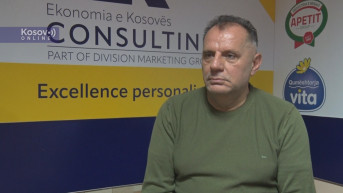
Former President of the Kosovo Chamber of Commerce Safet Grxhaliu has warned that, in addition to the €43 million already lost under the Growth Plan for the Western Balkans, Kosovo risks losing another €130 million by the end of the year if it fails to implement the required reforms.
Grxhaliu told Ekonomia Online that, alongside the adoption of the 2027 budget, Kosovo needed political stability and cooperation between the government and opposition in order to meet the criteria set by the European Union.
“By the end of the year, Kosovo must take a number of steps toward normalizing the political situation. First, now that we have functioning institutions, it is important that almost all elected positions have been filled. Second, we have numerous obligations ahead of us, primarily the adoption of the 2027 Budget Law. What is particularly important is meeting the prescribed criteria that Kosovo must fulfil if it does not want to lose another tranche of funding allocated to it under the Growth Plan for the Western Balkans,” Grxhaliu said.
He warned that political divisions could make it more difficult to fulfil the outstanding obligations within the remaining timeframe, thereby preventing Pristina from meeting the criteria and accessing the €130 million.
“We have an approach characterized by a lack of political unity and common positions in the interests of the state and its citizens. Party and political interests largely prevail, and that is genuinely harmful to Kosovo,” Grxhaliu said.
He stressed that reforms requiring implementation within a short timeframe included the adoption of laws on energy, bankruptcy, commercial law, public procurement, public-private partnerships and state aid control.
He also cited the strategy against organized crime, public administration reform, the green transition and human capital development as areas in which Kosovo must make progress by the end of the year.
“The greatest challenge, however, is what is described as sui generis—in other words, a specific condition applying to Kosovo concerning the normalization of relations with Serbia through the dialogue mediated or supported by the European Union,” Grxhaliu said.
He stressed that fulfilling these obligations required political stability and partnership among political parties, emphasizing that the economy must be a priority for the institutions.
“Social policies across Kosovo are equalizing poverty and moving the country further away from the path of development. In this period of inflation, it is not in Kosovo’s interest for imports, consumption and remittances from the diaspora to serve as the main pillars of budget growth or economic sustainability,” Grxhaliu said.

0 comments