
Grxhaliu: Budget geared more toward survival than economic development
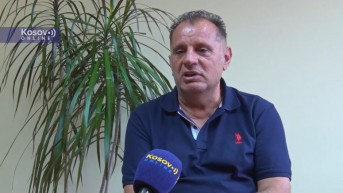
Economist Safet Grxhaliu has assessed that Kosovo’s 2027 budget, amounting to €4.27 billion, does not necessarily represent real economic growth, as the increase is largely the result of inflation.
Grxhaliu told Ekonomia Online that the €300 million increase compared with the 2026 budget should not be a cause for euphoria, since, according to his calculations, the impact of the current 7.8 percent inflation rate amounts to approximately €311 million.
He said that Kosovo needed not merely a numerical increase in the budget, but substantive growth that would translate into economic development and an improved standard of living for citizens.
According to him, every adopted budget should be accompanied by a strategic document clearly specifying where the money will be invested, what benefits those investments will generate and how they will affect citizens’ lives.
“There should be no euphoria over the adoption of the 2027 budget. It represents an increase of €300 million, but if we analyze the 2026 budget and multiply it by the current inflation rate in Kosovo of 7.8 percent, we see an increase of €311 million. Therefore, this increase in the budget to €4.27 billion is much more inflation-driven—that is, based on inflation—than a reflection of improved economic performance. All of this should send a clear message: Kosovo does not need a numerical increase, but a substantive increase in its budget. Every adopted budget should be accompanied by a strategic document setting out where the funds will be invested, what benefits the country will derive from them and how investments in strategic and capital projects will improve the lives of citizens in Kosovo,” he said.
Analyzing the structure of the budget, Grxhaliu said that the allocation of funds showed a greater focus on social support and recurrent expenditure than on economic development.
“The fact that the main budget allocations will include three categories—€1.45 billion for subsidies and transfers; €1.085 billion, or one-quarter of the budget, for expenditures; €1.007 billion for capital investment; while €547 million is earmarked for goods and services—best demonstrates that this will be much more a budget of survival than a budget of development and economic sustainability,” Grxhaliu said.
He also pointed to the concerningly low implementation rate of capital projects planned for 2026, stressing that the adoption of the budget should be accompanied by a concrete implementation strategy and measurable indicators of the impact of investments.
The economist also referred to the challenges Kosovo has faced, including European Union measures, the absence of fully functioning institutions and protracted electoral processes.
“Therefore, given the circumstances in which Kosovo has found itself in recent years—with European Union measures, a lack of functioning institutions and marathon election processes—this is ultimately what could be achieved. However, this budget is geared much more toward social sustainability than sustainable economic development. This is particularly evident given that in 2026 we had plans, or projections, for investment in capital projects, but only a small percentage was actually implemented. It is time for an adopted law to be genuinely accompanied by an implementation vision or strategy, together with measurable indicators of the budget’s impact,” Grxhaliu said.
As an additional cause for concern, he cited the small amount of funding Kosovo had received under the Growth Plan for the Western Balkans. According to him, Kosovo lost €43 million because it failed to meet the required criteria.
“It is true that Kosovo enters 2027 facing numerous challenges. The greatest challenge is certainly the fact that Kosovo has so far received only a very small share of the billions of euros available under the Growth Plan for the Western Balkans. Reports show that Kosovo lost €43 million because it failed to meet the stipulated criteria,” Grxhaliu concluded.
0 comments